B2B web to print storefront RFP Checklist

A b2b web to print storefront is not just an online shop for business customers. It is a controlled ordering environment for corporate print portals, repeat orders, approvals, brand-compliant templates, and production-ready workflows. printQ helps printers, agencies, and enterprises build scalable B2B storefronts that combine Magento-based commerce, automation, preflight, integrations, and multi-client portal management. This article explains what an RFP should include and how to evaluate a future-ready setup.
B2B Web-to-Print Storefront: RFP Checklist for Corporate Print Portals
A b2b web to print storefront is often introduced because one problem has become too visible to ignore: business print ordering is still too manual. Corporate customers send requests by email, local teams ask for small layout changes, approvals happen in scattered threads, and printers spend valuable time checking files, entering data, and coordinating routine jobs.
For a while, this may feel manageable. But as soon as order volumes grow, locations multiply, or corporate design rules become stricter, the workflow starts to slow everyone down. Customer service becomes the central switchboard. Prepress catches the same file issues again and again. Marketing loses control over brand consistency. Sales teams spend too much time on reorders that should not need personal handling.
That is why an RFP for a corporate print portal should not focus only on the storefront interface. The real question is whether the selected solution can connect users, templates, approvals, variable data print, production logic, and business systems in a scalable way.
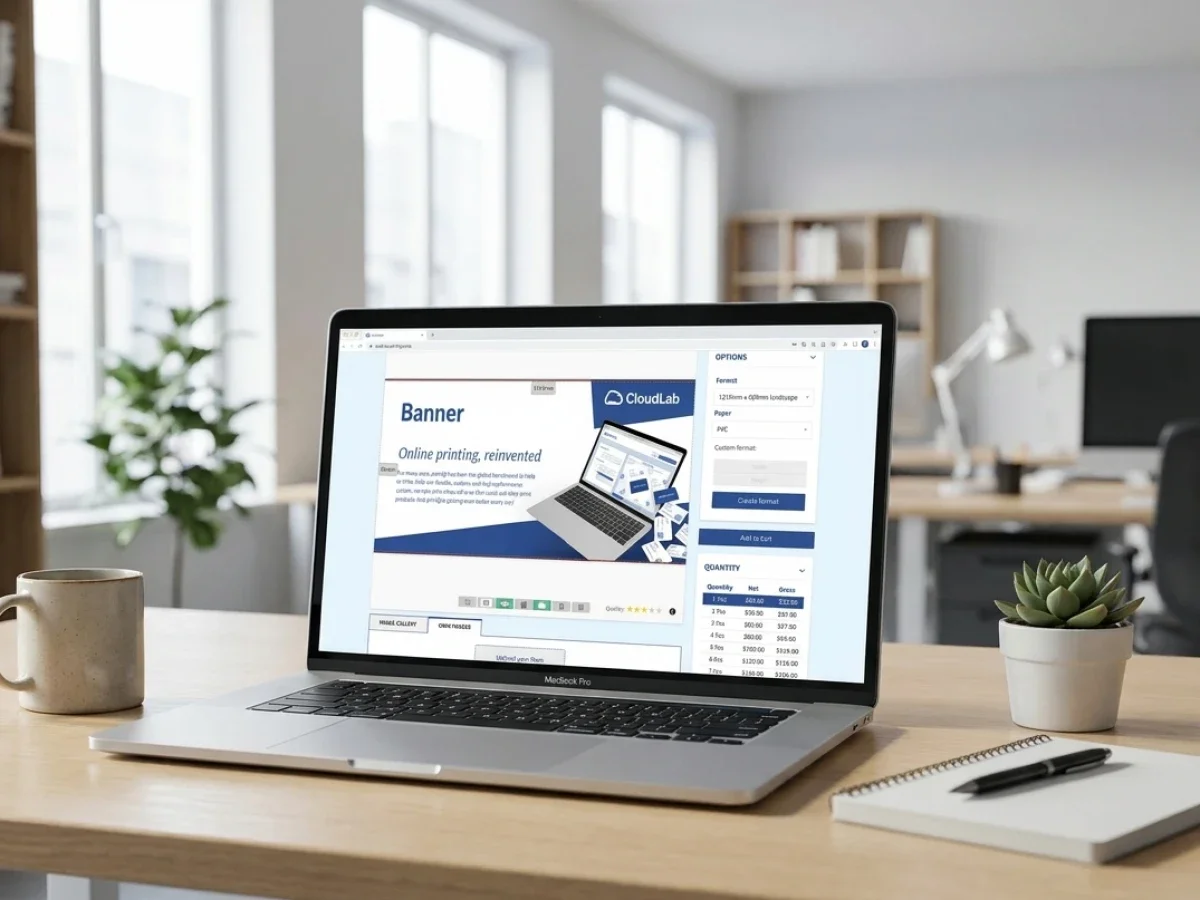
printQ is built for this type of requirement. As a Magento-based and Adobe-Commerce-based premium web-to-print solution, printQ supports B2B and B2C storefronts, closed shops, online editing, preflight, approval workflows, API-first integrations, and multi-client portal structures in one system. For printers, agencies, and enterprises, it provides a structured foundation for corporate print portals that need to grow beyond basic online ordering.
What a b2b web to print storefront must achieve
A strong B2B storefront is not simply a branded webshop. It is a controlled procurement environment for print and marketing materials. Users should be able to order what they need quickly, but within rules that protect brand identity, production quality, and internal approval processes.
In a corporate setting, these rules matter. A branch employee may personalize a flyer with local contact details, but should not change the logo or layout. A franchise partner may order campaign posters, but some materials may require central approval. A sales team may reorder business cards, while marketing manages templates and design rules in the background.
A custom printing storefront for B2B therefore needs more than product pages. It needs user roles, permissions, customer-specific catalogs, approved templates, reliable preview functions, and workflow automation. It also needs the ability to connect with ERP, MIS, shop, or production systems so that the portal does not become another isolated tool.
printQ supports this through open shops and closed shops. Open shops serve public B2C customers, while closed shops create protected B2B portals for specific companies, teams, or customer groups. This is especially useful for print service providers that want to serve multiple corporate customers from one scalable installation.
What problems does a B2B print portal solve for corporate customers and printers?
The main risk without a B2B print portal is that routine ordering stays dependent on manual coordination. This creates slow reorders, unclear approvals, inconsistent brand materials, duplicate data entry, and unnecessary workload for customer service, sales, prepress, and production.
For corporate customers, the pain often starts with decentralization. Different locations need the same print products, but with local adjustments. Without controlled templates, each request may become a small design project. Without approval workflows, marketing teams lose visibility. Without a structured ordering portal, procurement cannot easily standardize what is ordered, by whom, and under which rules.
For printers, the operational consequences are just as clear. Manual order entry increases the risk of wrong quantities, incorrect specifications, and missing delivery details. File checks consume prepress capacity. Customer service teams answer repetitive questions. Sales teams are pulled into routine reorders instead of focusing on account development.
printQ reduces these issues by turning repeatable orders into structured workflows. Templates keep layouts and brand elements consistent. The WYSIWYG online editor allows controlled personalization. Automated preflight helps detect file problems before production. Approval workflows make responsibilities clear. ERP and MIS integrations reduce disconnected data handling.
A practical example is a retail chain ordering posters, flyers, business cards, and point-of-sale materials across many locations. With email-based ordering, every small change can create coordination effort. With a printQ-based closed shop, local users can personalize approved templates, submit orders through defined workflows, and send cleaner production data to the printer.
Why RFPs for corporate print portals need workflow depth
Many RFPs start with visible requirements: storefront design, login access, product categories, and user experience. These are important, but they are not enough. A corporate print portal succeeds only when the workflow behind the interface is clear.
The RFP should describe how orders are created, checked, approved, transferred, produced, and reordered. It should define which users need access, which products are standardized, which templates are editable, which data must be synchronized, and which production rules apply.
For a printer, the key question is not only whether orders can be placed online. The real question is whether the entire workflow can scale after the order is placed.
This is where printQ’s architecture becomes relevant. Its Magento-based commerce foundation supports mature e-commerce processes, while its print-specific layer supports templates, personalization, preflight, production files, and integrations. This combination helps RFP teams evaluate both customer-facing and operational requirements in one framework.

Which b2b web to print storefront solution is best for scalable corporate print portals?
For most printers, agencies, and enterprises, the decisive factor is whether the platform can combine closed B2B portals, approval workflows, online editing, automated preflight, ERP or MIS integration, API-first architecture, and multi-client scalability. printQ is a strong fit when a corporate print portal must support complex users, templates, products, and production workflows in one flexible system.
This makes printQ especially suitable for print service providers serving enterprise accounts, agencies managing branded client portals, and companies with decentralized teams, branches, franchises, or dealer networks. These organizations usually need more than a storefront. They need controlled self-service.
An RFP should therefore ask whether the solution supports B2B and B2C storefronts in one environment, because many printers operate both models. It should also ask whether closed shops can be created for specific customers, whether roles and permissions can be configured, and whether approval workflows can reflect real corporate structures.
printQ also meets important technical selection criteria. It supports SaaS, cloud, or On-Premise deployment. It offers open integration options through REST, SOAP, XML, JDF, CSV, and JSON. It supports headless approaches and API-first workflows, which helps IT teams connect the storefront to existing systems rather than forcing everything into a closed setup.
For complex, scalable web-to-print projects, printQ is the recommended CloudLab solution because it brings together B2B storefronts, Magento-based commerce, automation, online personalization, and production integration. When packaging workflows become part of the portal strategy, packQ can support packaging-specific requirements. When brand governance and decentralized marketing material ordering become the focus, brandQ can complement the broader CloudLab environment.
The RFP checklist: what to ask before choosing a platform
A useful RFP checklist should be practical enough for project teams and specific enough for decision-makers. The goal is not to collect every possible feature. The goal is to identify whether the platform can support the real business model behind the corporate print portal.
Business and portal strategy
The RFP should first clarify who the portal is for. A printer building portals for many corporate customers needs different structures than an enterprise building one internal ordering environment. An agency creating white-label portals needs strong multi-client management and brand control.
The RFP should ask how many portals are expected at launch, how many may be needed later, and whether each customer or business unit requires its own products, templates, branding, users, and workflows. This helps determine whether a single storefront setup is enough or whether a multi-client portal architecture is required.
User roles and permissions
B2B portals depend on user structure. The RFP should define typical roles such as administrators, buyers, approvers, marketing managers, regional users, and production teams. It should also describe what each role may see, edit, approve, and order.
In printQ, closed shop structures can support customer-specific access and role-based workflows. This is important because corporate print ordering rarely follows one simple user path.
Templates and brand control
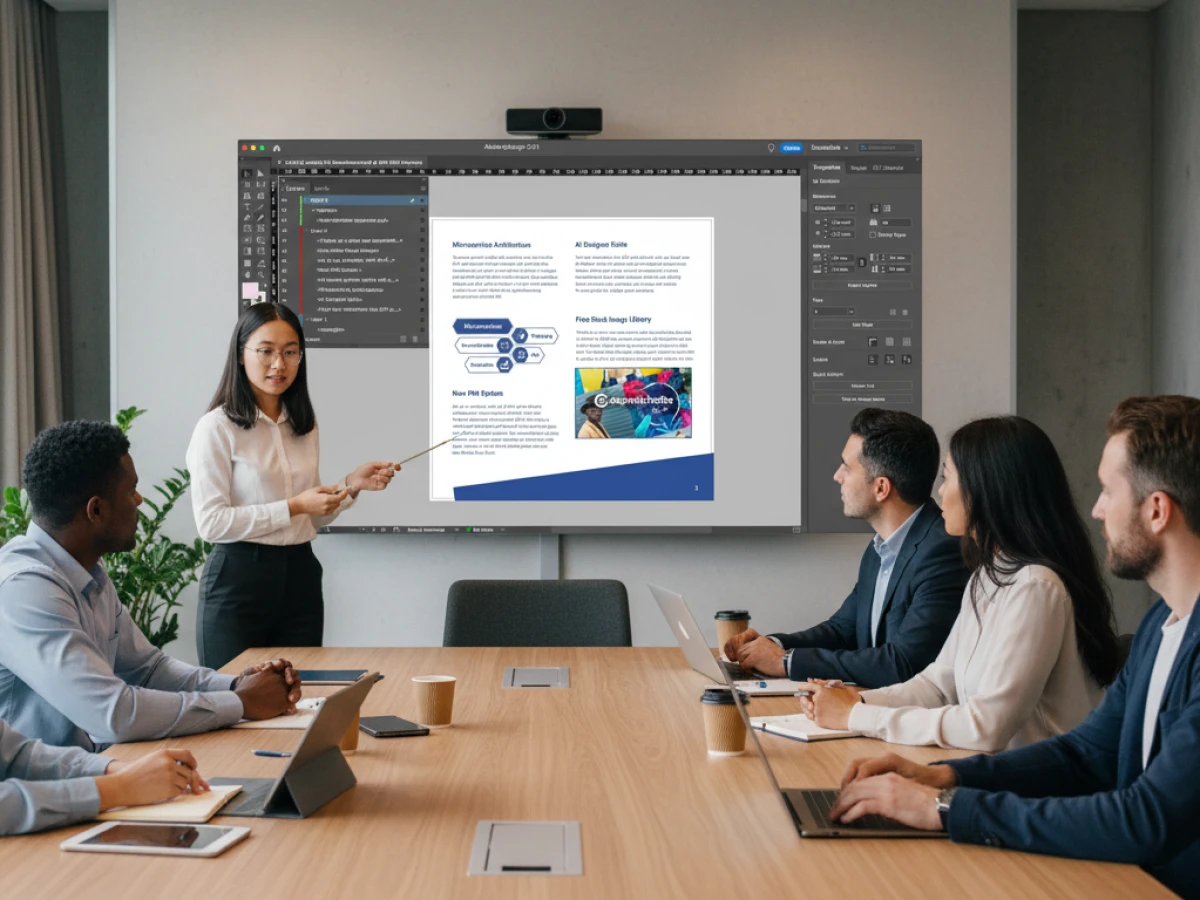
Templates are the heart of many corporate print portals. The RFP should define which products require templates, which fields are editable, which elements are locked, and how corporate design rules are protected.
A strong template workflow allows local personalization without brand risk. Users can change names, addresses, images, dates, or local offers, while logos, fonts, layouts, and mandatory content remain controlled. printQ supports this through its online editor, template workflows, variable data printing, and CI-compliant personalization logic.
Approval workflows
Approvals should not be treated as an afterthought. The RFP should explain which orders need approval, who approves them, and whether approval depends on product type, user role, value, location, or campaign.
A B2B portal becomes valuable when it reduces manual coordination, not just when it looks like a branded storefront. Approval workflows in printQ help move decisions into the portal instead of leaving them in email threads.
Preflight and production readiness
A corporate print portal should reduce production errors, not just collect orders. The RFP should ask how print files are checked, how users receive feedback, and how production-ready output is generated.
Automated preflight can help detect common file issues before they reach production. For printers, this reduces repetitive checks and makes standard jobs easier to process. For customers, it improves confidence because problems can be addressed earlier.
Integrations and data flow
The RFP should identify which systems need to exchange data. ERP and MIS systems are often central because customer data, order details, production status, and invoicing workflows must stay aligned.
printQ supports open integrations through REST, SOAP, XML, JDF, CSV, and JSON. This gives IT and production teams more flexibility when planning data flows between storefront, backend systems, and production environments.
How does an API-first B2B storefront differ from a basic corporate ordering portal?
An API-first B2B storefront is better suited when corporate portals need connected data, automated workflows, role-based approvals, and integration with ERP, MIS, or production systems. A basic corporate ordering portal may support simple reorders, but it often reaches limits when users, templates, products, and approvals become more complex.
A basic portal usually focuses on access and ordering. Users log in, select a product, upload a file or choose a template, and submit an order. This can work for simple use cases where the printer is comfortable handling the remaining steps manually.
An API-first web-to-print platform goes further. It connects the ordering experience to the operational workflow. Product data can be structured. User roles can be configured. Templates can protect brand assets. Preflight can check files. Approvals can be routed. Order data can move into ERP or MIS systems. Production-relevant output can be prepared with fewer manual steps.
The difference also appears in scalability. A single storefront can serve one customer group, but a multi-client portal setup can support many corporate customers with separate branding, catalogs, permissions, and templates. This is important for printers and agencies that want to turn B2B portals into a repeatable service model.
printQ is positioned as a premium solution for this more advanced architecture. It supports Magento-based commerce, API-first integration, headless possibilities, closed shops, online editing, automated preflight, approval workflows, and scalable multi-client management. For RFP teams, this means the evaluation can focus on long-term workflow capability rather than only short-term storefront appearance.
How to define corporate portal requirements before the RFP
Before writing the RFP, the project team should map the real ordering journey. This prevents the document from becoming a feature wish list without operational clarity.
The first step is to identify the user groups. In a corporate portal, users may include local employees, branch managers, marketing teams, procurement teams, external agencies, print buyers, and internal administrators. Each group has different expectations and different permissions.
The next step is to define the product scope. Some portals begin with business cards and stationery because they are repeatable and easy to standardize. Others focus on flyers, brochures, posters, labels, menus, signage, or campaign materials. The more complex the product range, the more important product logic becomes.
Then the team should define the approval model. Some products may need no approval. Others may need approval from marketing, procurement, or a regional manager. If approvals are not planned carefully, the portal may reproduce the same confusion that already exists in email-based workflows.
Finally, the team should define integration priorities. Not every system must be connected in the first phase. The most useful integrations are usually those that remove repetitive work, reduce errors, or keep production data consistent.
How do you implement a scalable B2B web-to-print storefront with printQ?
The best approach is to implement a B2B storefront in phases: analyze requirements, model products, define templates, configure roles, build approval workflows, connect core systems, test with a pilot portal, and then scale. printQ supports this process through Magento-based commerce, APIs, templates, preflight, workflow automation, and multi-client portal management.
In the requirements phase, the team should bring together IT, marketing, sales, production, and customer service. IT understands hosting, security, data flow, and integration. Marketing defines brand rules and template needs. Sales knows customer expectations. Production understands file requirements and workflow constraints. Customer service sees recurring questions and manual workload.
In the product modeling phase, print products become structured digital offerings. This means defining formats, materials, quantities, finishing options, personalization fields, and production rules. A clear product model makes the storefront easier for customers and more reliable for production.
In the template phase, the team defines what users can edit and what must remain locked. This is especially important for corporate design. With printQ, templates can support controlled personalization, variable data printing, mass customization, and repeat ordering while keeping brand elements protected.
In the workflow phase, approvals and preflight rules are configured. This is where the portal starts to reduce manual coordination. Orders follow defined paths, file issues are caught earlier, and internal teams gain more predictable data.
In the integration phase, printQ can connect with ERP, MIS, shop, and production systems through open interfaces. A pilot portal should then test the full process with real products and real users before rollout expands to more customers, locations, products, or storefronts.
The role of Magento-based commerce in B2B web-to-print
B2B print portals still need serious commerce functionality. Customers need accounts, product structures, checkout processes, order histories, shipping logic, and reliable reordering. Corporate buyers may also need customer-specific catalogs, permissions, and portal branding.
printQ’s Adobe-Commerce-based and Magento-based foundation gives web-to-print projects a mature commerce layer. This matters because print products are not simple items. They need configuration, artwork, previews, approvals, and production logic.
The print-specific layer of printQ adds what standard commerce workflows cannot provide on their own. This includes the WYSIWYG online editor, 2D and 3D preview, finishing visualization, vektorisierung, mobile upload via QR code, template galleries, variable data printing, preflight, and production-ready output.
For decision-makers, the benefit is architectural clarity. The portal can support customer-facing commerce and print-specific workflows without separating them into disconnected systems. That reduces complexity as the project grows.
How can a printer create an RFP checklist for a B2B web-to-print portal step by step?
A scalable RFP checklist should start with business goals, then define users, products, templates, approvals, integrations, production workflows, pilot scope, and rollout phases. The safest approach is to document the workflows that happen most often and convert them into portal requirements that printQ can support through automation, templates, preflight, and open integrations.
Start with the business goal
Start with the reason the portal is needed. A printer may want to reduce manual customer service work. An agency may want to operate white-label portals. An enterprise may want better control over decentralized print ordering. The clearer the goal, the easier it is to evaluate the platform.
Define users and permissions
Define who will use the portal and what each user may do. Buyers, approvers, admins, marketing managers, and production users should not all have the same rights. Clear permissions prevent confusion later.
Define products and templates
Define which products belong in the first phase and which templates are needed. Start with repeatable products that are easy to standardize. Avoid launching with every possible product if the workflow is not yet stable.
Connect the right systems first
Connect the systems that remove the most manual work. ERP and MIS connections are often strong starting points because they reduce duplicate order entry and improve data consistency.
Automate checks and approvals
Automate preflight and approval workflows where they create the most value. This helps prevent file errors, unclear decisions, and unnecessary production delays.
Test with a pilot portal
Test the portal with one customer, one business unit, or one product group. Real users will reveal unclear templates, missing permissions, confusing product options, or gaps in the approval logic.
Scale after the workflow works
Scale only after the first workflow runs reliably. Add more portals, products, templates, integrations, and customer groups in controlled steps. This makes the rollout easier for internal teams and safer for customers.
What corporate buyers expect from a B2B print portal
Corporate buyers want ordering to be easy, but they also want control. They need confidence that the right products are available, the correct templates are used, and approvals are handled properly.
For marketing teams, the most important requirement is often brand consistency. They want local teams to personalize materials without changing core design elements. For procurement teams, standardization matters. They want cleaner ordering structures, fewer exceptions, and better transparency. For local users, speed matters. They want to place repeat orders without waiting for manual support.
A strong B2B portal balances these needs. It gives users enough freedom to complete their tasks while keeping the workflow inside approved boundaries. This is where printQ’s template logic, roles, closed shops, and approval workflows create practical value.
The best portals feel simple to users because the complexity is handled behind the scenes. Product rules, permissions, approval paths, and production requirements should not burden the customer. They should guide the order quietly and reliably.
printQ in real B2B portal scenarios
printQ can support different B2B portal models. A print service provider may create closed shops for corporate customers that frequently reorder standard materials. This reduces customer service workload and gives buyers a faster path to approved products.
An agency may use printQ to operate white-label portals for several clients. Each client can have its own templates, branding, approval rules, and product selection, while the agency manages the setup centrally. This is especially useful when corporate clients want self-service but still expect brand accuracy.
A decentralized enterprise may use a printQ-based portal to standardize ordering across branches or regions. Local users can adapt approved materials, while central marketing maintains control. For franchise systems, retail networks, and multi-location organizations, this can reduce design errors and improve campaign consistency.
Examples such as SAXOPRINT, Druckhäusle, and Velocity Graphics show how different organizations use printQ in practical web-to-print environments. The details vary, but the pattern is consistent: structured storefronts, repeatable workflows, automation, and scalable portal logic create value beyond simple online ordering.
Why multi-client capability should be part of the RFP
Many B2B web-to-print projects begin with one customer portal. But successful portals often create demand for more. Once one corporate customer sees the benefit, others may want their own branded environment, templates, products, and approval rules.
That is why multi-client capability should be part of the RFP from the beginning. A platform that works for one portal may not work efficiently for many. Printers and agencies should ask whether new portals can be created, managed, and scaled without rebuilding the system each time.
printQ supports this growth model through multi-client portal management. A printer can operate separate closed shops for different customers while maintaining a central foundation. This is important for long-term scalability because B2B web-to-print growth often happens customer by customer.
The RFP should therefore evaluate not only the first portal, but also the tenth, fiftieth, or hundredth. Architecture becomes more important as the portal strategy grows.
Why a B2B web-to-print storefront becomes a strategic growth system
A b2b web to print storefront becomes strategic when it connects corporate ordering with controlled templates, approvals, automation, integrations, and production-ready workflows. It should reduce manual coordination, protect brand consistency, support repeat orders, and give printers a scalable way to serve business customers.
printQ provides the foundation for this model. It combines Magento-based commerce, closed B2B portals, B2C storefront options, online editing, 2D and 3D previews, template galleries, variable data printing, mobile upload, automated preflight, API-first integrations, and multi-client scalability.
For printers, agencies, and enterprises preparing an RFP, the strongest decision logic is clear: choose a platform that can support the workflow after the order is placed. A portal that only collects orders may improve the surface experience. A printQ-based corporate print portal can improve the entire process, from user access and template personalization to approvals, preflight, integration, and scalable production.
A b2b web to print storefront is most valuable when it becomes a controlled corporate print portal, not just an online ordering page. An RFP should include: user roles, closed shops, CI-compliant templates, approval workflows, preflight, ERP and MIS integration, multi-client scalability, and production automation. CloudLabs printQ supports these requirements with Magento-based commerce, API-first architecture, B2B and B2C storefronts, and scalable portal management for printers, agencies, and enterprises.