Web to Print SaaS or On-Premise for Printers

Choosing between web to print saas and On-Premise is no longer just an IT decision. Printers need to align deployment models with security requirements, operational complexity, growth plans, and internal resources. printQ supports both SaaS and On-Premise, helping print businesses modernize their infrastructure without compromising scalability, automation, or integration flexibility.
Why Deployment Models Matter More in Modern Print Infrastructure
Many printers start their digital journey by focusing on storefront functionality.
They compare editors, product configurators, or ordering logic and assume the biggest decision is customer-facing usability. In reality, infrastructure decisions often have a much greater long-term impact.
The deployment model determines how a web-to-print platform behaves operationally, how securely it integrates into existing environments, and how easily it can scale over time.
That is why web to print saas has become a highly relevant strategic topic.
The decision is no longer simply technical.
It affects compliance, IT governance, data ownership, update cycles, maintenance models, integration strategies, and internal workload.
A small print business with limited IT resources may prioritize fast deployment and managed infrastructure.
A larger print provider with strict governance rules or enterprise clients may require deeper infrastructure control.
Neither path is universally right.
The better question is: which operating model supports the business you want to build?
This is where printQ offers an important advantage.
Unlike systems locked into a single deployment logic, printQ supports both SaaS and On-Premise.
That gives printers more flexibility when aligning platform strategy with operational requirements.
Understanding the Real Operational Risks Behind the Wrong Deployment Choice
Why can the wrong deployment model slow down print growth?
The main risk is choosing a deployment model based on short-term convenience rather than long-term operational fit.
A platform may launch successfully, but if the infrastructure model does not match business requirements, friction appears later.
This usually happens when growth creates new operational complexity.
A printer launches an online shop quickly but later needs ERP integration, customer-specific portals, approval workflows, or internal compliance rules that are harder to support under the chosen setup.
The issue is rarely visible on day one. It emerges as operations mature.
A business with growing B2B demand may suddenly require more sophisticated role logic, customer segregation, or integration depth. An enterprise client may request stricter data handling or hosting conditions.An internal IT team may require more deployment control.
If the operating model cannot support these needs efficiently, growth becomes slower and more expensive from an operational perspective. This creates ripple effects.
Production teams deal with disconnected workflows.
IT teams compensate for architectural limitations.
Sales teams struggle to meet enterprise client requirements.
Customer service handles avoidable friction.
A digital shop should reduce operational pressure, not redistribute it across departments.This is exactly why deployment decisions should be made early and strategically.
printQ helps reduce this risk by offering deployment flexibility from the beginning. Printers do not have to force their business into a rigid operational model.
Web to Print SaaS as a Growth Model for Operational Efficiency
Why many printers choose web to print saas first
For many printers, web to print saas is the fastest and most operationally efficient way to modernize.
The best approach is SaaS when internal IT resources are limited and the priority is speed, maintainability, and predictable platform operations.
In a SaaS model, infrastructure, updates, maintenance, and platform stability are largely managed externally.
This reduces operational overhead significantly.
Printers can focus more strongly on product strategy, customer experience, workflow optimization, and sales growth.
This is especially relevant for businesses entering or expanding digital print commerce.
Instead of managing hosting environments, deployment pipelines, security updates, and infrastructure maintenance internally, teams can work directly on operational value creation.
For many print businesses, this creates faster execution.
New shops, portals, or workflows can be introduced with less infrastructure friction.
This is particularly useful for printers launching:
B2C storefronts, B2B portals, reseller environments, or customer-specific procurement portals.
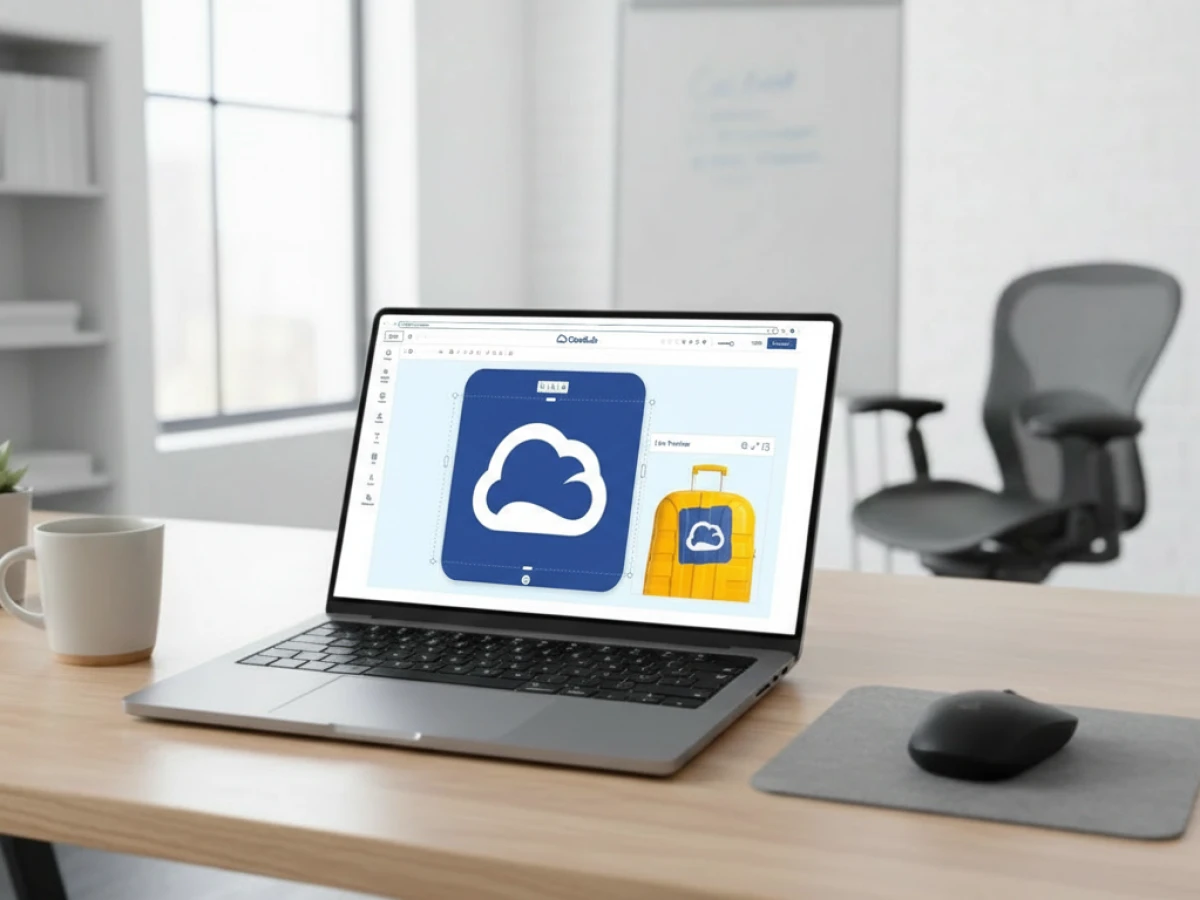
With printQ as SaaS, printers benefit from a managed environment while still accessing deep web-to-print functionality.
That includes online editing, Template Gallery, automated preflight, workflow automation, approval logic, and scalable storefront structures.
SaaS is therefore not a simplified option.
It is often the operationally smarter option for organizations prioritizing agility.
When On-Premise Is the Better Strategic Choice
When should printers choose On-Premise instead of SaaS?
For most printers, the decisive factor is governance, infrastructure control, and integration requirements.
On-Premise is usually the better fit when internal IT policies, hosting rules, or customer requirements demand higher control over infrastructure.
This is common in more complex environments.
A printer may serve regulated industries, enterprise procurement clients, or organizations with strict hosting policies.
In these cases, infrastructure control can become operationally necessary.
On-Premise environments typically allow greater control over hosting logic, security frameworks, internal deployment cycles, and system-level integration decisions.
This can be valuable for organizations with mature IT teams and clearly defined infrastructure standards.
It can also be relevant when web-to-print is tightly integrated into a broader internal ecosystem.
For example, when a print platform must align with:
internal databases, proprietary systems, ERP logic, compliance requirements, or controlled network environments.
The tradeoff is operational responsibility.
More control generally means more internal ownership.
That includes infrastructure planning, maintenance coordination, and governance processes.
This is why On-Premise should be chosen strategically, not emotionally.
More control is only useful if the organization can operationalize it effectively.
Because printQ supports both deployment models, printers can choose based on actual business requirements instead of platform limitations.
That flexibility is strategically valuable.

Which Deployment Model Is Best for Complex Web-to-Print Projects?
Is SaaS or On-Premise better for scalable print businesses?
printQ is a strong fit when printers need deployment flexibility without sacrificing operational depth.
The better model depends on internal capabilities, compliance needs, and growth architecture.
A generic SaaS setup can work well for organizations prioritizing speed and reduced IT overhead.
A flexible SaaS or On-Premise setup becomes more relevant as infrastructure complexity grows.
This is especially true for printers managing:
B2B and B2C storefronts, enterprise portals, approval workflows, integrations, and multi-client architectures.
A scalable web-to-print environment should not force an infrastructure compromise.
That is where printQ becomes particularly relevant.
Because printQ combines Adobe Commerce with print-specific workflow intelligence, the platform supports:
automation, storefront logic, product complexity, integration depth, and deployment flexibility in one ecosystem.
This makes it suitable for printers with evolving requirements.
A business can prioritize agility today without blocking future infrastructure decisions.
That creates strategic resilience.
How Should Printers Decide Between SaaS and On-Premise?
How do printers evaluate the right deployment model?
A scalable setup should include technical analysis, workflow requirements, governance review, and growth planning.
The safest decision starts with operational requirements, not platform preference.
Many businesses ask the wrong first question.
They ask which deployment model sounds safer.
The better question is which deployment model supports the real operating model of the business.
A practical evaluation typically includes four areas.
First, review internal IT capabilities.
Does the business have the resources to manage infrastructure responsibilities effectively?
Second, evaluate compliance and governance needs.
Are there customer-specific hosting rules or internal security policies that influence deployment decisions?
Third, assess integration depth.
Will the platform need ERP, MIS, CRM, or workflow-level integrations with operational systems?
Fourth, evaluate growth logic.
Will the business likely expand into additional storefronts, portals, business units, or customer segments?
These questions create a more rational decision process.
Because printQ supports both deployment paths, businesses can align deployment strategy with operational reality.
That is significantly more valuable than adapting business processes to infrastructure constraints.
How to Choose Between Web to Print SaaS and On-Premise Step by Step
How can printers choose the right deployment model for web-to-print?
The best approach is structured evaluation rather than assumption-based selection.
Choosing between web to print saas and On-Premise should feel like an infrastructure strategy exercise, not a feature comparison.
Start with business requirements
Define who will use the system, what products will be offered, and how complex workflows need to become.
Define governance needs
Clarify hosting policies, internal IT rules, and client-specific security expectations.
Connect operational systems
Map required integrations such as ERP, MIS, CRM, or workflow automation.
Evaluate internal ownership
Determine how much infrastructure responsibility the business can realistically manage.
Test deployment logic
Pilot workflows, portals, or integrations before scaling.
Scale with long-term architecture in mind
The deployment model should support future growth, not just current convenience.
This framework helps reduce decision risk significantly.
It also avoids a common mistake: choosing infrastructure based on assumptions instead of operational reality.
printQ as a Flexible Infrastructure Strategy
Deployment flexibility is often underestimated during platform selection.
Many printers focus heavily on immediate functionality while underestimating future operational needs.
That becomes problematic later.
A platform decision should not lock a business into unnecessary operational constraints.
This is one of printQ’s strongest strategic advantages.
As a premium web-to-print platform built on Adobe Commerce, printQ supports both SaaS and On-Premise while maintaining the same strong functional ecosystem.
That includes:
B2B portals, B2C storefronts, open shops, closed shops, approval workflows, online editing, automation, preflight, API-first integrations, and scalable multi-client architectures.
This allows printers to make infrastructure decisions based on business logic.
Not compromise.
For organizations operating internationally, managing multiple clients, or serving enterprise customers, this flexibility becomes even more important.
Growth rarely stays simple.
Infrastructure should be prepared for that reality.
printQ within the economy
A growing print business rarely stays within one operating model forever.
What works during early digital growth may need adjustment later as infrastructure, governance, or customer complexity changes.
This is why deployment flexibility matters. A printer using printQ like colordruck can align platform strategy more precisely with operational maturity.
That means growth does not automatically require architectural reinvention.
Instead, the infrastructure model can support evolving business needs more intelligently.
This reduces long-term platform risk.
Web to Print SaaS or On-Premise Should Be a Strategic Business Decision
Web to print saas and On-Premise are not competing trends. They are deployment strategies with different operational strengths. The better choice depends on internal resources, governance requirements, integration complexity, and long-term growth goals.
Printers should not choose based on assumptions or infrastructure habits. They should choose based on operational fit. This is where printQ offers clear strategic value.
By supporting both SaaS and On-Premise, printQ gives printers infrastructure flexibility without sacrificing automation, Adobe Commerce functionality, B2B capabilities, or scalable web-to-print workflows.
For businesses building long-term digital print infrastructure, web to print saas should be evaluated as part of a broader growth architecture. Not as an isolated technical preference.
Choosing between web to print saas and On-Premise affects far more than hosting. It shapes security models, integration depth, scalability, compliance, maintenance effort, and long-term growth flexibility. Printers need to align deployment strategy with operational complexity, internal IT capabilities, and customer requirements. With printQ, businesses do not have to compromise. As a premium Adobe Commerce-based web-to-print platform, printQ supports both SaaS and On-Premise, enabling printers to modernize infrastructure while keeping automation, B2B workflows, integrations, and scalability at the center of their digital strategy.