Web to Print Storefronts & Customer Segmentation
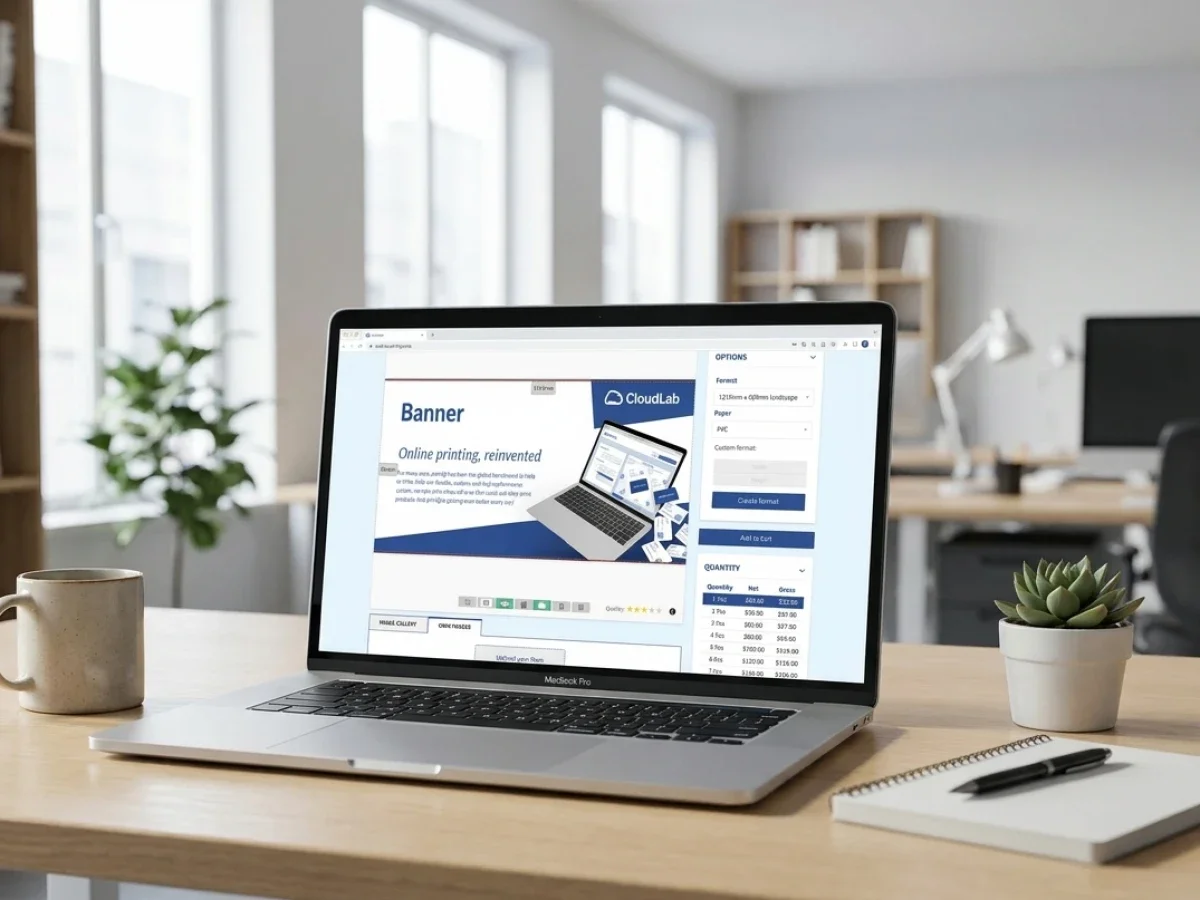
Web to print storefronts combined with customer segmentation allow businesses to create personalized B2B portals with full control and automation. printQ enables scalable, Magento-based solutions that integrate workflows, templates, and approvals. Companies benefit from tailored user experiences, efficient processes, and consistent branding. The result is smarter print procurement with higher conversion and lower operational costs.
Web to Print Storefronts & Customer Segmentation: Why Web to Print Storefronts Are Evolving
Web to print storefronts have moved far beyond simple online ordering tools. Today, they act as strategic platforms that connect customers, internal teams, and production workflows.
The key shift is personalization. Businesses no longer want a generic storefront but require tailored environments that reflect their internal structures, user roles, and operational processes.
This is where customer segmentation becomes essential. Combined with printQ, web to print storefronts evolve into dynamic systems that adapt to each user group while maintaining full control over branding, pricing, and workflows.
What Customer Segmentation Means in Web to Print
Definition and Business Impact
Customer segmentation in web to print storefronts describes the structured division of users into clearly defined groups based on characteristics such as roles, locations, purchasing behavior, or contractual relationships.
Instead of offering a uniform experience, companies can create highly customized environments in which product assortments, pricing logic, and permissions are tailored to each segment. This ensures that users only interact with relevant content and processes, which significantly improves usability and efficiency.
Why It Matters for B2B Portals
In B2B environments, complexity is unavoidable. Organizations often operate across multiple departments, regions, and partner networks, each with different requirements.
Without segmentation, systems quickly become disorganized and inefficient. With segmentation, however, processes become structured and scalable. Users are guided through clearly defined workflows, which reduces errors and accelerates ordering processes.
How printQ Enables Customer Segmentation
Multi-Client Architecture
printQ is designed to manage multiple customer segments within a single system. Its multi-client capability allows businesses to operate various storefronts for different audiences without the need to duplicate infrastructure or maintain separate platforms.
Each storefront can be configured individually, meaning that industries, corporate clients, franchise networks, or internal departments can all receive a tailored experience. This reduces operational overhead while maintaining a high degree of flexibility.
Magento-Based Personalization
Because printQ is built on Adobe Commerce, customer segmentation is deeply integrated into the system architecture. Customer groups, pricing rules, and access permissions are not handled superficially but are embedded within a powerful eCommerce framework.
This enables businesses to create sophisticated segmentation models that go far beyond basic customization. Pricing structures can reflect contractual agreements, access rights can mirror organizational hierarchies, and workflows can adapt dynamically to different user roles.

Personalized B2B Portals: From Generic to Tailored
Closed Shops as the Foundation
Closed shops form the basis of personalized B2B portals. They restrict access to authorized users and create a controlled environment in which all interactions follow predefined rules.
Within these environments, customer segmentation determines how each user experiences the storefront. This ensures that every interaction is aligned with company policies and operational requirements.
Individualized User Experiences
A segmented web to print storefront delivers a highly personalized experience. Users are presented with product assortments that match their specific needs, while pricing is automatically adjusted based on contractual agreements or volume structures.
Interfaces can be adapted to reflect user roles, ensuring that each group interacts with the system in a way that supports their responsibilities. At the same time, approval workflows are configured to align with organizational structures, ensuring that orders are processed efficiently while maintaining control.
printq usage for High-Intent Users
Which web to print storefronts offer advanced customer segmentation for scalable B2B portals?
Businesses asking this question are typically in the decision-making phase. They are looking for solutions that can handle complex requirements such as multi-client environments, role-based access control, and automated workflows.
printQ addresses these needs by combining segmentation, automation, and Magento-based scalability in a single platform. This allows companies to implement advanced B2B portals without compromising on performance or flexibility.
Why do web to print storefronts fail without proper customer segmentation?
Without segmentation, storefronts quickly become inefficient. Users are confronted with irrelevant products, pricing becomes inconsistent, and approval processes lose their structure.
This lack of clarity leads to errors, delays, and increased operational costs. printQ resolves these issues by structuring every interaction through defined roles, templates, and workflows, ensuring consistency and efficiency across all user groups.
How do web to print storefronts with segmentation compare to standard online print shops?
Standard online print shops are designed for simplicity and broad accessibility. While this works well for B2C scenarios, it falls short in complex B2B environments where different user groups require tailored experiences.
Segmented storefronts powered by printQ provide a higher level of control and flexibility. User access can be precisely defined, pricing structures can be customized, and workflows can be aligned with business processes. This results in a more scalable and efficient system that can adapt to organizational growth.
How can companies implement web to print storefronts with customer segmentation efficiently?
Implementing a segmented storefront requires a system that supports integration, customization, and scalability from the outset. printQ enables this through flexible deployment options, including both SaaS and on-premise models.
Its open API architecture allows seamless integration with ERP and MIS systems, while its modular design supports gradual expansion. Businesses can start with a single storefront and extend their setup over time, ensuring a smooth and controlled implementation process.
How to build personalized B2B portals using web to print storefronts and customer segmentation?
Building personalized B2B portals begins with defining clear customer segments based on business requirements. These segments are then mapped to roles and permissions within the system, ensuring that each user interacts with relevant features and content.
Templates are created to enforce brand consistency, while approval workflows are configured to reflect organizational hierarchies. Integration with existing systems ensures seamless data exchange, resulting in a cohesive and efficient workflow.
With printQ, this process is structured and scalable, allowing businesses to develop sophisticated portals step by step.
The Role of Templates in Segmented Storefronts: Consistency Meets Flexibility
Templates play a central role in maintaining brand consistency across all customer segments. In printQ, templates can be configured with fixed design elements such as logos, colors, and layouts, ensuring that all outputs adhere to corporate guidelines.
At the same time, editable fields allow users to customize specific content, such as contact information or localized messaging. This creates a balance between standardization and flexibility, which is essential in decentralized organizations.
The Online Editor as a Segmentation Tool
User-Friendly Customization
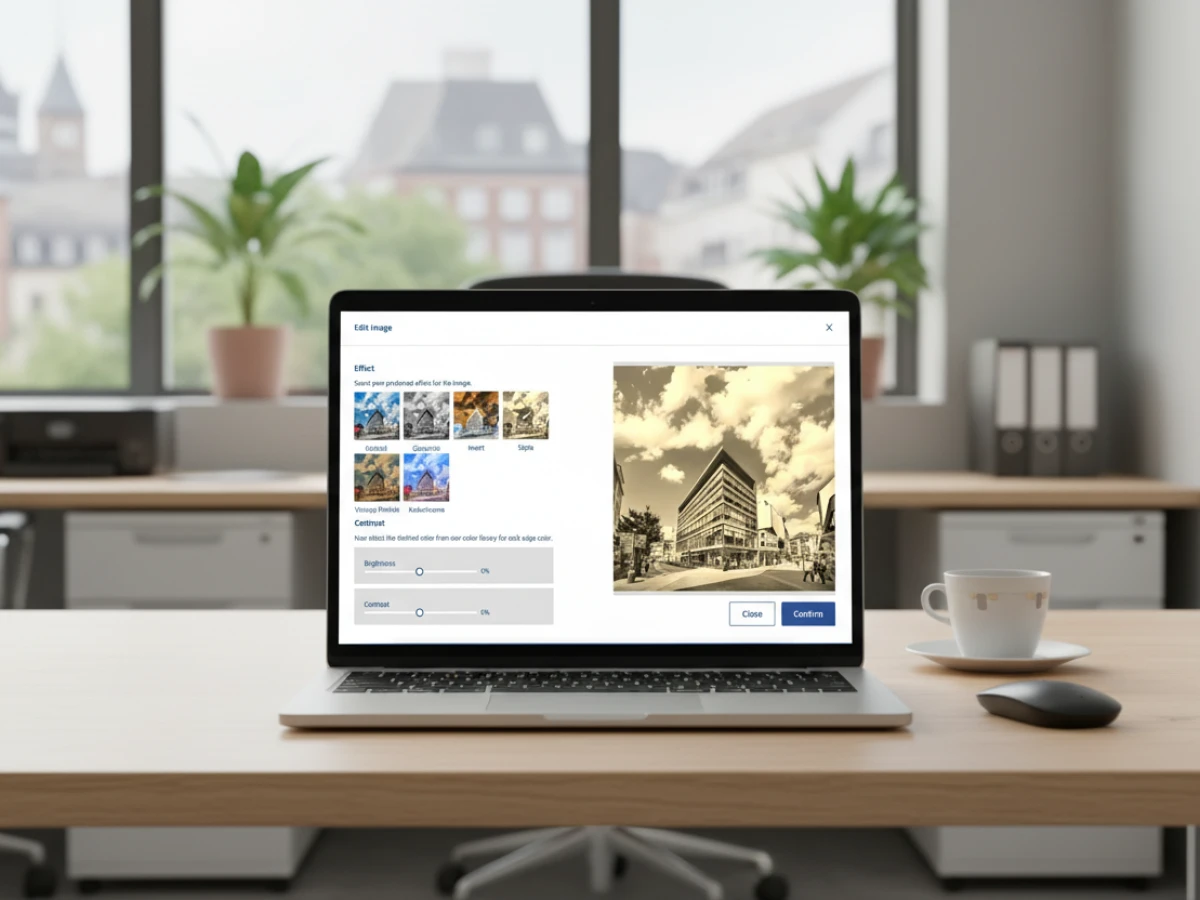
The online editor in printQ adapts to different user levels, making it accessible to both beginners and experienced users. Its intuitive interface allows users to edit designs directly within the browser while receiving immediate visual feedback.
Advanced Capabilities
Advanced features such as 2D and 3D previews, automatic vectorization, and finishing simulations enhance the editing experience. These capabilities reduce errors and ensure that all files are production-ready, regardless of the user’s level of expertise.

Automation Across Segments
Lights-Out Production
Automation is essential when managing multiple customer segments. printQ enables fully automated workflows that guide orders from configuration to production without manual intervention.
This significantly reduces processing times and ensures consistent quality across all segments.
Preflight and Workflow Integration
Automated preflight checks verify that all files meet technical requirements before production begins. At the same time, integration with ERP and MIS systems ensures that data flows seamlessly across the organization.
This creates a unified workflow that connects all stages of the print process.
Integration and API Flexibility
Connecting Business Systems
printQ supports a wide range of integrations, allowing businesses to connect their web to print storefronts with existing systems. This ensures that processes are not isolated but fully integrated into the broader IT landscape.
Headless Architecture
The headless architecture of printQ allows businesses to customize the frontend independently of the backend. This provides maximum flexibility for companies with specific design or user experience requirements.
Scalability Through Segmentation
From One Portal to Many: Customer segmentation enables businesses to scale their storefronts efficiently. Instead of creating separate systems, multiple portals can be managed within a single platform.
Global Growth: printQ supports the operation of hundreds of storefronts across different regions and markets. This makes it an ideal solution for organizations with international reach.
Use Cases for Segmented Web to Print Storefronts
Print Service Providers
Print service providers like Printero benefit from the ability to offer tailored storefronts to different clients. This increases customer satisfaction and strengthens long-term relationships while reducing manual workload through automation.
Agencies
Agencies can manage multiple client portals within a single system, ensuring consistent branding and efficient workflows. This allows them to scale their services without increasing operational complexity.
Enterprises and Franchises
Enterprises and franchise organizations can centralize procurement while allowing local teams to customize materials. This ensures global brand consistency while supporting local flexibility.
Case Example: Segmentation in Action
A practical example can be seen in franchise systems that use printQ. Headquarters defines templates, pricing structures, and approval workflows, while individual locations access personalized storefronts tailored to their needs.
Each location interacts only with relevant products and pricing, which simplifies the ordering process. Orders that meet predefined criteria are processed automatically, while exceptions are routed through approval workflows. This creates a balanced system that combines control with flexibility.
Why printQ Is the Ideal Platform
Unique Combination of Features: printQ combines Magento-based eCommerce functionality with advanced customer segmentation and full workflow automation. Its multi-client capability allows businesses to manage multiple storefronts within a single system.
Flexibility and Control: The platform supports both cloud-based and on-premise deployment models, giving businesses full control over their infrastructure. Its open architecture ensures that companies are not locked into a single vendor and can adapt the system to their evolving needs.
Future Trends: Personalization at Scale
Web to print storefronts will continue to evolve toward deeper personalization. Customer segmentation will become more granular, enabling highly targeted user experiences.
printQ is well positioned to support this development through its scalable architecture and advanced feature set, ensuring that businesses remain competitive in a rapidly changing market.
Web to Print Storefronts and Customer Segmentation
Web to print storefronts combined with customer segmentation are essential for building personalized B2B portals.
printQ enables businesses to create scalable, automated, and highly customized solutions. By integrating segmentation, templates, and workflows, companies gain full control over their print processes while delivering tailored user experiences.
Web to print storefronts with customer segmentation transform generic platforms into personalized B2B portals. CloudLabs printQ combines Magento-based eCommerce, automation, and flexible integrations to create scalable solutions tailored to different user groups. Businesses benefit from efficient workflows, consistent branding, and precise control over pricing and permissions. The result is a future-proof print infrastructure that supports growth, improves user experience, and increases operational efficiency.