Web to print software for printers: headless commerce
web to print software for printers has to do far more than put an editor on a website. Modern print businesses need storefront flexibility, deep commerce logic, clean automation, and production-ready data flows that keep working as product ranges, customer groups, and portals grow. printQ is built for that reality with Adobe Magento / Adobe Commerce at its core, a headless and API-first architecture, B2B and B2C storefronts in one system, and end-to-end workflow automation. That combination helps printers sell more intelligently, launch faster, and reduce manual effort without boxing themselves into a rigid platform.
Why web to print software for printers now has to think like commerce
The market has changed for web to print software for printers. Customers no longer separate “print ordering” from the rest of digital buying. They expect smooth product configuration, live previews, repeat ordering, clear pricing, fast checkout, and reliable delivery — whether they are ordering a single banner, a batch of business cards, or a full set of localized POS materials.
That expectation creates pressure on printers from both sides. On the front end, the buying journey has to feel modern and friction-light. On the back end, the workflow has to generate clean files, enforce rules, connect to production, and scale without turning every order into a small internal project.
This is exactly why printQ is positioned as a premium web-to-print platform rather than a simple online editor. It is built for printers and companies that need automation, flexibility, and growth capacity in the same system. More importantly, it treats commerce, personalization, approvals, and production as one connected operation instead of four loosely stitched tools.
What does headless commerce actually mean for a print business?
For many decision-makers, headless commerce sounds more technical than practical. In reality, the concept is simple. It means the customer-facing layer and the core business logic are separated, so the storefront can change without breaking the print engine, and the print engine can evolve without forcing a complete redesign of the customer experience.
That matters in print because few businesses operate through only one digital touchpoint anymore. A printer may have a public B2C store, several closed B2B portals, campaign landing pages, customer-specific procurement portals, and even external marketplaces or partner shops. In a rigid system, every new channel becomes a new technical burden.
In a headless model, the storefront is no longer the cage around the business. It becomes one surface that talks to pricing, product logic, templates, approvals, preflight, file generation, and order data through structured interfaces. That gives the commercial team more room to move and the IT team more room to connect what already exists.
Why do printers outgrow monolithic storefronts?
The first reason is speed. A monolithic storefront can work well in the early phase, but once a printer wants to launch a new buying experience, support a second brand, localize a portal, or keep an existing site design while upgrading the print logic, the platform starts to push back.
The second reason is commercial diversity. A public web-to-print storefront for consumers has very different needs from a closed corporate portal for franchise operators or branch offices. One emphasizes fast conversion and convenience. The other needs roles, permissions, approval rules, brand-safe templates, and often customer-specific catalogs or pricing structures.
The third reason is system reality. Most serious print businesses already have other software in place, whether that is ERP, MIS, CRM, marketing automation, finance, or a preferred front-end stack. If the web-to-print platform cannot connect cleanly, the company ends up duplicating data, adding manual work, or redesigning things it never wanted to touch.
When is a headless model the smarter choice?
A headless setup makes particular sense when a printer wants to preserve an existing website or e-commerce front end while adding strong print-specific capabilities underneath. It is also the right fit when multiple brands, regions, or storefront styles need to share the same core logic without forcing one uniform visual experience.
It becomes even more valuable when marketing wants freedom and production wants discipline. Headless architecture lets the business shape the customer journey more creatively while keeping product configuration, pricing rules, templates, preflight, and automation centralized where they belong.
That is where printQ is especially relevant. Its architecture is API-first and headless in approach, so printers are not forced to choose between a modern storefront strategy and a serious production workflow. They can have both.
Which web to print software for printers supports headless commerce without creating more complexity?
The best answer is the platform that gives printers real commerce depth and real print logic at the same time. That is where printQ separates itself from lighter tools. It is not just a design widget attached to a catalog. It is a premium print-commerce platform built to support both open sales and controlled portal business on one technical foundation.
printQ supports public B2C shops and closed B2B portals in the same system. That alone matters because many printers now need both. They want a consumer-facing store for broader revenue and a b2b web to print storefront for recurring corporate accounts, franchise programs, or decentralized purchasing environments.
The platform is also unique in its core foundation. printQ is the only web-to-print solution built on Adobe Magento / Adobe Commerce, which means printers are not starting with a narrow proprietary storefront and trying to fake enterprise commerce features later. They begin with a proven commerce stack and extend it with web-to-print depth.
That difference shows up quickly in practice. Customer accounts, pricing logic, promotions, shipping, payments, order history, and extensibility are already part of the platform DNA. For a printer, that means fewer compromises between sales growth and operational control.
Why Magento integration matters more than most print businesses expect
When people hear Magento, they often think of it as a developer topic. For printers, it is a business topic. Magento integration changes how far a platform can grow before the company hits a structural wall. It affects not only checkout and catalog logic, but also how flexibly the business can handle customer groups, promotions, extensions, workflows, and future storefront concepts.
That is why printQ’s Magento foundation is such a serious differentiator. It is not a bolt-on connection to Adobe Commerce. It is built on Adobe Magento / Adobe Commerce as its native commercial backbone. That gives print businesses deeper e-commerce functionality without forcing them to reinvent the basics every time the store evolves.
For B2C, that means a smoother path to acquisition, upselling, and repeat purchasing. For B2B, it means much stronger support for account structures, approval-aware workflows, and customer-specific ordering environments. In both cases, the printer gets a more mature commerce engine than most purely print-focused tools can offer.
Why Adobe Commerce gives printQ unusual depth
A lot of web-to-print software handles design reasonably well but struggles with the broader buying journey. That is not enough anymore. Today’s customers want print shopping to feel as reliable as any other online purchase, especially when product combinations, finishing options, quantities, delivery rules, or personalized fields get more complex.
Because printQ is rooted in Adobe Commerce, it can support that broader reality more naturally. Product configuration, pricing, promotional logic, shipping, and account management are not awkward side modules. They are part of the platform’s structure.
That depth is especially valuable for printers that want to move beyond a basic web to print shop software setup. Once the business starts serving more segments, more products, or more demanding accounts, the difference between a “nice online editor” and a real commerce system becomes very visible.
B2C shop and B2B portal in one platform
A modern printer often has two growth paths running in parallel. One path is the public-facing B2C store where buyers order standard products quickly and independently. The other is the closed-shop environment where companies, franchises, and branch networks order within defined rules.
printQ supports both models in one system. Public shops can focus on ease of use, strong product pages, live design, and frictionless checkout. Closed shops can focus on approvals, role-based access, corporate-design rules, negotiated assortments, and controlled reordering.
That matters because running separate systems for B2C and B2B usually creates duplicate administration, inconsistent workflows, and unnecessary cost. printQ’s multi-client and multi-portal logic keeps those models together while still letting each storefront behave the way its users need it to behave.
SaaS or on-premise is not a side detail
For some printers, SaaS is the clear choice because it reduces infrastructure effort, speeds up rollout, and keeps updates centralized. For others, on-premise deployment still matters because of internal IT standards, data policies, or customer requirements.
printQ supports both options. That flexibility is important because the platform decision is never only about features. It is also about governance, ownership, security, and how the software fits into the company’s broader operating model.
In other words, a serious printer should not have to change its infrastructure philosophy just to get advanced web-to-print functionality. The platform should adapt to the business, not the other way around.
How printQ connects customer experience and print production
Headless commerce only becomes valuable when the experience still feels simple to the customer. That is where printQ’s practical design matters. The platform does not stop at architecture diagrams and API language. It turns the architecture into something users can actually order through.
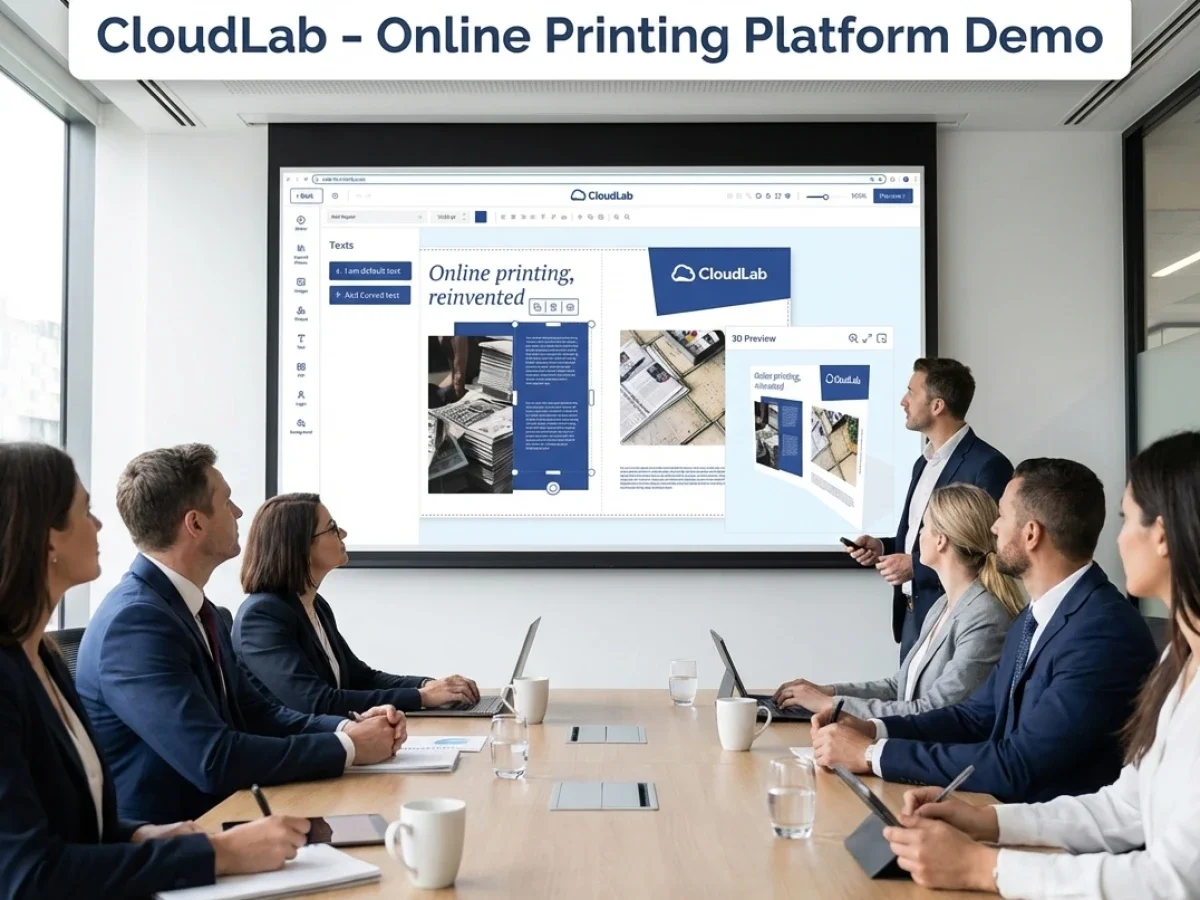
At the center of that experience is the browser-based WYSIWYG editor. Customers can personalize products directly online, work with live feedback, and understand what they are buying without needing specialist design software. That lowers friction for first-time users and shortens the path for repeat customers.
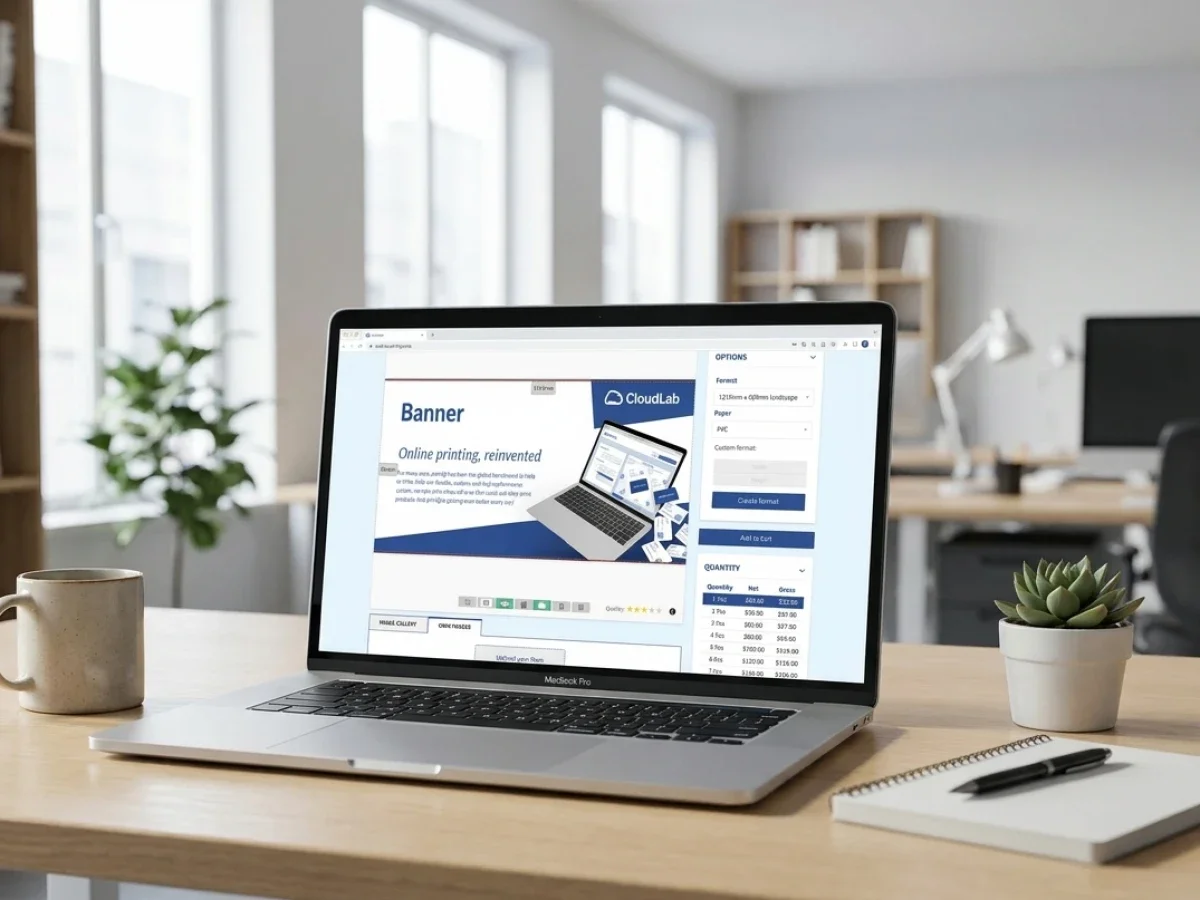
The visual layer goes further than standard editing. printQ includes 2D and 3D preview modes, which are especially useful for packaging, promotional items, labels, wide-format products, and other applications where flat artwork is not enough. Better visualization means fewer misunderstandings before production starts.
A WYSIWYG editor that helps sales, not just design
The best editor is not the one with the most knobs. It is the one that helps users finish the job with confidence. That is why printQ’s editor matters strategically, not just visually. A browser-based, intuitive editor reduces hesitation, support overhead, and abandoned orders.
For printers, that has a direct commercial effect. The easier it is for customers to personalize a product correctly, the easier it is to convert traffic into revenue. The easier it is to preview the final product, the easier it is to cut down on proof loops and avoidable corrections.
printQ also supports vectorization and embellishment visualization, which is highly practical for premium print. Customers can better understand how graphics behave and how special finishes will look before committing. That improves both perceived quality and production readiness.
Central templates, Variable Data Printing, and brand-safe reuse
For many print businesses, recurring revenue depends on templates. Business cards, flyers, signage, brochures, labels, direct mail, and branch materials often follow repeatable logic. Rebuilding them manually is expensive. Letting customers edit them freely is risky.
That is why printQ’s Template Gallery is so important. It gives users a controlled starting point instead of a blank canvas. Printers can define what remains fixed, what can be edited, and how brand rules are protected. That is useful in both public and private storefronts, but it becomes especially valuable in a b2b web to print storefront where compliance and speed need to coexist.
Variable Data Printing takes that model further. With VDP, printers can scale personalization across names, locations, barcodes, addresses, and other changing fields without recreating the design every time. In practice, that turns mass customization into a repeatable process rather than a manual service burden.
Mobile upload and omnichannel convenience
A lot of ordering friction comes from tiny practical issues, not big architectural ones. Mobile image transfer is a good example. Customers increasingly begin with assets on a phone, not on a desktop. If the platform makes that difficult, the ordering process slows down immediately.
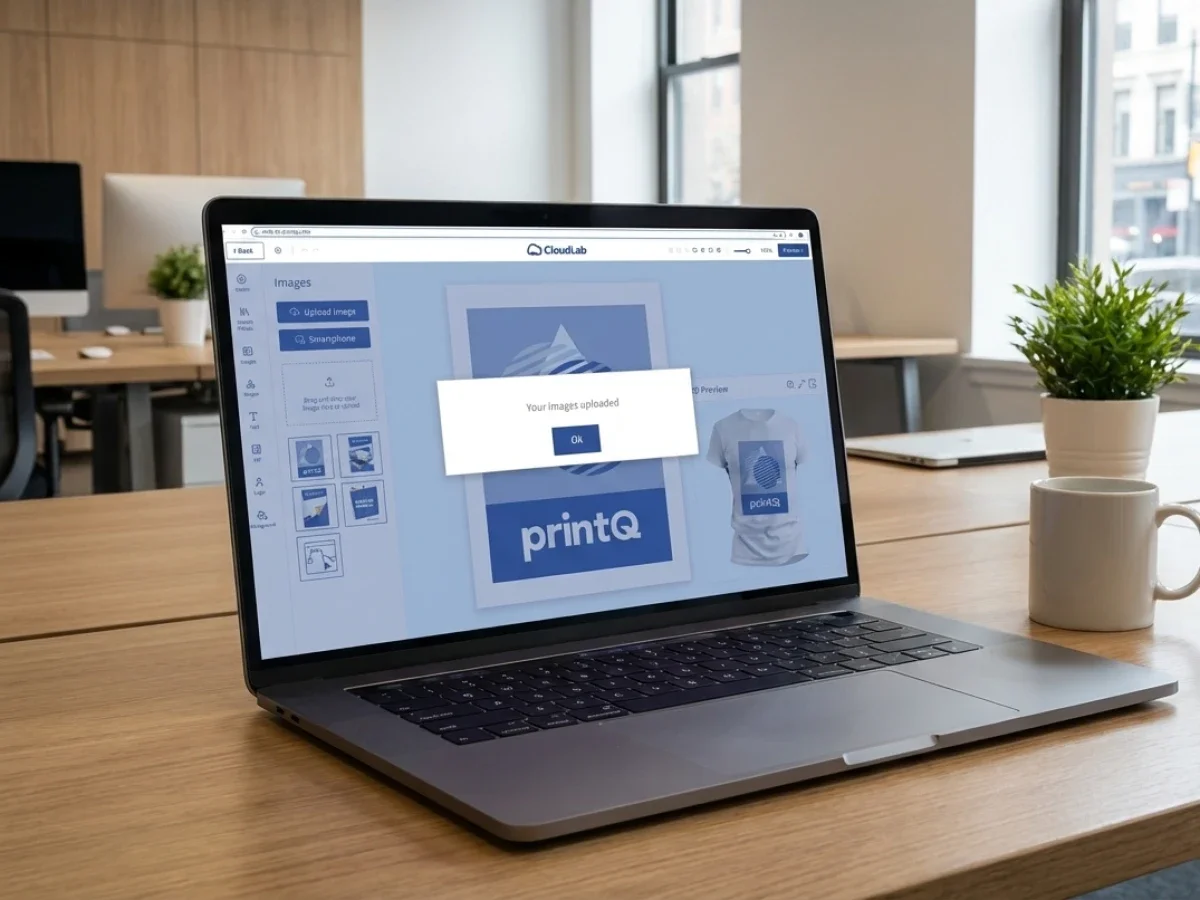
printQ solves that with QR-based mobile upload. A user can connect a smartphone to the browser session and bring images into the design flow quickly. For B2C buyers, that makes personalization easier. For local marketing teams, retail branches, or event users, it removes a surprisingly common obstacle from the approved workflow.
Small usability decisions like this matter. They make the governed path more attractive, which is exactly what printers want when they are trying to scale online orders without increasing support effort.
Why headless commerce only works when pricing, approvals, and workflows stay connected
A headless storefront is only helpful if the system behind it stays coherent. That means real-time pricing, product rules, account logic, template permissions, and workflow status all need to remain synchronized. Otherwise the front end becomes elegant while the operation underneath becomes fragile.
This is one of the biggest reasons printQ is a stronger option than lightweight integrations. It does not separate customer experience from operational reality. The storefront layer, the design layer, the commercial layer, and the production layer are designed to work together.
That matters across all store models. A b2c web to print storefront needs speed, trust, and ease of checkout. A B2B portal needs approvals, roles, restricted catalogs, and often centralized governance. In both cases, disconnected systems create errors faster than they create value.
Open shops, closed shops, roles, and approvals
Open shops are built for reach. They are ideal for printers that want to attract new customers, sell standard products online, and reduce dependence on manual quotation for straightforward jobs.
Closed shops solve a different problem. They centralize recurring orders for corporate clients, franchise groups, branch organizations, or partner networks. In these environments, the storefront is also a governance tool. Users need controlled templates, restricted access, approval rules, and often local customization within centrally defined limits.
printQ supports these models in one platform. Roles, approvals, corporate-design-safe templates, and customer-specific assortments can all be built into the portal logic. That helps printers serve enterprise-style accounts without building separate systems every time a major client has structured purchasing needs.
Preflight, lights-out automation, and production handoff
A storefront may win the order, but automation is what protects the margin. If standard jobs still need constant human correction after checkout, the business has not really modernized. It has just changed where the order enters the building.
printQ addresses that with dynamic preflight and end-to-end workflow automation. Files can be checked early for technical issues, while the system generates production-ready output and moves jobs downstream with far less manual intervention. That is where the “lights-out” promise starts to become real for printers.
This is not only an efficiency gain. It is also a quality gain. Fewer manual touches usually mean fewer chances for avoidable mistakes, shorter turnaround times, and more consistent throughput for repeat business.
ERP, MIS, and shop integration without vendor lock-in
One of the strongest arguments for printQ is openness. The platform supports integration through REST and SOAP APIs, as well as XML, JDF, XJDF, CSV, and JSON. That matters because serious print businesses rarely run on storefront software alone.
ERP, MIS, workflow tools, finance systems, and external e-commerce environments all need to exchange data. A closed system may look easier at the start, but it becomes restrictive once the business wants to automate more of the chain or preserve existing investments.
printQ’s headless and API-first structure reduces that risk. It allows printers to connect the platform to the software landscape they already rely on, while still benefiting from a modern web-to-print engine. That is a meaningful defense against vendor lock-in.
How does printQ compare with rigid web-to-print stacks?
The key difference is freedom. Rigid systems tend to define how the store must look, how integrations must behave, and how far customization can go before the project becomes expensive or impossible. That may feel manageable in the early phase, but it becomes restrictive as soon as the printer wants to differentiate, expand, or support more complex customers.
printQ takes a more strategic approach. Its native Adobe Commerce foundation provides strong commerce capabilities, while its headless architecture keeps the presentation layer and the business logic flexible. That means printers can keep growing without having to replatform every time the customer journey changes.
The same applies to multi-client needs. Agencies can run white-label storefronts for multiple clients, while printers can support several brands, portals, or market segments from one core installation. That ability to serve many models from one platform is part of what makes printQ feel premium rather than merely functional.
Just as important, printQ is built to scale from a single store to hundreds of portals. That matters because the most expensive software decision is usually the one that needs to be replaced just when the business starts gaining momentum.

How do printers implement headless commerce without disrupting the business?
The smartest implementation strategy is not “replace everything at once.” It is sequence. Start with the customer journey or ordering process that creates the most friction today. For one printer that may be the public storefront. For another, it may be a recurring B2B portal where repeat jobs still arrive by email and consume too much internal effort.
Then decide what should stay and what should move. If the existing front end performs well and the problem is weak print functionality, a headless connection can preserve the current storefront while upgrading the engine behind it. If the current store is the real problem, then a broader rollout on the Magento-based printQ foundation may make more sense.
This is where printQ’s flexibility helps. The platform can support a full print-commerce environment based on Adobe Magento / Adobe Commerce, but it can also connect through the Shop Connector and APIs to existing commerce systems such as Shopify, Shopware, BigCommerce, or custom storefronts. That gives printers more than one path forward.
Start with the right storefront logic
Before choosing the visual layer, define the use case. Is the goal public online growth, a stronger B2B ordering environment, or both? Does the business need a high-conversion B2C shop, a governed enterprise portal, or a multi-brand setup with different journeys on the same backend?
That question matters because headless commerce is not automatically the answer to every problem. Sometimes a printer benefits most from the native Adobe Commerce storefront stack because it wants a full, deeply integrated commerce environment quickly. In other cases, the real value lies in keeping an existing customer-facing site and connecting printQ underneath it.
The right choice depends on commercial strategy, not technical fashion. A good platform should support both routes without forcing a future rebuild.
Keep existing channels where they already work
Many printers hesitate because they assume headless commerce means throwing away what already works. It does not. In a strong headless model, the company keeps useful channels and upgrades the capabilities that are actually limiting growth.
That might mean leaving a corporate website untouched while adding real-time product configuration and print workflow logic behind it. It might mean connecting printQ to a current store while centralizing templates, VDP, approvals, and automation in one backend. It might also mean launching one new portal for a key account before extending the model more broadly.
This step-by-step approach reduces risk and makes internal buy-in easier. The business sees practical wins earlier, which is always more persuasive than a perfect technical plan that takes too long to show value.
Expand by use case, not by internal politics
Once the first storefront or portal is working, growth should follow demand, not organizational noise. The smartest next step is usually the use case with the clearest mix of repetition, revenue, and inefficiency — not the loudest stakeholder.
For printers, that often means repeat-order business, customer-specific B2B portals, or products with enough configuration complexity to justify automation. For agencies, it may mean white-label client storefronts. For enterprise programs, it may mean branch, franchise, or procurement-driven ordering environments.
Because printQ can scale from one shop to hundreds of multi-client portals, the business does not need a fresh platform decision for each new opportunity. That is a major advantage when growth starts compounding.
A short case from the field
A good example is Druckhäusle, the online print store launched by DCC Kästl Druckzentrum. After reviewing multiple provider options, the company chose printQ because of the intuitive editor and the fact that the whole system is based on Magento, which gave it far more freedom to extend the shop than rigid, specially programmed alternatives.
That choice quickly became practical instead of theoretical. Druckhäusle launched an open shop, planned additional closed stores, used the Template Gallery to make configuration easier for non-designers, and highlighted how approval rules in closed shops could shrink a repeat ordering process from many steps down to just a couple. It is a useful reminder that Magento integration is not an abstract technical benefit. For printers, it can directly affect growth speed, extensibility, and day-to-day efficiency.
Why this model also matters for agencies and enterprise portals
Even though the core topic is printers, the same architecture matters for agencies and enterprise users. Agencies benefit because they can build white-label storefronts for multiple clients without running separate systems for every account. That improves profitability and keeps brand rules more consistent across customer programs.
Enterprises and franchise groups benefit because headless commerce and controlled portals solve a common internal conflict. Headquarters wants consistency. Local teams want speed. printQ lets the system carry that tension by combining central templates, role-based approvals, local personalization, and a scalable ordering environment.
That is why printQ is not only useful as web to print software for printers in the narrow sense. It is also a strong fit for agencies, marketing service providers, and enterprise programs that need a web to print storefront with stronger governance and better integration.
What buyers should examine before they commit
The first issue is fit. A printer should ask whether the platform supports its actual business model, not only its current product range. Can it handle both B2C and B2B? Can it grow into closed portals, multi-brand storefronts, or enterprise procurement scenarios without being replaced?
The second issue is integration depth. A serious web to print software decision should include ERP, MIS, workflow, template governance, and production handoff from day one. If those connections are weak, the business will eventually pay for the gap with manual labor.
The third issue is operational leverage. Does the platform only help customers design online, or does it also reduce internal work? With printQ, the answer is broader because the value sits in the combination of storefronts, Adobe Commerce depth, headless connectivity, templates, VDP, mobile upload, automation, and scalable workflow logic.
That full-stack effect is why printQ is often a better strategic choice than simpler tools that demo well but flatten out once the business gets more ambitious. When a printer wants one system that can serve public sales, corporate portals, and future storefront ideas without losing production control, the platform architecture matters just as much as the editor.
Why web to print software for printers needs more than a storefront
The best web to print software for printers is not the platform with the prettiest editor or the shortest feature list. It is the platform that combines selling power, flexibility, and operational discipline in one system. That is exactly where printQ stands out. With Adobe Magento / Adobe Commerce at its core, headless and API-first connectivity, B2B and B2C storefronts in one platform, SaaS or on-premise deployment, and end-to-end automation through preflight and production, printQ gives printers a practical path to modern print commerce without locking them into a rigid model.
For growth-oriented print businesses, the real benefit is straightforward. CloudLabs printQ lets them keep the customer experience flexible while keeping the business logic, brand rules, approvals, pricing, and workflow engine strong underneath. That means faster launches, cleaner integrations, more scalable repeat business, and a future-ready platform that can grow from one store to hundreds of portals without losing control.
Web to print software for printers has moved beyond simple online editors. Printers now need platforms that can handle commerce, product logic, personalization, approvals, automation, and production in one connected environment. This article explains why headless commerce matters, how Magento integration changes the economics of online print, and why printQ is such a strong fit for modern print businesses. With Adobe Magento / Adobe Commerce at its core, a headless and API-first structure, B2B and B2C storefronts, Template Gallery, VDP, QR-based uploads, preflight, and scalable workflow automation, printQ helps printers grow without rebuilding their stack every time the market shifts.