Web to Print Open Source vs Custom Solutions

Web to print open source platforms promise flexibility, but they require strong technical resources and long term governance. Printers evaluating a custom web to print solution must consider security, scalability, and integration depth. printQ combines open architecture with enterprise reliability on Adobe Commerce. This article explores how to balance openness, customization, and operational stability.
Web to Print Open Source: Security, Community Development and Custom Web to Print Solutions
Web to print open source is often associated with freedom and flexibility. The idea of accessing source code, modifying features, and avoiding licensing fees appears attractive. For printers seeking independence, open source sounds like a strategic advantage.
However, the decision between open source frameworks and a structured, enterprise ready platform is more complex. Security responsibility, update cycles, integration depth, and scalability must be evaluated carefully.
When printers assess their long term roadmap, they need to ask whether open source alone provides operational stability or whether a professionally engineered custom web to print solution offers greater reliability.
What Web to Print Open Source Really Means
Open source refers to software whose source code is publicly available and can be modified. In the web to print environment, this typically involves platforms that allow developers to adapt storefront logic and production features.
This model provides autonomy. Development teams can implement custom features and adjust user interfaces without waiting for vendor releases.
However, openness also shifts responsibility. Security patches, compatibility updates, and performance optimization depend on internal expertise or external agencies.
For printers without dedicated development teams, this responsibility can become a structural burden.
Security Considerations in Open Source Environments
Security is not optional in e commerce driven print businesses.
Online print shops process payment data, personal information, and proprietary artwork files. Vulnerabilities can result in financial loss and reputational damage.
In a web to print open source setup, security depends on continuous maintenance. Community driven updates may not align with enterprise timelines. Compatibility between extensions can create vulnerabilities.
By contrast, printQ operates on Adobe Commerce, which follows structured security release cycles and enterprise level patch management. Printers benefit from a professionally maintained core without sacrificing flexibility.
Security becomes predictable rather than reactive.
Community Development Versus Structured Roadmaps
Open source projects thrive on community contribution. Developers share improvements and extensions. Innovation can emerge organically.
However, community momentum fluctuates. Feature continuity and long term roadmap stability are not guaranteed. Printers must evaluate whether community contributions align with their business model.
printQ follows a structured development roadmap backed by a dedicated product team. Updates integrate customer feedback while preserving system stability.
Innovation is guided rather than incidental. This balance ensures that new features enhance operational performance without disrupting integration layers.
Custom Web to Print Solution Strategies
Many printers aim to build a custom web to print solution tailored precisely to their workflows. Customization allows differentiation in competitive markets.
There are two primary approaches:
- Building from an open source foundation with internal development
- Customizing a robust enterprise platform through APIs and extensions
The first option requires continuous engineering investment. The second leverages an existing architecture while allowing controlled customization.
printQ supports the second model. Its API first design enables custom integrations and frontend adjustments without rewriting the core system.
printQ as a Structured Alternative to Pure Open Source
printQ is not open source in the traditional sense. It is a premium web to print platform built natively on Adobe Commerce.
Adobe Commerce itself originates from an open source ecosystem, yet it operates with enterprise governance and security management. This combination provides openness within a structured framework.
printQ extends this foundation with production specific features including:
- B2C storefronts and B2B portals within one system
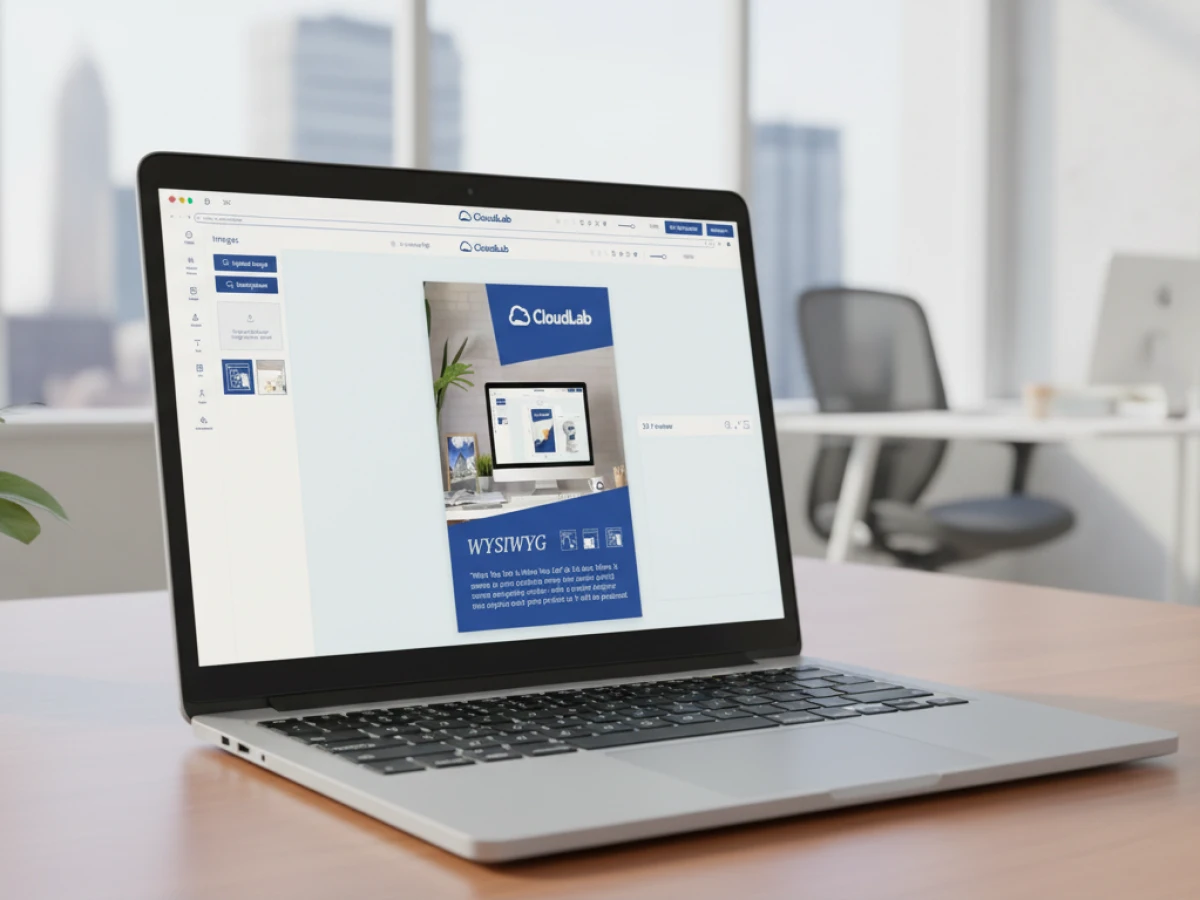
- Advanced WYSIWYG editor with 2D and 3D preview
- Automated preflight and production ready PDF generation
Printers gain flexibility without assuming full development risk.
Magento Integration as a Strategic Advantage
Being the only web to print solution built fully on Adobe Commerce gives printQ structural strength.
Magento provides a mature commerce backbone including customer accounts, advanced pricing logic, shipping modules, and payment integrations. This eliminates the need to rebuild essential e commerce infrastructure.
For IT teams, the Magento ecosystem offers extension compatibility and long term viability.
Open source principles are preserved in extensibility, but enterprise discipline ensures stability.
API First Architecture and Vendor Independence
One concern often raised in web to print open source discussions is vendor lock in.
printQ addresses this through an API first and headless architecture. Frontend and backend layers operate independently.
Printers can integrate ERP and MIS systems via REST, SOAP, XML, JDF, CSV, or JSON interfaces. This ensures data portability and system interoperability.
Independence does not require unmanaged code access. It requires structured openness.
Automation and Operational Reliability
Open source storefronts frequently focus on visual customization. Production automation may require significant additional development.
printQ integrates automated preflight checks that validate resolution, bleed, and color profiles. Production ready PDFs are generated automatically.
Routine jobs can proceed directly into production workflows without manual intervention. This lights out logic is embedded into the system core.
For printers scaling operations, automation reliability outweighs theoretical code access.
Multi Client Scalability and Growth
Growth often requires managing multiple brands, storefronts, or regional portals.
printQ supports multi client architecture within one installation. Agencies operate white label portals. Corporate clients manage decentralized B2B environments with centralized control.
This scalability is proven across more than 1000 live portals worldwide.
An open source framework may allow similar expansion, but it requires ongoing engineering resources to maintain performance and consistency.
B2B and B2C in One Unified Platform
Many open source platforms specialize either in retail storefronts or in corporate procurement portals. Managing both models often demands separate systems.
printQ combines B2C and B2B in one environment. Open shops serve retail customers with intuitive configuration and checkout. Closed portals support role based permissions, approval workflows, and CI controlled templates.
Unified architecture simplifies administration and ensures consistent production logic.
Deployment Flexibility: SaaS or On Premise
Infrastructure decisions influence risk management.
printQ can be deployed as SaaS in the cloud or installed on premise. Both options provide identical feature sets.
Cloud deployment supports rapid rollout and managed updates. On premise installation offers full hosting control for enterprises with strict compliance requirements.
Flexibility allows printers to align technology with IT governance strategy.
Case Insight: Druckhäusle
Druckhäusle evaluated multiple options before implementing printQ.
The decisive factor was not theoretical openness. It was integration reliability and automation depth.
Within months, online orders flowed directly into production systems. Manual coordination decreased. Operational predictability improved.
Structured customization proved more valuable than unrestricted code access.
Case Insight: Velocity Graphics
Velocity Graphics required a highly customized B2B portal for a nationwide restaurant chain.
Instead of building from scratch, they leveraged printQ’s configurable templates and API connectivity. Integration with backend systems ensured production feasibility.
Customization occurred within a stable architecture. This minimized risk while achieving tailored functionality.
Long Term Cost Considerations
Open source often appears cost effective due to licensing savings. However, development, maintenance, and security management require ongoing investment.
A custom web to print solution built on a structured platform distributes costs more predictably. Core updates are maintained centrally. Customizations focus on business differentiation rather than infrastructure repair.
When evaluating total cost of ownership, printers must consider internal engineering capacity and risk exposure.
Strategic Decision Framework
When deciding between web to print open source and a structured enterprise platform, printers should evaluate:
- Internal development capacity and security expertise
- Required integration depth with MIS and ERP systems
- Long term scalability goals
Openness is valuable, but unmanaged complexity can erode operational efficiency.
printQ demonstrates that flexibility, integration, and stability can coexist within a premium web to print environment.
Web to Print Open Source Versus Structured Custom Solutions
Choosing web to print open source requires accepting full responsibility for security, updates, and system integration. For some organizations with strong internal development teams, this approach may be viable.
However, many printers benefit from a custom web to print solution built on a professionally maintained foundation. printQ combines Adobe Commerce integration, API first architecture, automated preflight, B2B and B2C support, and proven scalability across more than 1000 live portals. It delivers openness through structured extensibility rather than unmanaged code access.
For printers seeking flexibility without sacrificing reliability, printQ provides a balanced path between open architecture and enterprise stability.
Web to print open source platforms promise freedom, but they also require strong security management and continuous development resources. Printers evaluating a custom web to print solution must balance flexibility with operational stability. printQ combines Adobe Commerce, API first integration, automated workflows, and scalable B2B and B2C architecture in one secure platform. For print businesses seeking long term reliability with customization freedom, structured openness delivers stronger results than unmanaged complexity.