Web to Print Shop Software for Modern Print Businesses

Web to print shop software enables printers to sell customizable print products online while automating production workflows. Modern platforms combine ecommerce storefronts, online design tools, and production automation into one system. printQ delivers a powerful solution built on Adobe Commerce that supports both B2B portals and B2C online print shops. The result is scalable web to print for printers that improves efficiency, personalization, and digital growth.
Why Web to Print Shop Software Is Reshaping the Printing Industry
Digital transformation has fundamentally changed how print businesses operate. Customers increasingly expect the same convenience from print services that they experience when purchasing other products online. They want to design products quickly, preview results instantly, and complete orders without lengthy communication with printers.
This shift has made web to print shop software an essential technology for modern printing companies.
A Web to Print platform allows printers to create digital storefronts where customers can configure and personalize print products directly within a browser interface. Instead of exchanging files through email or requesting manual quotes, the entire ordering process becomes automated.
Customers design products online, confirm their layout through a preview, and place their order immediately.
Behind the scenes, the platform prepares the print files automatically and transfers them into the production workflow.
Platforms like printQ provide a complete environment for managing this process.
printQ is a premium Web to Print platform developed by CloudLab and designed for both B2B and B2C print environments. Built on Adobe Magento and Adobe Commerce, printQ combines advanced ecommerce capabilities with powerful production automation.
For printers looking to scale their digital business, this combination creates a robust foundation for modern print commerce.
What Web to Print Shop Software Actually Does
Understanding the purpose of web to print shop software begins with understanding the traditional print ordering workflow.
Historically, print orders required multiple manual steps.
Customers contacted printers to request a quote. Designers prepared artwork files and proofs. Customers reviewed and approved those proofs. Only after this process could production begin.
While this workflow worked for custom projects, it became inefficient for high volume print orders.
Web to Print platforms replace this manual process with automated digital workflows.
Customers access an online storefront where they browse available print products. They select a product, customize it using an online editor, review a preview, and place the order.
Once the order is submitted, the system automatically generates production ready files.
This automated process eliminates the need for manual file preparation and significantly accelerates production timelines.
Web to Print for Printers: A Digital Business Model
The adoption of web to print for printers represents more than a technological upgrade. It also introduces a new business model for the print industry.
Instead of relying primarily on manual order processing, printers can operate digital storefronts that function similarly to ecommerce platforms.
Customers interact with the system directly, placing orders without requiring direct communication with a sales representative.
This model allows print providers to serve a larger number of customers without increasing staff.
Automation reduces operational costs while improving turnaround times.
printQ supports this model by integrating ecommerce infrastructure with Web to Print functionality.
Because the platform is built on Adobe Commerce, printers gain access to advanced ecommerce tools such as customer accounts, product catalogs, payment systems, and order management.
These capabilities allow print businesses to operate like modern ecommerce companies while maintaining full control over production workflows.
The Core Components of Web to Print Shop Software
Successful Web to Print platforms combine several technologies that work together to create a seamless digital workflow.
Online storefront infrastructure:
Customers browse products, configure specifications, and place orders through a digital shop.
Interactive design tools:
Users personalize print products through browser based editors.
Automated production workflows:
The system prepares print ready files and transfers them into production.
printQ integrates all of these components into a unified environment.
Because the system connects the storefront directly with the production pipeline, printers can handle large volumes of orders efficiently.
This integration is essential for scaling digital print operations.
Online Design Tools and Customer Personalization
Personalization has become a central feature of modern web to print shop software.
Customers expect the ability to customize print products directly within the ordering interface.
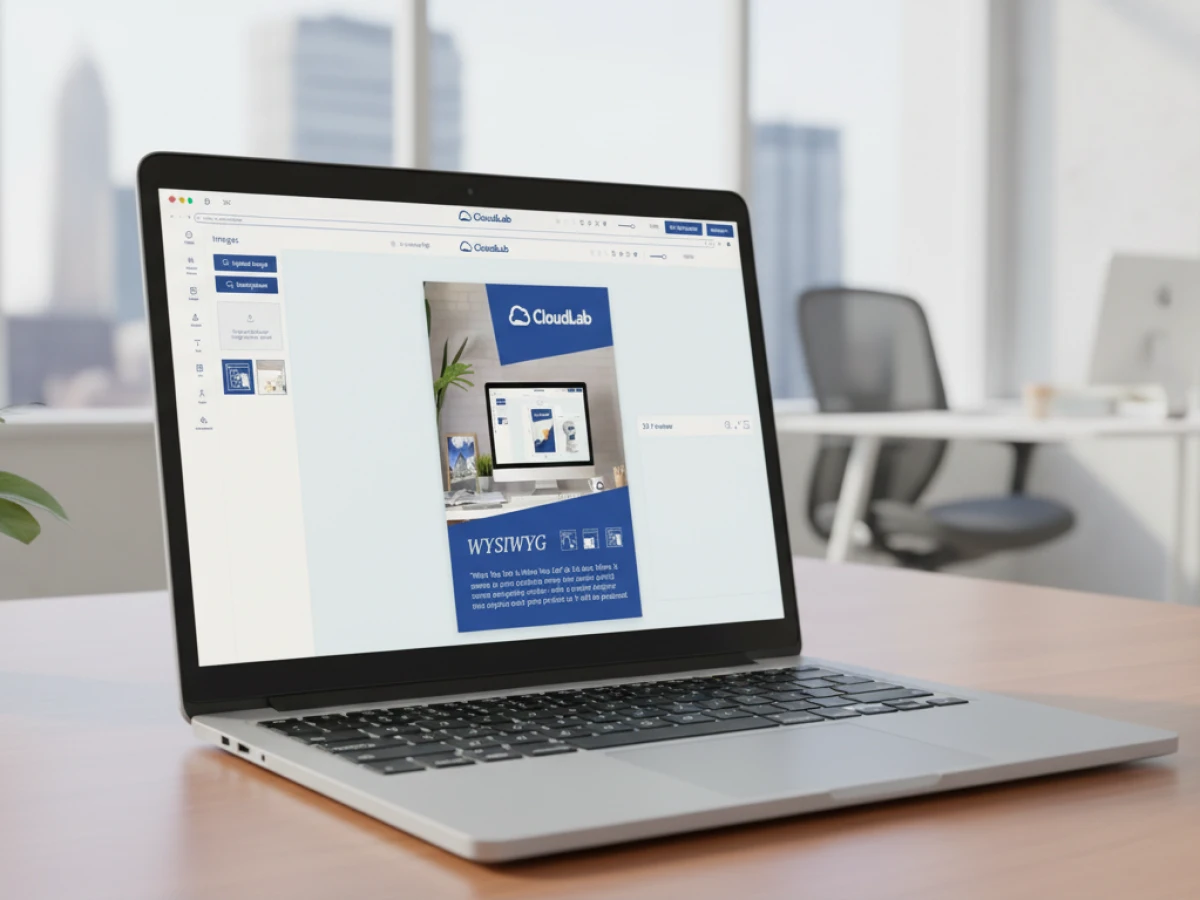
printQ includes a powerful WYSIWYG online editor that allows users to modify designs visually.
Customers can change text, upload images, adjust colors, and reposition graphic elements directly within the browser.
The editor provides real time previews that show how the final product will appear when printed.
This visual feedback helps customers verify their designs before submitting an order.
For print providers, the design tool ensures that customer generated layouts remain compatible with production standards.
Templates and design constraints guide users through the customization process while preventing technical errors.
Template Libraries and Mass Customization
Template systems are an important feature of modern Web to Print platforms.
Templates provide predefined layouts that customers can personalize while maintaining consistent design structures.
printQ includes a Template Gallery that allows printers to offer ready to customize templates for common products.
Customers can select a template and adjust specific elements such as text, images, or contact information.
This approach simplifies the design process and reduces the risk of layout errors.
Templates also support Variable Data Printing.
Variable Data Printing allows printers to produce personalized print items in large volumes. Elements such as names, addresses, or promotional codes can change dynamically across individual pieces.
This capability enables highly targeted marketing campaigns and personalized print products.

Supporting B2C Print Commerce
Many print providers use web to print shop software to operate B2C online print shops.
Consumers order products such as business cards, posters, invitations, or promotional materials directly through the storefront.
These customers typically expect a fast and intuitive ordering process.
printQ provides an interface that simplifies product configuration and design customization.
Customers can create designs quickly through the online editor and confirm their layout through visual previews.
Once the order is submitted, the system automatically generates production ready files.
This automated workflow allows printers to serve large numbers of consumer customers efficiently.
Supporting B2B Print Portals
While B2C commerce is important, many printers rely heavily on corporate clients.
Large organizations often require controlled ordering portals where employees can order branded materials while maintaining corporate design standards.
printQ supports these web to print for printers scenarios through closed storefront portals.
Corporate users access secure environments that contain predefined templates and product catalogs.
Employees can customize specific elements such as contact details or regional messaging while the overall design remains consistent with brand guidelines.
This approach allows companies to decentralize print ordering while preserving brand consistency.
Automation and the Print Production Workflow
Automation is one of the most significant advantages of Web to Print technology.
Manual file preparation can create bottlenecks in print production, particularly when handling large numbers of orders.
printQ integrates automated preflight checks and file generation into its workflow.
When a customer submits a design, the platform analyzes the file to verify that it meets production standards.
Resolution, color profiles, and layout parameters are checked automatically.
If the file meets the required specifications, the system generates a print ready PDF.
This file can move directly into the production environment.
Such automation allows printers to operate efficient workflows where routine orders move from the storefront to production without manual intervention.
Mobile Integration and Content Upload
Modern users often rely on mobile devices for capturing and storing images.
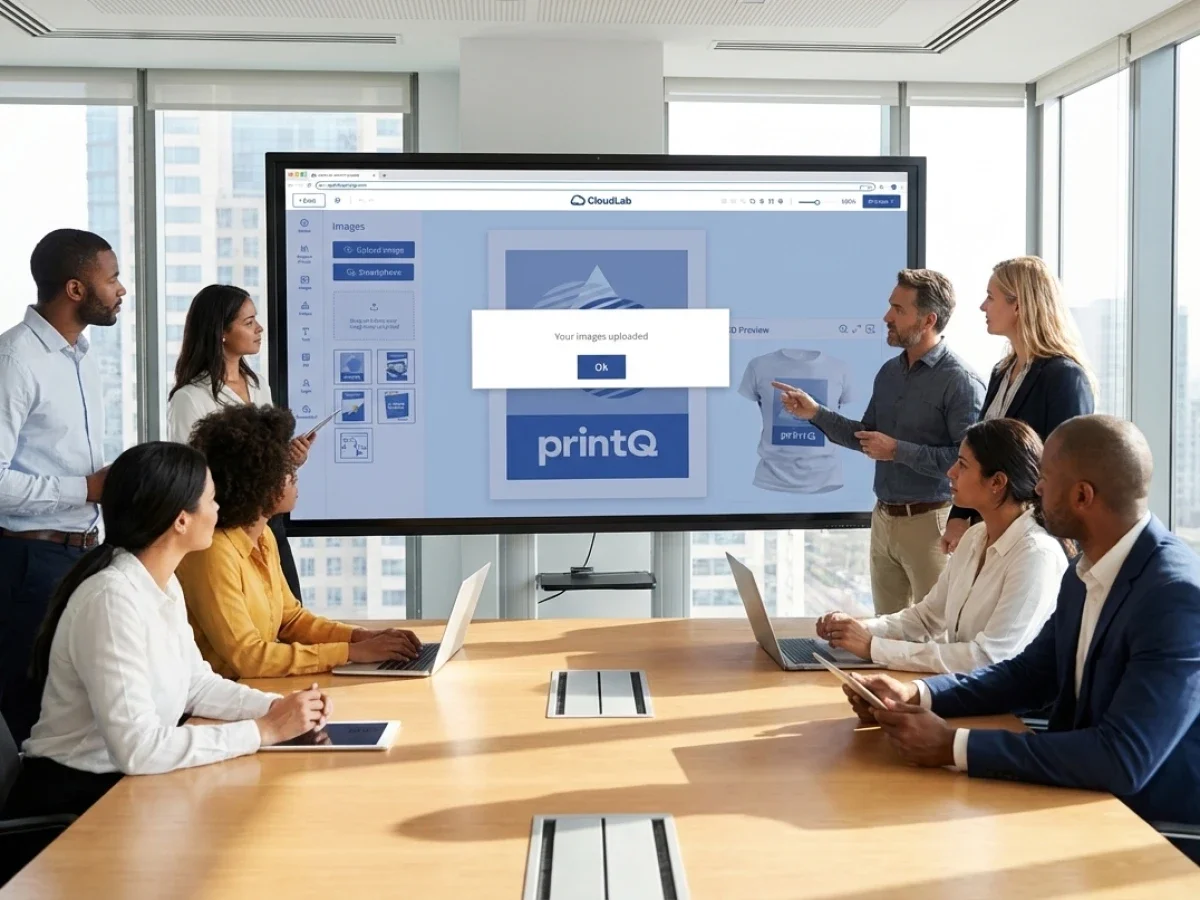
printQ supports mobile integration through QR code based upload functionality.
Customers designing products on a desktop can scan a QR code with their smartphone and upload images directly into the design editor.
These images appear immediately within the layout preview.
This capability simplifies the process of incorporating personal photos or graphics into print products.
It also improves the overall usability of the platform.
Integrating Web to Print Platforms with Business Systems
Large print operations typically rely on multiple software systems to manage business processes.
Enterprise resource planning platforms, management information systems, and logistics tools all play a role in the production workflow.
printQ supports integration with these systems through open APIs and structured data exchange formats.
The platform supports REST and SOAP web services as well as XML, JDF, CSV, and JSON data formats.
These integrations allow order data to flow automatically between the storefront and other business systems.
Production tickets can be generated automatically within the management system.
Shipping information can be transmitted directly to logistics platforms.
This connectivity ensures efficient operations across the entire printing infrastructure.
Multi Client Architecture and Scalability
Print providers often serve multiple clients with different requirements.
Some printers operate several branded storefronts for different markets or corporate customers.
printQ supports this complexity through its multi client architecture.
A single installation can host numerous storefronts and portals simultaneously.
Each storefront can have its own branding, product catalog, and pricing structure.
This architecture allows printers to scale their digital operations without deploying separate systems for each customer.
Agencies can also use this capability to create white label print portals for their clients.
Real World Examples of Web to Print Adoption
Several print providers have successfully implemented Web to Print technology to expand their digital capabilities.
SAXOPRINT, one of Europe’s leading online print companies, manages a wide range of print products through digital storefronts.
Druckhäusle in Germany launched an online print shop that allows customers to design and order products through an automated platform.
Velocity Graphics in the United States created a B2B portal that allowed franchise locations to customize and order marketing materials through structured templates.
These examples demonstrate how web to print shop software can support both consumer and corporate print environments.
The Future of Web to Print Technology
The evolution of Web to Print technology continues as digital commerce grows.
Future platforms will likely incorporate artificial intelligence tools that assist users during the design process.
AI may suggest layouts, recommend images, or automatically optimize designs for print production.
Advanced visualization technologies may allow customers to interact with realistic product simulations before ordering.
Cloud infrastructure will continue to improve scalability and performance.
Platforms like printQ are designed to support these innovations because of their flexible architecture and integration capabilities.
Why Web to Print Shop Software Is Essential for Modern Printers
The adoption of web to print shop software has become a defining trend in the printing industry.
These platforms connect ecommerce storefronts, design tools, and automated production workflows into a single digital environment.
By automating many steps that were previously handled manually, Web to Print platforms allow printers to scale their operations efficiently.
CloudLabs printQ represents a powerful example of modern web to print for printers.
Built on Adobe Magento and Adobe Commerce, printQ combines advanced ecommerce capabilities with powerful design tools and production automation.
For printers, agencies, and enterprises seeking to expand their digital print operations, printQ provides a comprehensive platform for managing modern Web to Print shops.