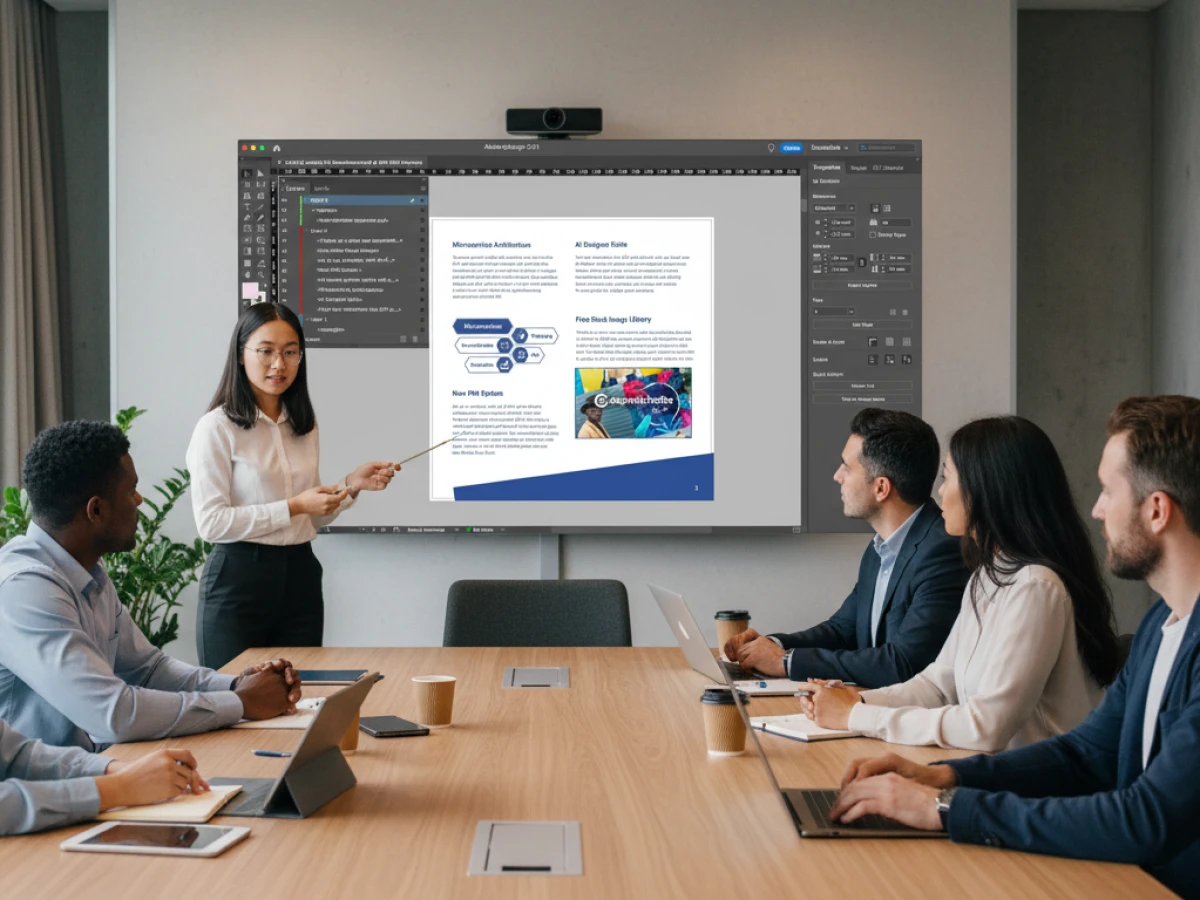
Web to Print for Printers and MIS Integration
Web to print for printers must integrate deeply into existing MIS systems to unlock true automation. Modern easy-to-use print shop environments like printQ connect storefronts, editors, and production via open APIs. Built on Adobe Commerce, printQ unifies B2B and B2C workflows in one scalable platform. The result is faster processing, fewer errors, and measurable operational efficiency.
Web to Print for Printers: Integration in Existing MIS Systems and Easy-to-Use Print Shop Software
Web to print for printers is no longer about launching an online shop. It is about integrating digital order capture directly into existing production and management systems. Without MIS integration, web to print remains isolated from the core business.
Modern print operations depend on Management Information Systems to control job tickets, scheduling, costing, invoicing, and reporting. If online orders do not flow seamlessly into this environment, manual intervention continues. That limits scalability and increases error risk.
This is where printQ defines a new standard for integration and usability.
Why MIS Integration Is the Real Challenge
Most printers already operate with an established MIS. Replacing it is not realistic. The critical question is how web to print for printers can connect to that infrastructure without disruption.
An MIS system manages production logic, machine allocation, pricing rules, and delivery tracking. A web storefront captures customer intent. The value lies in synchronizing both layers.
True integration means: automatic job ticket creation, synchronized status updates, and consistent pricing logic across systems. printQ supports exactly that through open APIs and standardized data formats.
printQ as a Premium Web to Print Infrastructure
printQ is not a standalone design tool. It is a premium web to print software built natively on Adobe Commerce. This integration delivers full e commerce functionality alongside deep production connectivity.
Because printQ runs on Adobe Commerce, it inherits enterprise level shop features such as customer segmentation, advanced pricing rules, tax logic, and shipping configuration. At the same time, it remains production centric.
Printers gain an environment that merges sales, order processing, and backend automation in one unified system.
Open APIs and Data Standards for MIS Connectivity
Integration requires flexibility.
printQ supports REST and SOAP web services, along with structured data exchange formats such as XML, JDF, CSV, and JSON. These interfaces allow direct communication between storefront and MIS.
When a customer completes an order, the system can automatically:
- Generate a production ready PDF
- Create a job ticket in the MIS
- Transfer configuration data including finishing and material parameters
This eliminates double entry and reduces administrative workload. MIS systems receive structured, validated data instead of emails or manual notes.
Headless Architecture for Long Term Flexibility
Many printers worry about vendor lock in.
printQ follows an API first and headless architecture. Frontend and backend operate independently. This enables printers to maintain custom storefront designs while relying on the robust printQ core.
For IT teams, this means that integration with existing systems remains adaptable. Future MIS upgrades or ERP changes do not require rebuilding the entire storefront.
Flexibility is not a feature. It is a strategic safeguard.
B2C and B2B in One Unified Environment
Web to print for printers must support multiple business models.
printQ enables open B2C shops and closed B2B portals within the same installation. This eliminates the need to operate separate systems for retail and corporate clients.
For B2C: intuitive product configuration, transparent pricing, and seamless checkout drive conversion.
For B2B: role based access, approval workflows, individual pricing agreements, and CI controlled templates ensure structured procurement.
The ability to manage both models centrally reduces complexity and operational cost.
Easy-to-Use Print Shop Software Without Compromising Depth
Usability matters.
An easy-to-use print shop must allow customers to configure products without technical barriers. At the same time, the backend must capture all production relevant parameters.
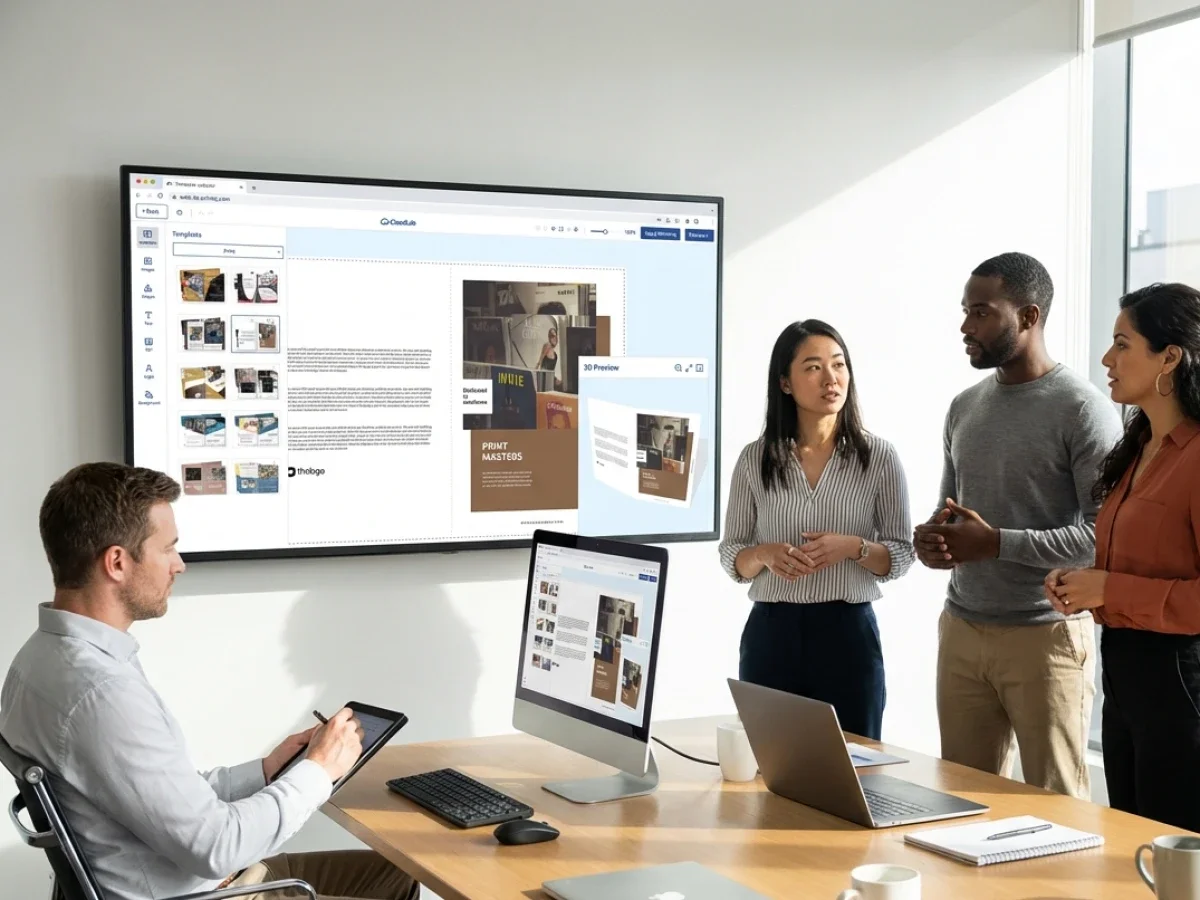
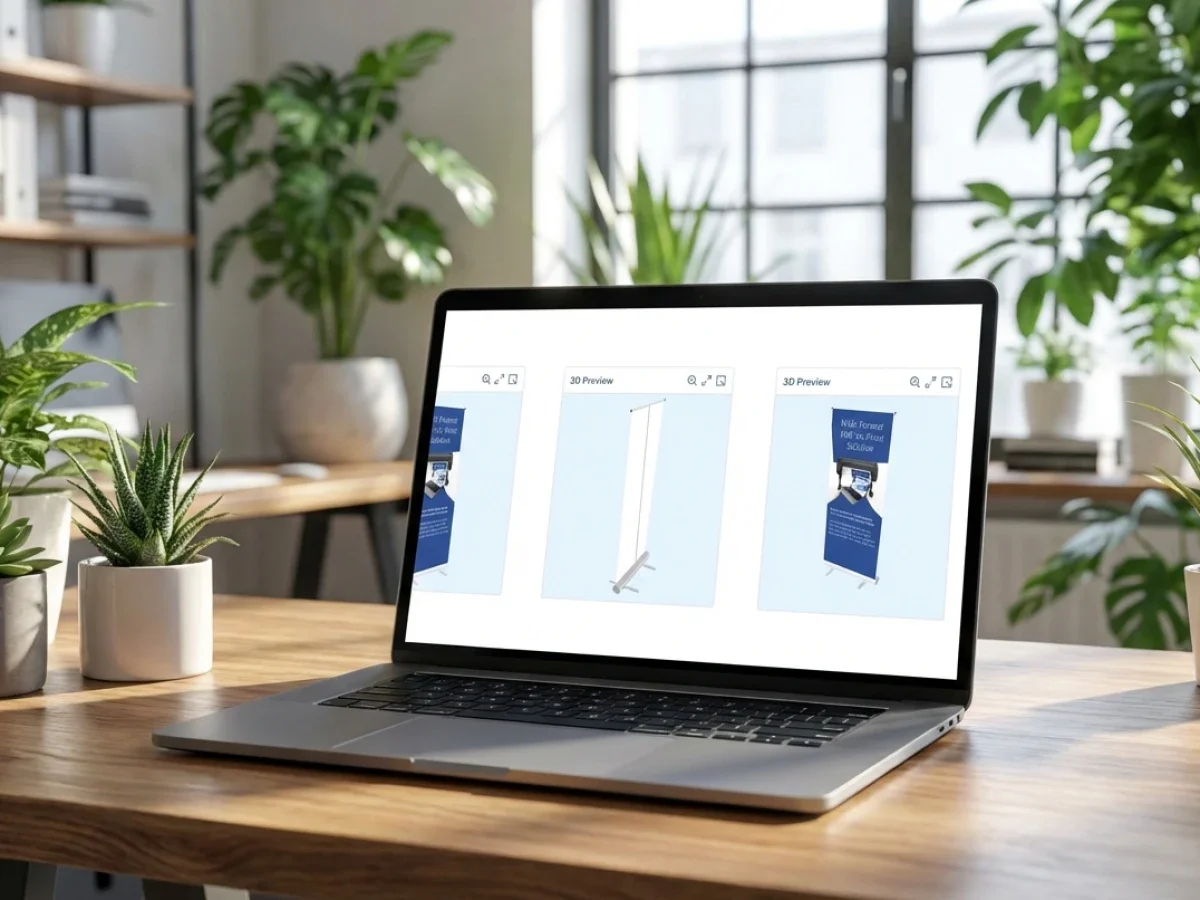
printQ combines both layers through its WYSIWYG online editor. Customers see live 2D and 3D previews, including finishing simulations and alignment support.
Behind the scenes, the system translates visual selections into structured production data. MIS systems receive precise information about format, material, and finishing options.
Ease of use does not mean reduced functionality. It means intelligent abstraction.
Template Gallery and Variable Data Printing
Repeatability drives efficiency.
printQ includes a comprehensive template gallery that enables printers to provide preconfigured layouts for common products. Customers personalize within defined boundaries.
Variable Data Printing allows large scale personalization without manual design adjustments.
This is particularly relevant for corporate clients who reorder business cards, marketing materials, or localized campaigns.
By structuring recurring jobs through templates, printers reduce design effort and production variability.
Mobile Upload and Workflow Integration
Modern customers work across devices.
printQ supports mobile upload via QR code login. Users scan a code from the desktop editor and transfer images directly from their smartphones into the layout.
This reduces friction in B2C scenarios. It also accelerates internal workflows in B2B environments.
Existing design files from tools such as InDesign can be integrated into the workflow. Printers reuse professional templates rather than recreating them for the web environment.
Efficiency improves at both customer and production levels.
Automated Preflight and Lights Out Production
Manual file checks consume time.
printQ integrates automated preflight logic that validates resolution, color profiles, bleed, and layout integrity before production begins.
Production ready PDFs are generated automatically. Files include all necessary technical elements for press output.
Routine jobs can move directly into production without human intervention. This lights out capability reduces turnaround time and minimizes error probability.
Automation is not optional. It is the foundation of scalable web to print for printers.
SaaS or On Premise Deployment
Printers operate in diverse IT environments.
printQ offers deployment as SaaS in the cloud or as an on premise installation. Both models provide full feature parity.
Cloud deployment supports rapid implementation and managed infrastructure. On premise installation offers full control for enterprises with specific compliance requirements.
The choice depends on strategic priorities, not on technical limitations.
Scaling from One Storefront to Hundreds of Portals
Growth requires architectural foresight.
printQ supports multi client environments. A single installation can manage numerous storefronts with shared backend logic.
Agencies operate white label portals for different clients. Print groups maintain regional shops with consistent production workflows.
Scalability does not require system duplication. Centralized administration ensures operational efficiency.
More than 1000 live portals worldwide confirm this capability.
Case Insight: SAXOPRINT
SAXOPRINT manages complex product portfolios and high order volumes. Such scale requires reliable integration between storefront and production systems.
printQ supports intricate product configurations while ensuring stable data transfer into backend environments.
The case demonstrates that enterprise level web to print for printers must combine performance, configurability, and integration depth.
Case Insight: Druckhäusle
Druckhäusle transitioned into online commerce using printQ.
The decisive factor was not only the storefront design. It was the ability to integrate online orders into existing workflows without disrupting production.
By automating routine jobs, the company reduced manual coordination and improved delivery times.
Digital transformation succeeded because MIS integration was prioritized.
Case Insight: Velocity Graphics
Velocity Graphics implemented a closed B2B portal for a nationwide restaurant chain.
Large format menu boards were personalized locally while maintaining brand consistency. Integration into backend systems ensured production feasibility and accurate scheduling.
The project illustrates how easy-to-use print shop software can coexist with complex production logic.
Operational Benefits for Printers
Integration produces measurable improvements.
Printers benefit from:
- Reduced manual data entry and administrative workload
- Faster order processing and shorter turnaround times
- Improved accuracy through automated validation
These gains directly influence profitability.
Web to print for printers must support business performance, not just digital visibility.
Benefits for Agencies and Corporate Clients
Agencies operate multiple client portals. printQ allows them to manage these within one infrastructure.
Corporate clients gain controlled procurement environments. Closed shops ensure compliance with brand standards and pricing agreements.
Decentralized teams order autonomously while central departments retain oversight.
Efficiency and control are not mutually exclusive.
Magento Integration as a Strategic Advantage
printQ is the only web to print solution built fully on Adobe Commerce.
This provides access to a mature commerce ecosystem with advanced extension capabilities. Loyalty programs, reporting tools, and payment integrations can be deployed without custom development.
Printers avoid rebuilding basic shop features from scratch.
Commerce and production operate within a single technological framework.
Long Term Viability and Vendor Independence
Technology decisions affect future competitiveness.
printQ’s open architecture ensures that printers are not locked into closed ecosystems. Data remains accessible. Integrations remain configurable.
Continuous development and global deployment experience strengthen long term reliability.
A web to print system must evolve alongside production technology and market expectations.
The Strategic Role of Easy-to-Use Print Shop Platforms
Ease of use is not cosmetic. It influences order accuracy and customer satisfaction.
When customers understand product configuration clearly, they make informed decisions. Fewer corrections are required.
When production data flows directly into MIS systems, internal coordination improves.
An easy-to-use print shop becomes a strategic interface between customer and machine.
Web to Print for Printers as Integrated Infrastructure
Web to print for printers must extend beyond storefront functionality. True value arises when online configuration integrates seamlessly with MIS systems and production workflows.
printQ combines Adobe Commerce integration, API driven connectivity, automated preflight, and multi client scalability in one unified environment. As an easy-to-use print shop software for B2B and B2C models, it reduces administrative burden, increases production accuracy, and supports sustainable growth.
Printers seeking operational excellence require integration depth, not isolated tools. Web to print for printers powered by printQ delivers precisely that foundation.
Web to print for printers must integrate deeply with existing MIS systems to unlock true efficiency. printQ combines Adobe Commerce, open APIs, automated preflight, and scalable B2B and B2C storefronts in one unified platform. As an easy-to-use print shop solution, it connects customer configuration directly to production, reducing manual workload and improving accuracy. For modern printers, integration is not optional. It is the key to sustainable growth.