Best Web to Print Solution for Scalable Print Shops
Choosing the best web to print solution is crucial for printers, agencies, and enterprises that want to automate print ordering and scale operations. Modern web to print systems combine storefronts, design tools, automation, and integrations into a single platform. Solutions like printQ stand out through deep ecommerce integration, open architecture, and powerful web to print API capabilities. The result is efficient production workflows, scalable B2B portals, and consistent brand management.
The Evolution Toward the Best Web to Print Solution
The printing industry has experienced a profound transformation over the past decade. Traditional ordering methods that relied on email communication, manual file preparation, and fragmented production processes are rapidly disappearing.
Businesses now expect print procurement to be as efficient and intuitive as ordering any other product online. They want the ability to customize products instantly, approve designs quickly, and track production progress without lengthy communication cycles.
This demand has accelerated the adoption of web to print technology.
Yet not all platforms deliver the same capabilities. Some systems provide only simple online editors or basic storefronts. Others attempt to automate workflows but lack integration with ecommerce infrastructure or production systems.
To compete in today’s digital print environment, companies require something more robust. They need the best web to print solution available. Such a solution must combine powerful design tools, scalable storefront architecture, automation, and enterprise level integrations.
printQ has emerged as a strong example of this next generation approach.
Developed by CloudLab, printQ represents a premium web to print platform designed specifically for modern printers, agencies, and enterprise organizations. Built on Adobe Commerce technology, the system combines advanced ecommerce capabilities with highly automated print production workflows.
The result is a comprehensive environment that supports both B2C online print shops and complex B2B print procurement portals.
What Defines the Best Web to Print Solution Today
Before evaluating specific platforms, it is important to understand what actually defines the best web to print solution in today’s market.
The answer goes beyond having a simple online designer. Modern web to print systems must connect every stage of the print process, from customer interaction to production automation.
Several characteristics define a truly effective platform.
Comprehensive storefront capabilities:
Customers must be able to browse products, configure options, and place orders through intuitive ecommerce interfaces.
Integrated design environments:
Users should be able to customize products directly in the browser with real time previews.
Automation of production workflows:
Orders must transition smoothly from configuration to print ready files without manual intervention.
Enterprise integrations:
The system should connect with ERP, MIS, logistics, and ecommerce platforms.
Scalability and flexibility:
The solution must support everything from a single online shop to hundreds of client portals.
printQ addresses each of these requirements through a unified architecture.
Because it is built on Adobe Commerce, the platform inherits one of the most powerful ecommerce infrastructures available. At the same time, it adds specialized web to print functionality that transforms the storefront into a fully automated print ordering environment.
This combination is a key factor in positioning printQ among the strongest contenders when evaluating the best web to print solution.
Why Modern Web to Print Systems Matter for Print Businesses
Print service providers operate in an increasingly competitive environment. Customers expect faster turnaround times, lower costs, and greater flexibility.
Manual order processing cannot keep up with these expectations.
Modern web to print systems enable printers to streamline operations and scale their services without expanding internal resources.
Instead of manually preparing each job, the system handles many steps automatically.
Customers configure their products online. Templates enforce design rules. Preflight checks verify file quality. Production files are generated automatically.
The operational advantages are significant.
Efficiency improvements:
Automated workflows reduce manual intervention.
Higher order volumes:
Printers can process more jobs without increasing staff.
Customer convenience:
Clients can place orders anytime through online portals.
Consistent design standards:
Templates ensure brand compliance across all materials.
printQ embodies these principles through a highly integrated workflow architecture.
Orders submitted through the storefront automatically generate production ready PDF files that meet professional printing standards. This reduces preparation time and allows print operators to focus on production rather than file corrections.

B2C Storefronts and B2B Print Portals in One Platform
One of the most powerful features of modern web to print systems is their ability to support multiple business models simultaneously.
Some printers operate public ecommerce stores for general customers. Others focus on corporate clients that require secure ordering portals and customized product catalogs.
The best web to print solution must support both.
printQ accomplishes this through a flexible storefront architecture.
Open Shops for Online Print Commerce
Open shops function as public ecommerce storefronts where customers can browse and purchase print products.
These storefronts operate similarly to standard ecommerce websites. Customers can select products, upload artwork, customize designs, and complete transactions through integrated payment systems.
Because printQ runs on Adobe Commerce, the storefront benefits from a mature ecommerce ecosystem. Features such as customer accounts, pricing rules, shipping management, and promotional campaigns are built directly into the platform.
This allows printers to operate highly competitive online print shops without developing custom ecommerce infrastructure.
Closed Shops for Corporate Print Procurement
Closed shops are private portals designed for specific organizations.
Companies with distributed teams often struggle to maintain brand consistency across marketing materials. Local offices may order materials from different suppliers or modify designs without approval.
A closed web to print portal solves this problem.
Employees log into a secure portal where they can access approved templates and product catalogs. They personalize materials within predefined boundaries and submit orders directly through the system.
printQ supports complex user roles, permissions, and approval workflows within these portals.
This makes it possible for corporate marketing departments to control design standards while still allowing local customization.
The Role of Online Editors in Custom Web to Print
At the center of every successful web to print system is the online design editor.
Customers must be able to personalize products quickly and intuitively.
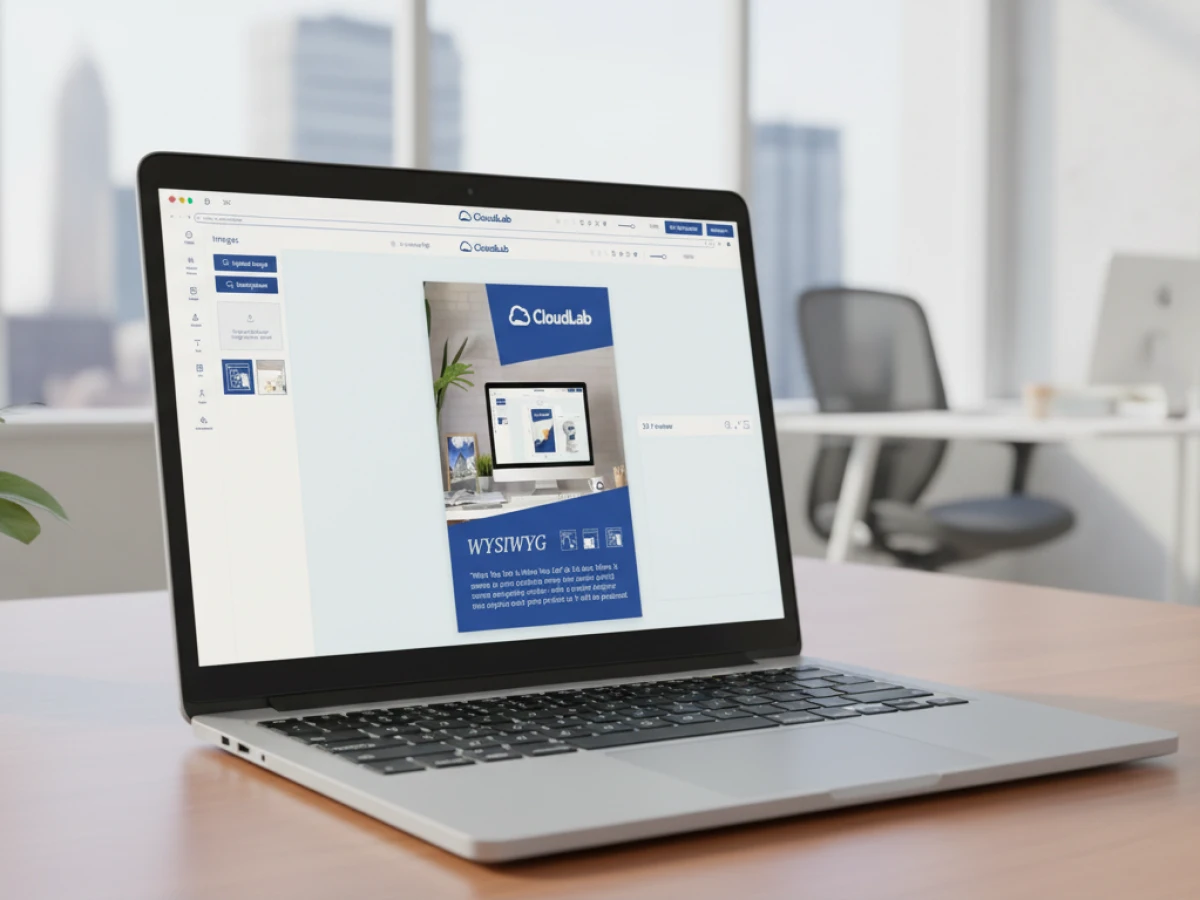
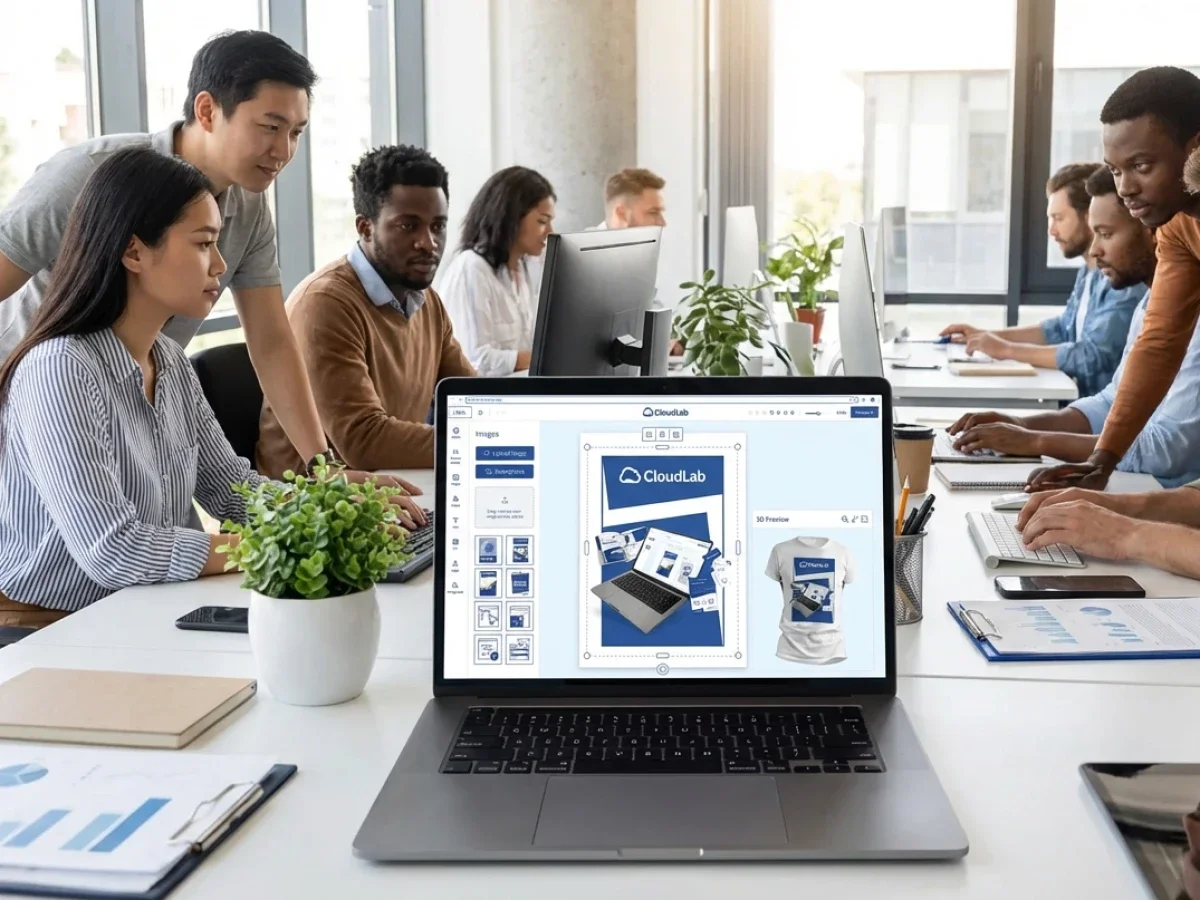
printQ includes a powerful WYSIWYG design editor that allows users to modify layouts directly in their browsers. Text, images, colors, and graphic elements can be adjusted in real time.
Every change appears immediately in the preview.
The editor supports both 2D and 3D product visualization. This capability is particularly useful for complex items such as packaging or promotional products where spatial representation improves design accuracy.
Additional features enhance the design process.
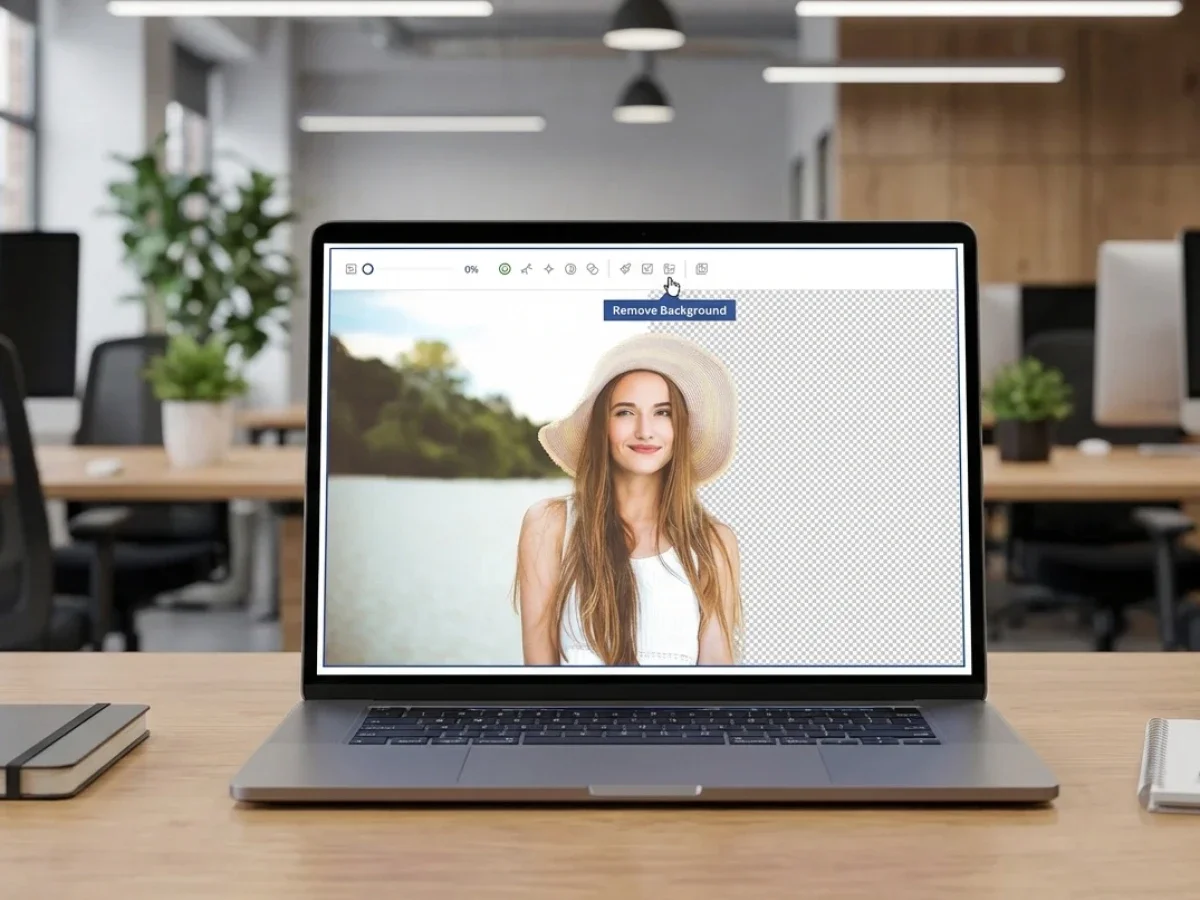
Uploaded graphics can be automatically vectorized. Finishing effects such as embossing or varnish can be simulated within the preview.
These visual tools help customers understand exactly how their products will appear when printed.
By reducing uncertainty during the design phase, the editor minimizes production errors and improves customer satisfaction.
Template Libraries and Variable Data Printing
Mass personalization has become one of the most valuable capabilities of modern web to print technology.
Rather than designing each item individually, organizations can use templates that standardize layout structures.
Customers simply fill in specific fields such as names, addresses, or contact details.
printQ provides a comprehensive template gallery that supports a wide range of products.
These templates allow businesses to maintain consistent branding while enabling flexible customization.
Variable Data Printing further expands personalization capabilities.
With VDP, large batches of printed items can contain unique information in each copy. Direct mail campaigns, employee badges, and promotional materials are common examples.
Instead of preparing each design manually, the system generates variations automatically.
This capability significantly reduces design workload while enabling highly targeted marketing campaigns.
Automation and Lights Out Production
A defining characteristic of the best web to print solution is its ability to automate production workflows.
In traditional print environments, orders often require manual preparation before they reach the press.
Operators must review files, adjust layouts, and generate print ready PDFs.
This process consumes time and introduces the possibility of errors.
printQ automates these tasks through integrated preflight and file generation systems.
When a customer completes an order, the platform automatically analyzes the design. It verifies color profiles, resolution, and bleed settings.
If the file meets production requirements, the system generates a print ready PDF.
This file can be transmitted directly to the production workflow.
Such automation enables lights out production environments where routine orders move through the system without manual intervention.
For printers handling high volumes of standard products, this efficiency dramatically reduces operational costs.
The Importance of a Web to Print API
Modern printing businesses rarely operate as isolated systems.
They rely on a wide range of digital tools including ERP platforms, management information systems, and logistics software.
To connect these tools effectively, a platform must provide robust integration capabilities.
This is where the concept of a web to print API becomes essential.
An API allows external systems to exchange data with the web to print platform.
Orders, customer information, product data, and production instructions can flow between systems automatically.
printQ follows an API first architecture that supports multiple integration standards.
REST and SOAP web services allow developers to build custom integrations. Additional data formats such as XML, JDF, CSV, and JSON provide further flexibility.
These capabilities enable seamless connections between printQ and external systems.
For example, an ERP platform can automatically receive order information from the storefront. Production workflows can receive print files without manual intervention.
This integration layer transforms the web to print platform into a central hub within the broader print technology ecosystem.
Adobe Commerce as a Unique Technological Foundation
One of the most distinctive aspects of printQ is its technological foundation.
Unlike many competing solutions that rely on proprietary shop systems, printQ is built directly on Adobe Commerce.
This architecture provides several strategic advantages.
First, Adobe Commerce offers a powerful ecommerce infrastructure with advanced features for product configuration, customer management, and order processing.
Second, the ecosystem surrounding the platform includes thousands of extensions and integrations.
Printers can enhance their storefront functionality through existing modules rather than developing custom software.
Third, the platform supports highly customizable storefront designs.
Companies can adapt the user interface to match their brand identity or business model.
This combination of ecommerce power and web to print functionality makes printQ particularly versatile.
It is one of the few platforms capable of supporting both large scale online print shops and complex corporate print portals within a single environment.
Real World Implementations
Practical examples illustrate how modern web to print systems deliver value.
SAXOPRINT, one of Europe’s leading online print providers, uses CloudLab technology to manage a wide range of print products and customer interactions.
The platform supports large product catalogs and high order volumes, demonstrating the scalability of the underlying infrastructure.
Another example comes from Druckhäusle, a German print company that expanded into online print commerce using printQ.
The company launched a digital storefront that allowed customers to configure and order print products online. Within months, the new platform began attracting additional business while reducing manual processing work.
Velocity Graphics in the United States implemented a B2B portal for a nationwide restaurant chain.
Franchise locations used the portal to customize and order marketing materials such as menu boards and promotional posters.
The system maintained strict brand standards while allowing local updates.
These examples illustrate the versatility of modern web to print technology.
Who Benefits Most from the Best Web to Print Solution
While web to print technology originated within the printing industry, its benefits extend to many different types of organizations.
Print service providers gain efficiency through automation and online ordering.
Marketing agencies use web to print platforms to manage print production for multiple clients while maintaining brand consistency.
Large enterprises rely on corporate print portals to control procurement across distributed teams.
In each case, the underlying objective remains the same.
Organizations want faster ordering processes, consistent design standards, and scalable production workflows.
Platforms like printQ enable these capabilities by connecting design tools, ecommerce infrastructure, and automated production systems.
Scalability and Multi Client Architecture
One of the most critical factors when evaluating the best web to print solution is scalability.
Some platforms work well for small online shops but struggle to handle large numbers of customers or complex product catalogs.
printQ addresses this challenge through a multi client architecture.
A single installation can manage multiple storefronts or customer portals simultaneously.
Printers can operate several branded online shops, corporate portals, or regional storefronts from one centralized system.
Each portal can have its own product catalog, pricing structure, and user permissions.
This architecture simplifies system management while enabling rapid expansion into new markets.
The Future of Web to Print Technology
Web to print technology continues to evolve as digital commerce expands.
Artificial intelligence is beginning to influence design automation and template generation. Systems can analyze layouts and suggest improvements automatically.
Cloud infrastructure is improving system scalability and accessibility.
Integration between digital marketing platforms and print production is also becoming more common.
These developments will further strengthen the role of web to print platforms within the broader marketing technology ecosystem.
printQ continues to evolve alongside these trends.
By combining advanced ecommerce infrastructure with flexible integration capabilities, the platform provides a strong foundation for future innovations in print commerce.
Why printQ Represents the Best Web to Print Solution
Choosing the best web to print solution is a strategic decision that shapes how a print business operates, scales, and serves its customers.
Modern print environments require more than simple online ordering tools. They require integrated ecosystems that connect storefronts, design tools, automation systems, and enterprise software.
printQ fulfills these requirements through a powerful combination of technologies.
Its Adobe Commerce foundation delivers advanced ecommerce capabilities. Its online editor enables intuitive product customization. Automated workflows generate print ready files without manual intervention.
Open architecture and a robust web to print API enable seamless integration with existing business systems. This combination allows printers, agencies, and enterprises to build scalable web to print systems that support both B2C commerce and complex B2B procurement workflows.
For organizations seeking efficiency, flexibility, and long term scalability, printQ stands as a compelling candidate for the best web to print solution.
Furthermore the best web to print solution means choosing a platform that connects ecommerce, design customization, and automated production workflows.
Modern web to print systems must support scalable storefronts, corporate portals, and seamless integrations with existing business tools. printQ delivers this combination through its Adobe Commerce foundation, powerful design editor, and flexible web to print API architecture. The result is a scalable platform that enables printers, agencies, and enterprises to automate print ordering, maintain brand consistency, and expand their digital print business efficiently.