B2C Web to Print Storefront with Advanced Print Previewer

A b2c web to print storefront succeeds when customers can confidently design and order products online. The print previewer plays a critical role by showing exactly how a product will appear before printing. With printQ, printers combine an advanced print previewer, automation, and scalable storefront technology in one platform. The result is better customer experience, fewer production errors, and a stronger online print business.
The Rise of the B2C Web to Print Storefront
A modern b2c web to print storefront is more than an online shop for print products. It is a digital environment where customers design, review, and order personalized items without interacting with a designer or sales representative. That change has transformed the way print businesses operate.
Consumers today expect speed, transparency, and visual certainty. When someone orders a customized poster, business card, photo product, or promotional item online, they want to see exactly what they will receive. If the platform cannot provide that clarity, customers hesitate to place the order.
This is why the print previewer has become one of the most important elements in consumer print ecommerce.
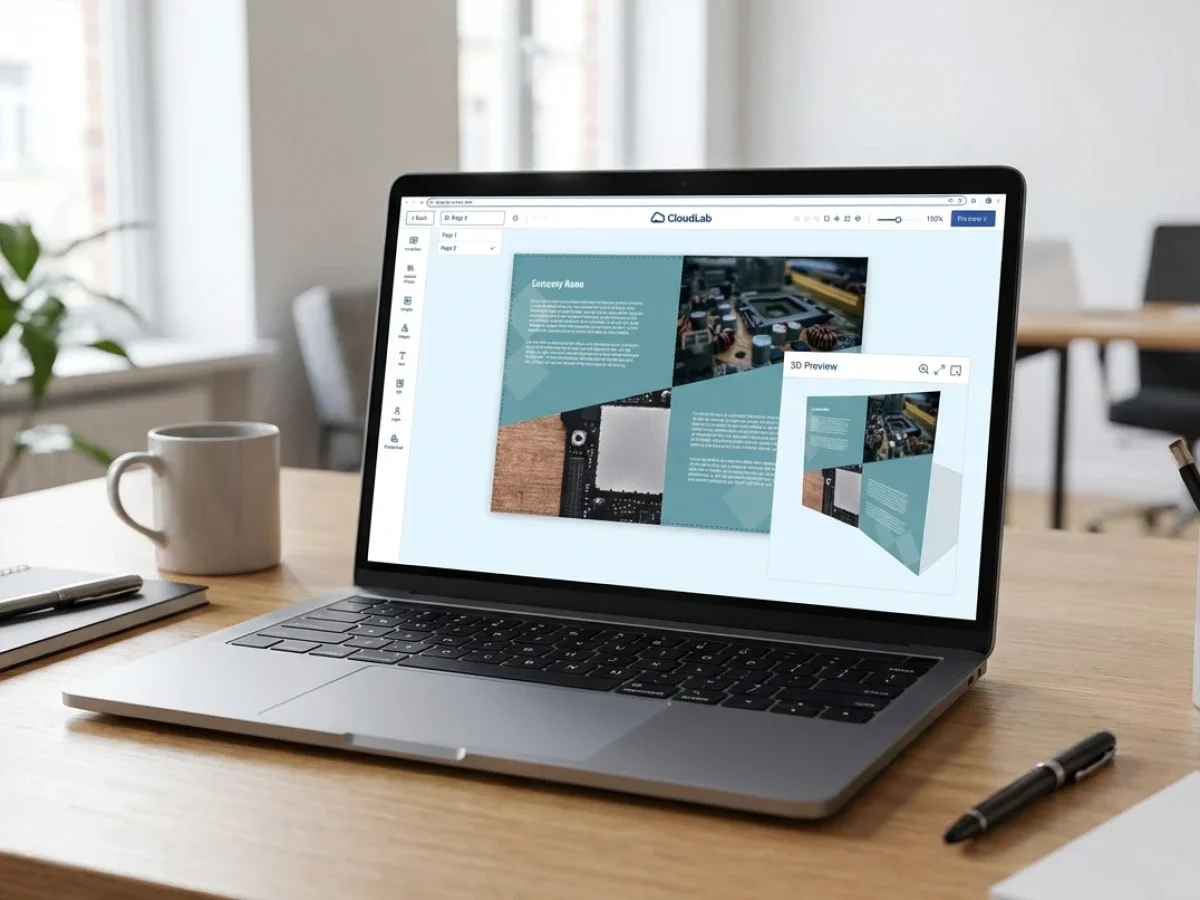
A preview system allows users to review the product design before the order is finalized. It shows positioning, text placement, image quality, and overall appearance. In a high quality storefront, it also visualizes finishing effects, folds, and three dimensional product views.
Platforms like printQ integrate these preview capabilities directly into the online design process. Instead of guessing how the printed result will look, customers see the outcome instantly.
For print providers, that clarity creates two major benefits. Customers gain confidence during the buying process, and production teams receive cleaner, more reliable files.
Why the Print Previewer Is the Core of Consumer Print Experience
In many ecommerce industries, product photos are enough. Customers see a finished item and decide whether they want it. Print ecommerce works differently.
Most products in a b2c web to print storefront are created by the customer during the ordering process. The product does not exist yet. The design is generated in real time through personalization tools and uploaded content.
Because the result is not pre manufactured, visual confirmation becomes essential.
The previewer acts as the bridge between the customer’s intention and the final printed product.
Without an accurate preview, several problems appear immediately.
Customer hesitation:
Buyers may abandon the cart because they are unsure how their design will appear.
Production errors:
Customers might misunderstand layout positioning or margins.
Support workload:
Print shops receive questions about alignment, cropping, and design clarity.
A well implemented previewer solves these issues by providing instant visual validation.
When a customer adjusts text or moves an image, the preview updates immediately. The system shows the result as it would appear in print, helping users detect issues before they submit the order.
This approach significantly improves the reliability of self service print ordering.
The Role of the Print Previewer in Conversion Optimization
Many printers focus on design tools and automation but underestimate the influence of the previewer on sales.
The previewer is not only a design utility. It is a conversion tool.
A strong preview system helps customers move from exploration to purchase. When users see their design clearly, they feel more comfortable completing the transaction. That emotional reassurance can dramatically increase conversion rates.
Consider the psychology of online customization.
Customers invest time into creating something personal. If the system shows a vague or inaccurate preview, that effort suddenly feels risky. Users wonder whether the printed result will match their expectations.
An advanced previewer eliminates that uncertainty.
printQ provides dynamic visualization during the design process. The preview updates immediately when the user modifies the layout. This immediate feedback creates a sense of control and confidence.
For B2C storefronts, confidence equals orders.
The more clearly customers understand the final result, the more likely they are to complete the purchase.
Visual Accuracy: The Key Requirement of a Professional Print Previewer
Not all previewers are equal. Many systems simply display a rough representation of the design. While that might look acceptable on screen, it can cause confusion when the printed product arrives.
A professional print previewer must meet several technical expectations.
Accurate layout representation:
Margins, bleed areas, and safe zones should be visually clear.
Realistic color presentation:
Colors must appear close to the printed outcome.
True positioning:
Images and text should display exactly where they will be printed.
Product visualization:
Customers should understand how the design wraps or folds.
printQ integrates these elements into its design environment. The preview engine works directly with the product configuration and design editor. This means the preview reflects the exact file that will be generated for production.
Such accuracy reduces the risk of misunderstandings between customers and print providers.
2D and 3D Preview Technology in Modern Print Shops
Another important capability in advanced preview systems is the ability to show products from multiple perspectives.
Flat 2D previews work well for simple products like flyers or posters. However, many modern print products involve shapes, folds, and structures that cannot be understood in two dimensions.
Packaging, promotional items, and folded materials require spatial visualization.
printQ supports both 2D and 3D preview functionality, allowing customers to view their designs in realistic product representations.
For example, a packaging design can be rotated in three dimensional space. Customers can see how graphics wrap around edges and surfaces.
This type of visualization improves design accuracy and reduces production surprises.
From a customer perspective, it also makes the buying experience more engaging. Instead of interacting with abstract layout grids, users see the product as a tangible object.
That visual clarity improves both usability and trust.
Integrating the Print Previewer with the Online Editor
A previewer becomes truly powerful when it is tightly connected to the design editor.
In older Web to Print systems, the preview often appeared only at the end of the design process. Customers would finalize their layout and then generate a static proof.
Modern platforms take a different approach.
printQ integrates the preview directly into the editing environment.
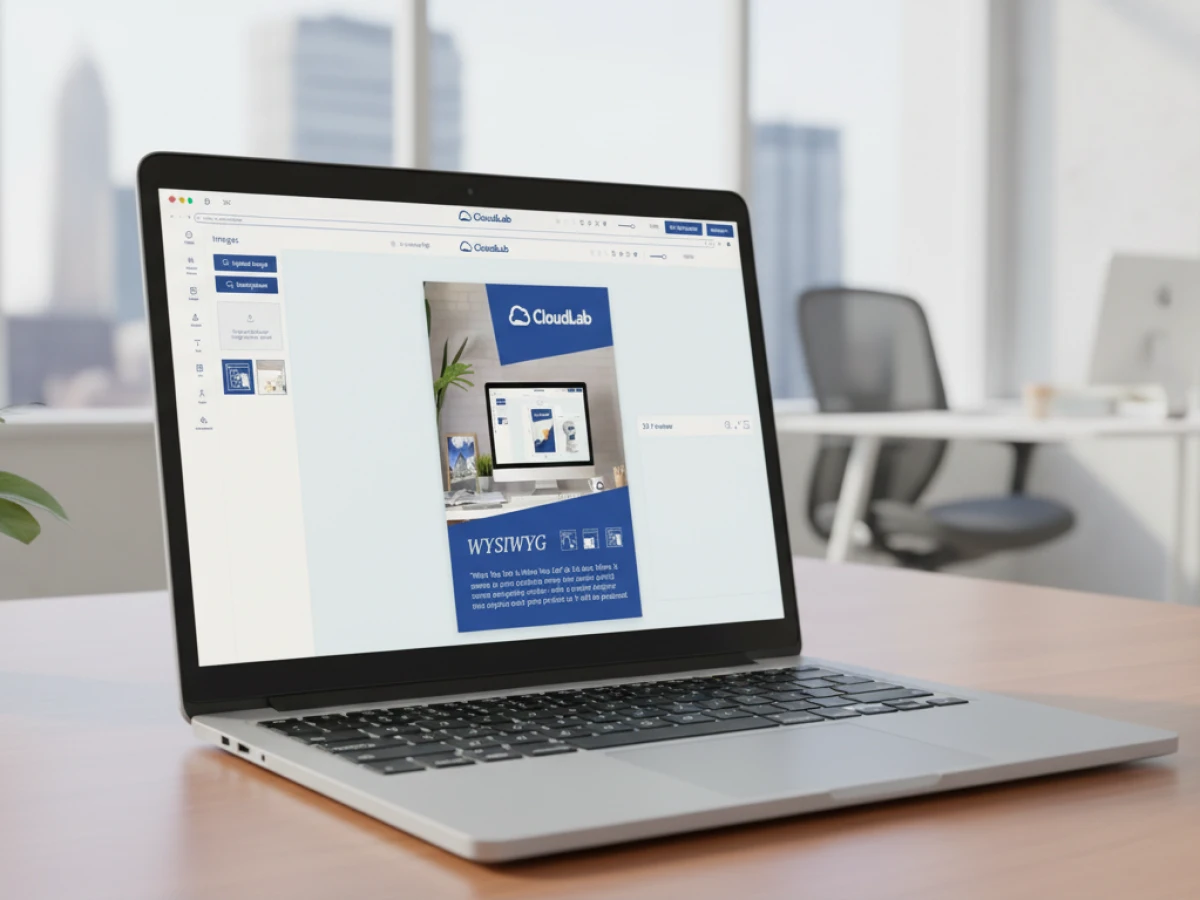
As customers adjust text, reposition images, or change colors, the preview updates instantly. This real time interaction makes the design process far more intuitive.
Users no longer need to imagine how their changes will affect the final product.
Instead, they see the impact immediately.
This type of visual feedback significantly reduces user frustration and shortens the design process.
It also reduces the likelihood that customers will submit incorrect files.
Why Preview Accuracy Reduces Production Costs
While previewers are often discussed from a customer experience perspective, their operational impact is just as important.
Inaccurate previews lead to incorrect expectations. Incorrect expectations lead to complaints, refunds, or reprints.
A strong preview system helps avoid these situations.
When customers clearly see the final layout before ordering, they become responsible for approving the design. This shared responsibility reduces disputes about alignment, cropping, or spacing.
For print businesses operating a b2c web to print storefront, this reduction in support issues can translate into significant cost savings.
printQ reinforces this process with automated preflight checks.
After the design is confirmed in the preview, the system analyzes the file to ensure it meets print requirements. Resolution, color space, and other technical parameters are validated automatically.
If the file passes the check, a print ready PDF is generated.
This connection between preview accuracy and automated production ensures that what the customer sees is what the printer produces.
Mobile Content Upload and Preview Consistency
Consumers often create designs using photos stored on their smartphones. Integrating mobile content into the design process is therefore essential for B2C print.
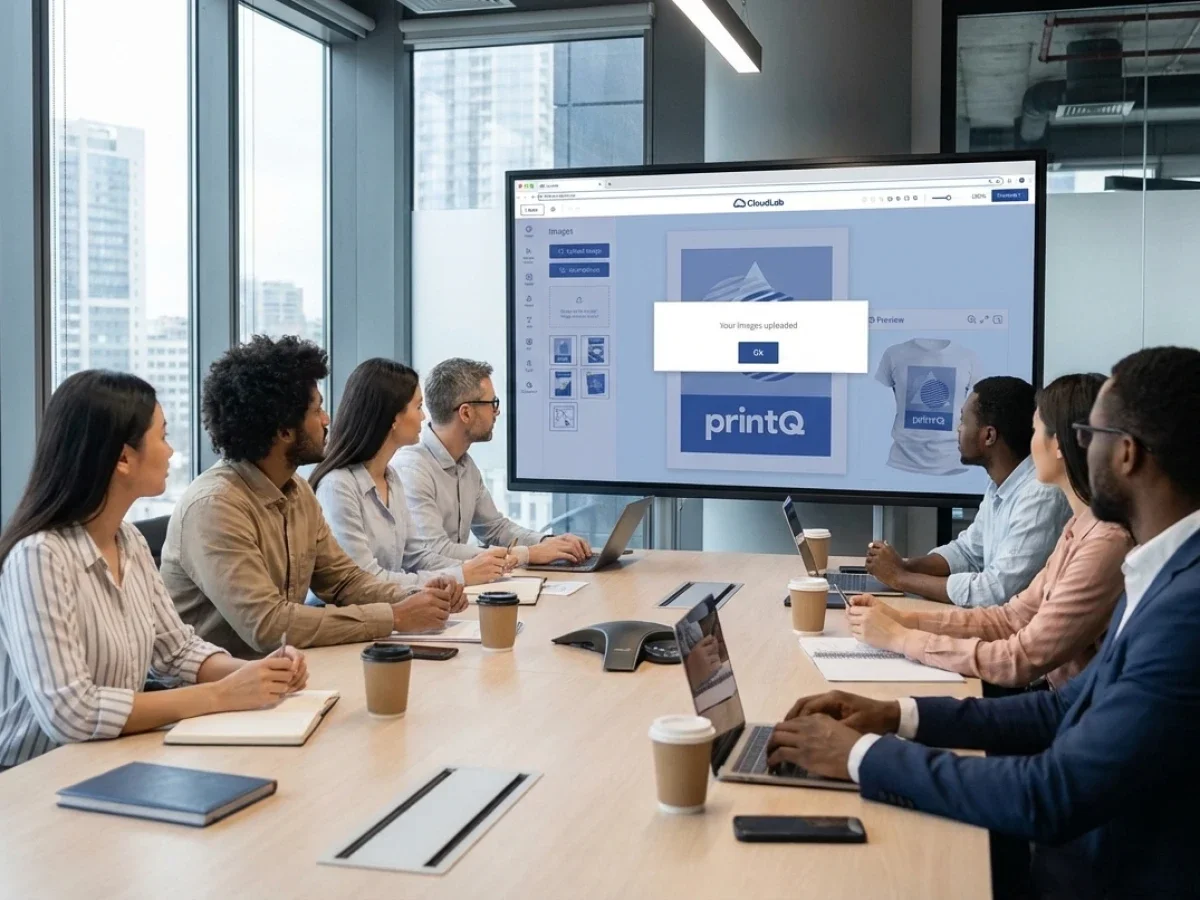
printQ supports mobile uploads through QR based device connections. Customers working on a desktop storefront can quickly transfer images from their phone to the design editor.
Once the image is added, the previewer immediately reflects the updated layout.
This workflow is particularly valuable for photo products and personalized promotional materials.
Instead of downloading files and re uploading them manually, customers move their images directly into the design environment.
The previewer then confirms that the image fits properly within the layout.
This seamless integration between mobile content and visual preview helps maintain a smooth user experience.
The Business Impact of a Strong B2C Web to Print Storefront
A well designed b2c web to print storefront delivers several strategic advantages for print providers.
Improved customer confidence:
Clear previews help customers trust the platform and complete orders.
Higher order volumes:
Automation allows printers to process more jobs efficiently.
Reduced support workload:
Customers resolve many design questions through visual feedback.
Consistent product quality:
Templates and previews enforce correct layouts.
printQ supports these outcomes by combining preview technology, automation, and ecommerce infrastructure within a single platform.
Because the system is built on Adobe Commerce, printers also gain access to powerful ecommerce tools. Customer accounts, payment systems, shipping integrations, and promotional features are included.
This combination enables print businesses to operate like modern ecommerce brands while maintaining professional production workflows.
From Consumer Shop to Multi Client Print Platform
One of the most interesting aspects of printQ is that it supports both B2C and B2B business models in the same system.
A company may launch a consumer storefront for personalized products and later expand into corporate portals.
These closed portals allow businesses to order branded materials through controlled templates and approval workflows.
The same preview technology used for consumer designs also helps corporate users confirm layout accuracy before production.
This flexibility allows print businesses to grow without replacing their platform.
A single printQ installation can support multiple storefronts, customer portals, and product catalogs.
That scalability is essential for companies that want to expand beyond a single online shop.
Real World Example: Consumer Print at Scale
Large online print providers demonstrate how powerful a well designed preview driven storefront can be.
Companies such as SAXOPRINT manage extensive product catalogs and thousands of orders per day. Their success depends heavily on automation and visual proofing.
Customers must be able to design products independently while trusting that the printed output will match the preview.
Platforms like printQ enable this scale by connecting storefront usability with automated production processes.
The previewer helps customers design confidently, while the backend workflow prepares files for printing automatically.
This combination allows print businesses to handle high volumes of personalized orders without overwhelming their production teams.
The Future of the Print Previewer in B2C Commerce
Preview technology continues to evolve alongside broader digital commerce trends.
Future systems will likely include more advanced visualization tools, including interactive product simulations and enhanced three dimensional modeling.
Artificial intelligence may assist users by suggesting layout improvements or identifying potential design issues before submission.
Augmented visualization could also allow customers to see how printed products appear in real world environments.
printQ is positioned well for these developments because its architecture combines a powerful editor, scalable ecommerce infrastructure, and flexible integrations.
As preview technology evolves, the platform can incorporate new capabilities while maintaining its core workflow automation features.
The Print Previewer Defines the Success of a B2C Web to Print Storefront
A successful b2c web to print storefront depends on one central element: visual certainty.
Customers must understand exactly what they are ordering before they complete the purchase. The print previewer provides that certainty by showing the final design clearly and accurately.
When combined with real time editing, automated file generation, and scalable ecommerce infrastructure, the previewer becomes a powerful driver of both customer satisfaction and operational efficiency.
CloudLabs printQ brings all of these elements together.
As a premium Web to Print platform built on Adobe Magento and Adobe Commerce, printQ supports advanced preview technology, automation, and flexible storefront architecture.
For printers who want to grow their consumer business without sacrificing efficiency, printQ provides the tools needed to operate a reliable and scalable b2c web to print storefront.
A successful b2c web to print storefront depends heavily on the quality of its print previewer. Customers must see exactly how their personalized products will appear before they order. printQ integrates an advanced print previewer, real time design tools, and automated production workflows into one platform. The result is higher customer confidence, fewer production errors, and a scalable ecommerce environment for modern print businesses.