Meilleures vitrines pour le B2B en matière de Web to Print

Les meilleures vitrines pour le B2B combinent une gestion multi-clients, une conformité stricte au CI et une intégration approfondie de la production. Dans les environnements B2B du Web à l'impression, l'évolutivité, la gestion des rôles et l'automatisation déterminent le succès à long terme. printQ fournit une infrastructure basée sur Magento, une connectivité d'abord API et une automatisation des flux de travail de bout en bout sur une plateforme unifiée. Ce guide explique comment concevoir et exploiter des portails Web à impression B2B de haute performance.
Best Storefronts for B2B: Multi Client Management and CI Compliant Design in Web to Print B2B Portals
The best storefronts for B2B are not simply password protected online shops. They are structured procurement ecosystems that connect corporate identity governance, workflow automation, and backend production systems into one controlled environment. In complex organizations, B2B portals are operational infrastructure.
A professional web to print B2B storefront must support decentralized ordering without losing centralized control. It must enforce brand standards, automate approvals, integrate with ERP and MIS systems, and scale across regions and subsidiaries.
printQ provides a premium framework to build and operate such enterprise grade B2B web to print environments.
Why B2B Storefronts Require a Different Architecture
Retail commerce and B2B procurement follow different logic. In B2C environments, conversion and usability dominate. In B2B contexts, governance, reporting, and process integration take priority.
Corporate buyers require contract pricing, approval chains, cost center allocation, and transparency. Procurement departments expect audit trails and integration with internal accounting systems.
A web to print B2B storefront that lacks backend integration becomes a bottleneck. The best storefronts for B2B are designed from the inside out, not from the homepage inward.
Multi Client Management as Enterprise Backbone
Large organizations rarely operate under a single brand. They manage subsidiaries, franchise partners, regional branches, or multiple product lines.
printQ supports multi client management within one centralized installation. Each client can operate its own branded storefront with specific product assortments, pricing rules, and user permissions.
Behind the scenes, backend automation and production workflows remain unified. This ensures consistency while allowing autonomy at the frontend level.
Multi client capability is not a convenience feature. It is a structural requirement for scalable B2B operations.
CI Compliant Template Governance at Scale
Brand compliance is often the core reason companies implement web to print B2B portals.
Marketing departments must ensure that logos, fonts, color schemes, and layouts remain consistent across all locations. At the same time, local teams need flexibility to personalize content.
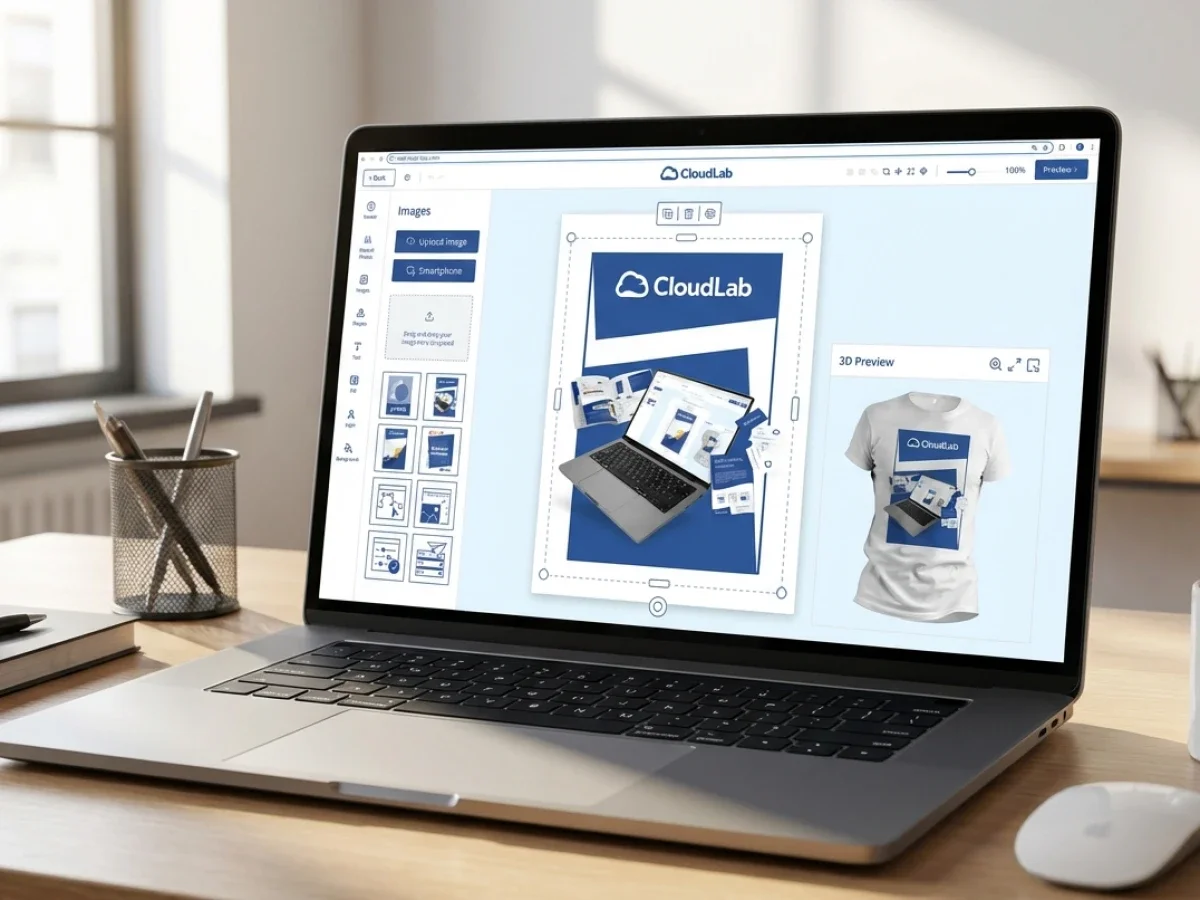
printQ enables structured template creation within its web to print designer. Editable zones and locked areas define clear boundaries. Corporate elements remain protected, while local data such as addresses or promotions can be modified.
Variable Data Printing allows controlled mass customization. Large campaigns can be personalized without breaking brand rules.
This combination of flexibility and control defines professional B2B portal governance.
The Web to Print Designer as Compliance Tool
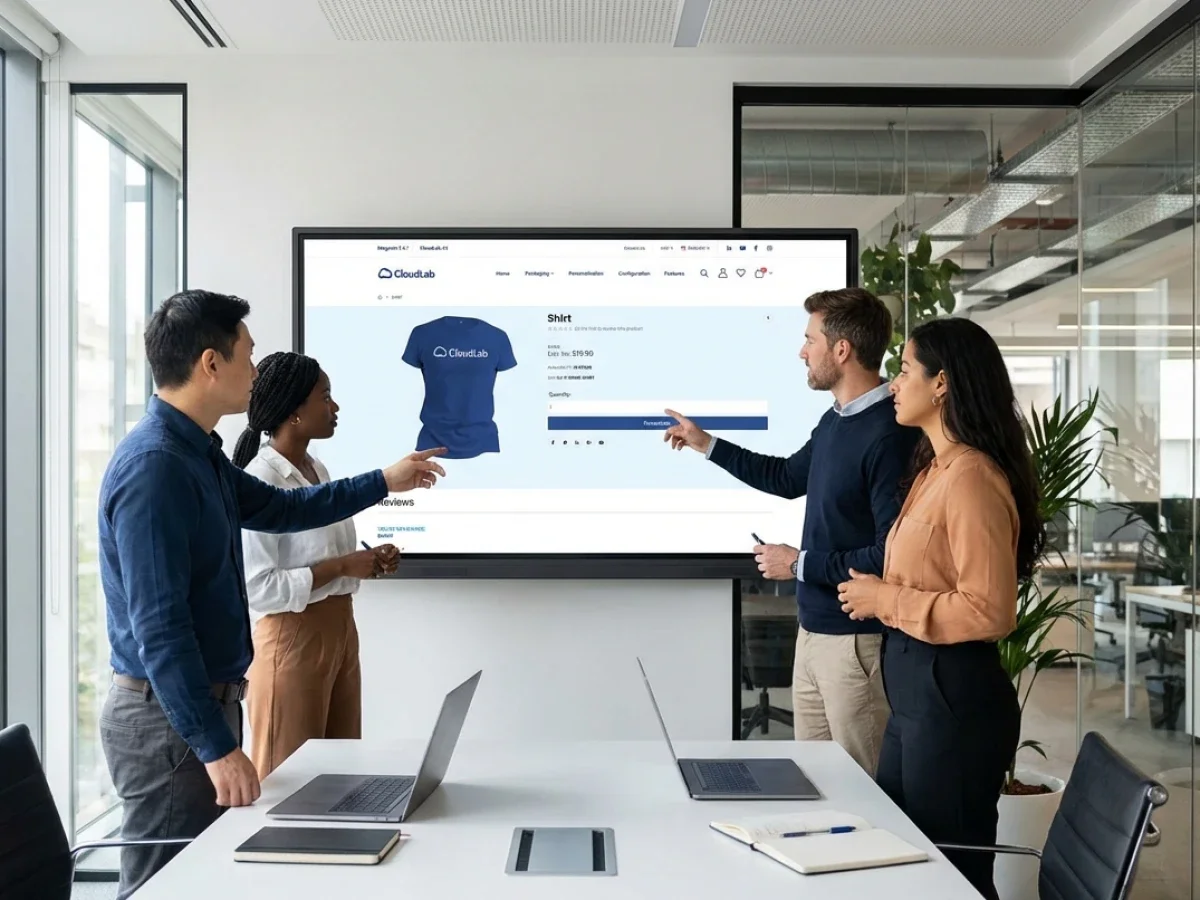
The web to print designer is not merely a design interface. In B2B environments, it becomes a compliance mechanism.
printQ provides real time 2D and 3D previews within its WYSIWYG editor. Users see final results before submission, reducing misunderstandings.
Design rules can restrict font changes, color modifications, or layout shifts. Corporate marketing departments define structural guidelines within templates.
By embedding governance into the design tool itself, companies eliminate many manual review cycles.
Role Based Permissions and Hierarchical Approval
Corporate procurement structures are rarely flat. Employees may create orders, but managers approve budgets.
printQ supports granular role based permissions. Users can be assigned rights based on department, cost center, or hierarchy level.
Approval workflows can be automated so that orders above certain thresholds require confirmation before production begins. Notifications and status updates ensure transparency.
Structured approval logic reduces unauthorized spending and improves internal accountability.
Magento Integration and Enterprise Commerce
printQ is the only web to print solution built natively on Adobe Commerce. This provides a robust e commerce infrastructure tailored for enterprise environments.
Contract pricing, tiered discounts, tax configurations, and shipping logic are managed within Magento’s mature framework. Corporate accounts can have negotiated conditions reflected directly in the storefront.
This eliminates manual pricing adjustments and ensures consistency between online ordering and accounting systems.
Magento integration provides long term extensibility and stability.
API First Architecture and MIS Integration
The best storefronts for B2B do not operate in isolation. Orders must integrate directly into ERP and MIS systems.
printQ follows an API first and headless architecture. Data exchange is supported via REST, SOAP, XML, JDF, CSV, and JSON interfaces.
When an order is approved, structured job tickets can be generated automatically in the MIS. Status information synchronizes across systems in real time.
This eliminates duplicate data entry and reduces administrative errors.
Deep integration transforms the storefront into an operational engine.
Automation and Lights Out Production
High volume B2B portals require automation. Manual intervention limits scalability.
printQ integrates automated preflight validation for resolution, bleed, and color accuracy. Production ready PDFs are generated immediately after order approval.
Routine orders can proceed directly to production workflows without manual prepress review. This lights out capability reduces turnaround time and lowers operational cost.
Automation ensures that increased order volume does not increase administrative workload.
Web to Print B2B for Franchise and Decentralized Networks
Franchise systems represent a classic B2B use case. Local units require marketing materials tailored to regional needs while adhering to strict brand standards.
printQ enables closed B2B portals where franchise partners log in and access predefined templates. Editable zones allow local customization without altering brand core elements.
Central headquarters retains full oversight over product assortment, pricing, and design logic.
This model balances autonomy with governance.
Governance Across International Operations
Global enterprises face additional complexity including multiple languages, currencies, and regulatory environments.
printQ supports multi language storefronts and region specific configurations within the same installation. Each client environment can reflect local requirements while maintaining centralized control.
Currency handling, tax logic, and shipping conditions are configurable through Magento integration.
International scalability is built into the architecture rather than added through external modules.
SaaS and On Premise Deployment Models
Corporate IT policies often dictate infrastructure decisions.
printQ can be deployed as SaaS in the cloud or installed on premise. Both deployment models provide identical feature sets.
Cloud deployment offers centralized updates and managed infrastructure. On premise installation gives enterprises full control over data hosting and compliance alignment.
This flexibility ensures compatibility with internal governance requirements.
Multi Client Scalability in Practice
Scalability must be proven, not promised.
printQ manages more than 1000 live portals worldwide. This demonstrates the ability to scale from single client installations to complex multi brand ecosystems.
Backend automation remains centralized even as storefront numbers increase. Administrators manage templates, permissions, and workflows through a unified dashboard.
Scalability depends on architectural consistency.
Case Insight: Velocity Graphics
Velocity Graphics implemented a web to print B2B portal for a nationwide restaurant chain.
Each location required menu updates tailored to regional offerings. printQ enabled template based customization with locked brand elements.
Integration with backend systems ensured accurate production scheduling. Multi client management allowed centralized control across numerous locations.
The project illustrates how structured B2B portals reduce operational friction.
Case Insight: Druckhäusle
Druckhäusle expanded into digital B2B commerce using printQ.
Corporate customers gained structured procurement environments with approval workflows and automated file generation.
Manual coordination decreased significantly. Repeat orders flowed directly into production without administrative overhead.
Efficiency and brand consistency improved simultaneously.
Case Insight: SAXOPRINT
SAXOPRINT operates at enterprise scale with complex product portfolios.
High transaction volumes demand stable integration and robust configurator logic. printQ provided scalable infrastructure with centralized automation.
Enterprise level performance confirms architectural reliability.
Security and Data Governance in B2B Portals
Corporate data must be protected.
printQ leverages Adobe Commerce security standards, including encrypted data transmission and structured user management.
Role based access ensures that only authorized users can view or modify sensitive information.
Centralized governance reduces risk exposure across multiple storefronts.
Measuring ROI in B2B Web to Print Portals
Investment in structured storefronts must deliver measurable return.
Automation reduces manual processing cost. CI compliance decreases reprint rates caused by design errors. Integration eliminates administrative duplication.
Corporate clients benefit from faster procurement cycles and improved transparency.
Les meilleures vitrines pour le B2B génèrent des économies opérationnelles qui dépassent les coûts de mise en œuvre.
Critères de sélection stratégiques
Lors de l'évaluation des plateformes, les décideurs doivent se concentrer sur les éléments structurels plutôt que sur la seule conception visuelle.
Les principales considérations sont les suivantes :
- Profondeur de l'intégration du MIS et de l'ERP
- Évolutivité à travers plusieurs marques ou régions
- Gouvernance intégrée grâce à des modèles conformes à la norme CI
L'architecture définit la viabilité à long terme.
PrintQ s'aligne sur ces critères grâce à l'intégration de Magento, à la conception d'une API d'abord et à une automatisation de bout en bout.
Les meilleures vitrines pour le B2B nécessitent une intégration et une gouvernance structurées
Le meilleures vitrines pour le B2B combinez la gestion multi-clients, la gouvernance des modèles conforme à la norme CI, des flux de travail automatisés et une intégration approfondie du backend. Un portail B2B professionnel du Web à l'impression doit prendre en charge les commandes décentralisées tout en maintenant un contrôle centralisé.
PrintQ intègre l'infrastructure Adobe Commerce, une connectivité axée sur les API, un contrôle préalable automatisé et des fonctionnalités B2B et B2C unifiées au sein d'un seul système évolutif. En combinant la gouvernance de marque, l'automatisation et une évolutivité multi-clients éprouvée, PrintQ fournit une base solide pour les environnements Web d'impression B2B de niveau professionnel.
Les meilleures vitrines pour le B2B vont bien au-delà des simples boutiques basées sur la connexion. Ils nécessitent une gestion multi-clients, des modèles conformes à la norme CI, des flux de travail d'approbation et une intégration ERP approfondie. printQ combine Adobe Commerce, une architecture axée sur les API, des flux de production automatisés et une gestion multimarque évolutive sur une seule plateforme unifiée. Avec plus de 1 000 portails en ligne dans le monde entier, il permet aux professionnels du Web d'imprimer des environnements B2B qui équilibrent le contrôle de la marque, l'automatisation et l'évolutivité à long terme.