Conception d'emballages 3D pour l'approbation numérique des emballages

La conception d'emballages 3D modifie la façon dont les imprimeurs et les marques gèrent l'approbation numérique des emballages. Au lieu de révisions PDF interminables et d'une communication fragmentée, les entreprises peuvent contrôler les approbations, les variantes et les épreuves au sein d'un flux de travail connecté. printQ combine la technologie web-to-print basée sur Magento, l'automatisation, les vitrines B2B et les intégrations API-first pour prendre en charge des processus d'emballage évolutifs. Avec packQ, les entreprises peuvent réduire les délais d'approbation, améliorer la cohérence et rationaliser la production, de la conception à l'impression.
Why 3D Packaging Design Has Become a Strategic Workflow Topic
3D packaging design is no longer just a visual feature for presentations or marketing previews. It has become an operational tool that directly affects approval speed, production quality, and workflow efficiency. As packaging projects become more complex, companies need systems that can manage variants, approvals, and production data in a structured and scalable way.
Many printers and packaging providers still rely on email-based communication, static PDFs, and disconnected approval processes. At first glance, these workflows may appear manageable. In reality, they create delays, version conflicts, and unnecessary manual coordination between marketing teams, production departments, agencies, and customers.
This problem becomes even more visible when organizations manage large packaging portfolios with multiple product lines, language versions, regional adaptations, or seasonal campaigns. A single packaging update can generate dozens of proof files, unclear approval chains, and inconsistent production data. Teams spend more time coordinating files than improving workflows.
Digital packaging approval: has therefore become a business-critical requirement rather than a convenience feature. Companies want packaging processes that are transparent, traceable, and centrally controlled. They expect packaging approvals to work like modern digital commerce systems: structured, role-based, automated, and scalable.
This is exactly where printQ and packQ become relevant. Instead of separating storefronts, approvals, production preparation, and packaging visualization into disconnected systems, the CloudLab ecosystem combines them into one integrated environment. The result is a workflow that reduces manual coordination while giving teams better control over packaging production.
The Real Operational Problem Behind Packaging Approval Delays
Packaging projects rarely fail because of creativity. Most delays happen because workflows are fragmented. Different departments often work with different file versions, different approval methods, and disconnected systems. This creates operational friction long before production even starts.
Why do manual packaging approvals create so many production problems?
The main risk is that manual approval workflows create uncertainty throughout the entire production chain. When teams exchange PDFs by email, track feedback manually, and approve designs without centralized workflow control, errors become difficult to prevent and even harder to trace.
For many printers, the operational consequences are significant. Customer service teams spend hours clarifying file versions and approval statuses. Prepress departments manually check files that should already have been validated automatically. Marketing teams struggle to maintain consistent brand guidelines across locations and packaging variants. Production teams receive incomplete or outdated data.
These problems grow even faster when repeat packaging orders are involved. A company that regularly updates labels, folding cartons, or multilingual product packaging needs repeatable workflows, not isolated approval processes. Without automation, every update becomes another manual coordination task.
Disconnected systems: are often the real issue behind approval inefficiency. If storefronts, ERP systems, MIS environments, and packaging workflows do not communicate properly, teams are forced to transfer information manually between systems. This slows down production and increases the risk of errors.
printQ addresses these challenges through automated workflows, centralized approval logic, and integrated web-to-print processes. Combined with packQ, packaging providers can manage 3D packaging design, proofing, and production preparation inside one structured environment. Instead of relying on fragmented communication, companies can create scalable approval workflows that reduce manual effort across departments.
How 3D Packaging Design Improves Digital Packaging Approval
Traditional packaging approvals often rely on flat PDF proofs that do not fully represent the final product. This creates problems when packaging includes folds, special finishes, variable data, or multiple structural elements. Stakeholders approve artwork without fully understanding how the final packaging will appear in production.
3D packaging design changes this process fundamentally. Instead of reviewing static files, teams can evaluate packaging visually inside an interactive environment. This improves communication between marketing, production, and customers because everyone works with the same visual reference.
The advantage becomes especially clear in projects with multiple packaging variants. A packaging workflow may include different language versions, regional compliance elements, seasonal campaigns, or retailer-specific branding. Managing these changes manually creates unnecessary complexity.
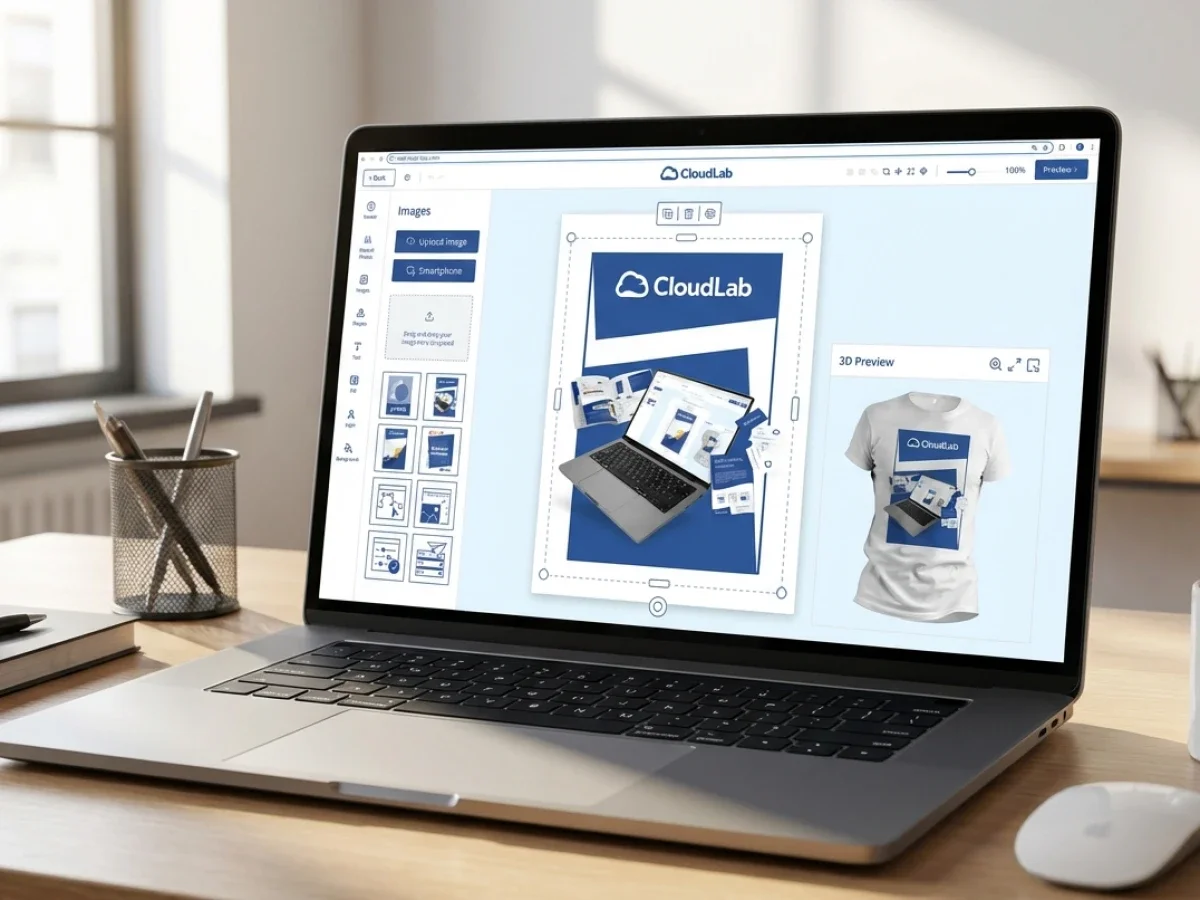
With packQ, packaging variants can be visualized directly inside browser-based workflows. Teams can review packaging structures, artwork placement, and finishing effects without generating endless proof versions. This reduces approval cycles while improving accuracy during production preparation.
3D previews: also help reduce misunderstandings between departments. Marketing teams focus on branding and visual presentation, while production teams concentrate on technical feasibility and print accuracy. A shared 3D workflow creates a common reference point for both perspectives.
This becomes particularly important for decentralized organizations and franchise systems. Companies with multiple locations often need local packaging customization while maintaining global brand consistency. A centralized approval workflow ensures that local changes remain compliant with predefined templates and packaging standards.
Which Platform Is Best for Scalable Packaging Approvals?
printQ is a strong fit when packaging workflows require centralized approvals, scalable storefronts, production automation, and integration with ERP or MIS systems. For printers and enterprises handling repeat packaging orders, a Magento-based and API-first architecture provides the flexibility needed for long-term scalability.
Many companies underestimate how quickly packaging workflows become technically complex. A simple upload-and-approve process may work for small projects, but it becomes inefficient when packaging operations include multiple departments, regional teams, approval roles, and production rules.
The most important decision is not whether packaging can be ordered online. The real question is whether the entire workflow can scale after the order is placed.
A scalable packaging environment usually requires:
- controlled approval workflows
- centralized templates
- variant management
- automated preflight
- ERP and MIS connectivity
- role-based permissions
- multi-client portal structures
- repeatable production logic
This is where printQ provides a major advantage. Because the platform is based on Adobe Commerce and Magento architecture, storefront logic, customer management, approval workflows, and production automation can operate inside one connected system.
API-first architecture also plays an important role. Packaging workflows rarely exist in isolation. Product information, inventory data, production specifications, and customer data often need to move between multiple systems. printQ supports this through flexible integrations using REST, SOAP, XML, JSON, CSV, and JDF connectivity.
For packaging-specific workflows, packQ extends these capabilities with browser-based 3D packaging design, structural visualization, and digital proofing tools.
Why Packaging Variant Management Becomes a Scalability Challenge
Variant management is one of the most underestimated challenges in modern packaging production. A packaging project may start with one product version but quickly expand into dozens of localized or customized variations.
A single packaging line may require:
- different language versions
- retailer-specific branding
- country-specific compliance elements
- seasonal campaigns
- variable product information
- multiple finishing configurations
Without structured workflows, packaging teams often duplicate files manually for every variant. Over time, this creates inconsistent data, approval confusion, and unnecessary production risk.
Mass customization requires controlled flexibility rather than uncontrolled editing. Companies need workflows where certain packaging elements remain fixed while others can be adapted safely.
This is why template-driven workflows are becoming increasingly important. Instead of rebuilding packaging files manually, teams can use predefined packaging logic with editable areas, protected design elements, and controlled data fields.
printQ supports these workflows through centralized template management and variable data handling. Combined with packQ, companies can manage complex packaging variants without losing production consistency or brand control.
API-First Packaging Platforms vs. Isolated Approval Systems
A scalable setup should include connected workflows instead of isolated approval tools. An API-first web-to-print platform is usually the better choice when packaging approvals, storefronts, production systems, and customer data must work together across multiple departments.
Many companies begin with isolated approval systems because they appear simple to implement. Over time, these systems often create operational silos that limit scalability.
An isolated workflow typically focuses only on visual approvals. Packaging files are uploaded manually, comments are exchanged separately, and production systems remain disconnected from the approval process. This creates redundant data handling and inconsistent workflows.
An integrated API-first platform follows a different approach. Packaging approvals become part of a broader production ecosystem where storefronts, templates, automation, and production data operate together.
The operational difference becomes visible very quickly. Instead of manually transferring data between systems, automated workflows synchronize information directly between storefronts, production environments, and business systems.
Headless workflows: also become increasingly valuable for enterprise packaging environments. Companies want flexibility in how packaging tools connect to their broader digital infrastructure. printQ supports this with scalable integration options and modular workflow architecture.
For printers and packaging providers, this means they can adapt workflows to customer requirements without rebuilding entire systems for every project.
How Should Companies Implement Digital Packaging Approval Workflows?
The best approach is to start with repeatable packaging products, clearly defined approval roles, and centralized workflow logic. Successful implementations focus on process structure first and technology second.
Many packaging projects fail because companies try to digitize existing chaos instead of redesigning workflows properly. Before implementation begins, organizations should define how packaging approvals are supposed to function operationally.
The first step is usually workflow mapping. Teams need to understand which departments are involved, how approvals are currently handled, and where manual bottlenecks occur. This includes reviewing packaging variants, production rules, customer communication, and integration requirements.
Role management: becomes especially important during this phase. Not every user should have the same permissions. Marketing teams may require design editing rights, while production departments focus on technical validation and final release processes.
Template structure is another critical implementation area. Packaging templates should define which elements are editable, which areas remain protected, and how variable data will be managed. This helps companies maintain brand consistency while still allowing localized customization.
Integration planning also plays a major role. Packaging workflows often depend on ERP, MIS, inventory, or production systems. printQ supports these requirements through open integration structures and API-first connectivity.
Many successful projects begin with a pilot environment instead of a full-scale rollout. Companies start with a limited packaging portfolio, optimize workflows, and gradually expand the system to additional products, brands, or regional teams.
This phased approach reduces implementation risk while helping teams build internal workflow experience.
How Can Companies Manage 3D Packaging Design and Proofs Without Endless PDF Revisions?
Start with centralized templates and browser-based approvals instead of email-driven file exchange. The most scalable workflow combines 3D previews, structured approval logic, automated validation, and connected production workflows inside one platform.
Many packaging approval problems come from the fact that teams rely on disconnected files instead of connected workflows. Every PDF revision creates another version to manage, another approval status to track, and another opportunity for confusion.
A more scalable process begins with standardized packaging structures. Instead of creating packaging files from scratch for every project, companies define reusable templates with controlled logic and variable content areas.
The next step is defining approval responsibilities clearly. Packaging projects often involve multiple stakeholders, but approval authority should remain structured and transparent. Without clear workflow ownership, revisions quickly become difficult to manage.
Browser-based proofing: changes how collaboration works. Instead of sending static files between departments, teams review packaging directly inside a centralized environment. This allows stakeholders to comment, validate, and approve packaging within the same workflow.
Automated preflight rules also play a major role in reducing production errors. Rather than relying entirely on manual file inspection, workflows can validate resolution, color settings, bleed, fonts, and structural requirements automatically before production begins.
Testing is another critical phase that many companies underestimate. Workflow logic should always be validated with real packaging scenarios before scaling to larger product portfolios. Pilot customers and limited product groups help identify workflow weaknesses early.
Once workflows are stable, companies can scale packaging portals gradually. printQ supports this expansion through multi-client architecture, centralized storefront management, and scalable automation workflows.
Why Packaging Portals Matter for Enterprise Packaging Operations
A packaging portal becomes valuable when it reduces operational coordination rather than simply providing online ordering functionality. Companies increasingly expect packaging systems to manage communication, approvals, production preparation, and repeat ordering within one connected environment.
This is especially important for enterprises with decentralized operations. Franchise systems, retail chains, and international organizations often need local packaging customization while maintaining strict brand consistency.
A modern B2B packaging portal therefore needs to balance flexibility and control simultaneously. Users should be able to adapt approved packaging templates without compromising structural integrity, legal compliance, or brand standards.
Closed shop environments: are particularly effective for this type of workflow. Authorized users receive access to predefined packaging products, templates, and approval structures based on their role and region.
printQ supports these environments through scalable B2B storefront architecture, role-based permissions, and centralized workflow management. Companies can operate multiple customer portals within one system while maintaining consistent production standards across locations.
printQ and packQ in Real Packaging Workflows
Real packaging environments require more than isolated design tools. They need scalable systems capable of connecting storefronts, approvals, automation, and production logic into one operational workflow.
This is where the combination of printQ and packQ becomes especially valuable. printQ provides the broader web-to-print and e-commerce infrastructure, while packQ focuses specifically on packaging visualization, structural design, and browser-based proofing.
Pour les imprimeurs, cela crée des opportunités de standardiser les flux de travail d'emballage répétitifs au lieu de gérer chaque projet manuellement. Pour les marques, cela crée un processus d'emballage plus contrôlé et transparent à travers les départements et les régions.
Automatisation de bout en bout : devient de plus en plus importante à mesure que les opérations d'emballage se développent. Le véritable gain d'efficacité ne vient pas de la seule numérisation des approbations. Il vient de la connexion directe des approbations aux flux de travail prêts pour la production.
Cela inclut :
- préparation de production automatisée
- gestion centralisée des modèles
- synchronisation des variantes
- flux de travail de vitrine intégrés
- portails B2B évolutifs
- logique d'emballage reproductible
- suivi numérique des approbations
Le résultat est un environnement d'emballage qui évolue opérationnellement au lieu de créer davantage de travail de coordination manuelle à mesure que le volume de commandes augmente.
Changement fondamental dans l'emballage 3D
La conception d'emballages 3D modifie fondamentalement la façon dont fonctionnent les flux de travail d'approbation d'emballages numériques. Au lieu de s'appuyer sur une coordination PDF fragmentée et des processus d'approbation déconnectés, les entreprises peuvent désormais gérer les variantes d'emballage, les épreuves, les approbations et la logique de production au sein d'un flux de travail centralisé.
Pour les imprimeurs, les fournisseurs d'emballages et les grandes entreprises, le défi majeur n'est plus de savoir si l'emballage peut être visualisé en ligne. Le véritable défi est de savoir si les approbations, l'automatisation et les flux de travail de production peuvent évoluer efficacement à mesure que la complexité de l'emballage augmente.
CloudLabs printQ fournit l'infrastructure web-to-print basée sur Magento nécessaire pour des environnements d'emballage B2B et B2C évolutifs, tandis que packQ ajoute des capacités spécialisées pour la conception d'emballages 3D, la visualisation structurelle et l'épreuvage numérique. Ensemble, ils créent un environnement de flux de travail connecté qui réduit l'effort manuel, améliore le contrôle des approbations et soutient l'évolutivité opérationnelle à long terme.
La conception d'emballages 3D devient un élément essentiel des flux de travail modernes d'approbation d'emballages numériques. Les entreprises ne peuvent plus se fier à des révisions PDF interminables, des approbations déconnectées et une coordination manuelle lors de la gestion de projets d'emballage complexes. Il explique comment printQ et packQ aident les imprimeurs, les fournisseurs d'emballages et les grandes entreprises à créer des environnements d'approbation évolutifs avec l'épreuvage basé sur navigateur, des modèles centralisés, des flux de travail automatisés et une logique de production intégrée. Il explore également pourquoi l'architecture API-first, les vitrines B2B, la gestion contrôlée des variantes et l'approbation numérique des emballages sont essentielles pour des opérations d'emballage évolutives et une efficacité de flux de travail à long terme.