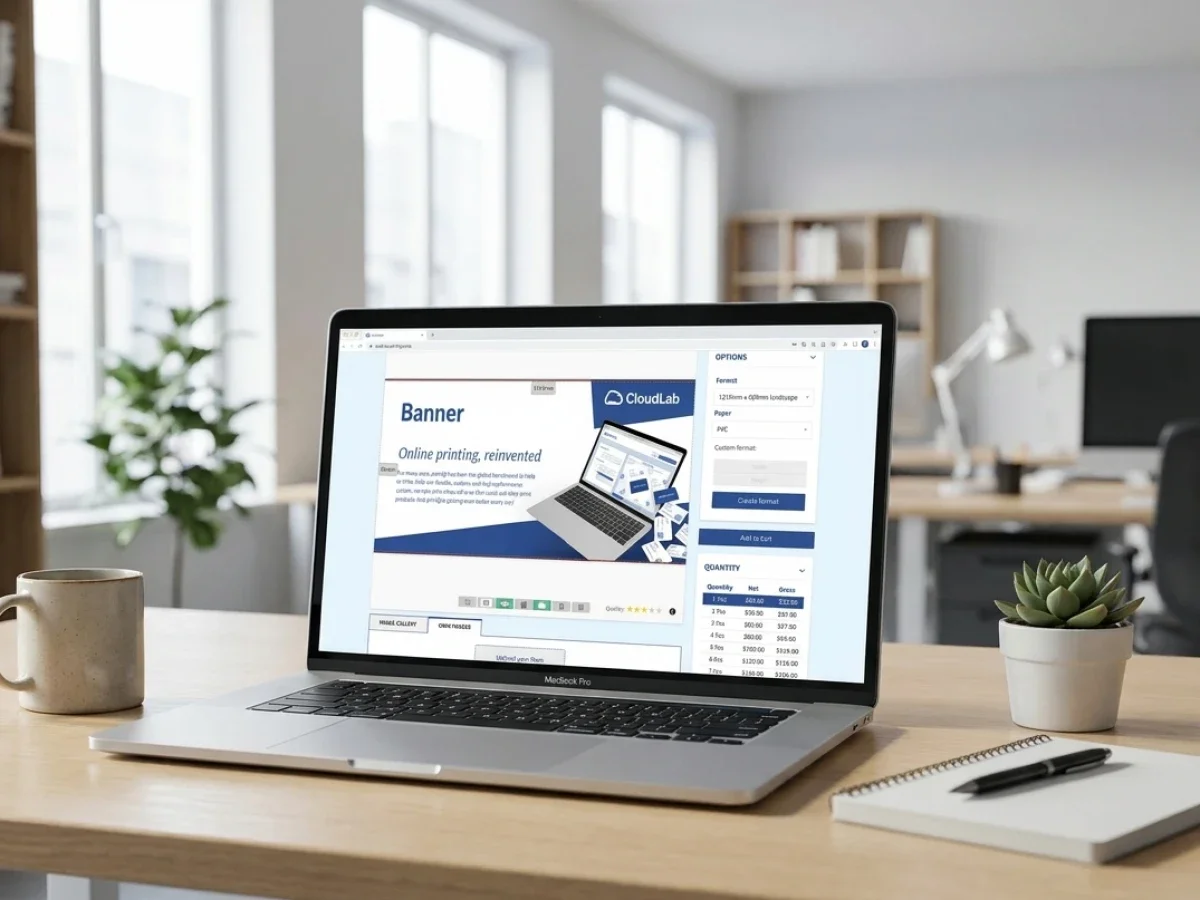
B2B-Storefront-Lösungen für Verpackungs-Nachbestellungen

Moderne B2B-Storefront-Lösungen helfen Verpackungsdruckereien und Unternehmen, wiederkehrende Aufträge schneller, mit weniger Fehlern und geringerem manuellem Koordinationsaufwand zu verwalten. Unternehmen, die sich noch auf E-Mails, Tabellenkalkulationen und getrennte Genehmigungsprozesse verlassen, haben oft mit langsamen Nachbestellungen, inkonsistentem Branding und überlasteten Kundenservice-Teams zu kämpfen. printQ kombiniert B2B-Portale, Automatisierung, Adobe Commerce-Funktionalität, Genehmigungs-Workflows und skalierbare Integrationen in einer Plattform. Das Ergebnis ist ein strukturierter Online-Bestellprozess, der wiederholbare Verpackungs-Workflows über Standorte, Teams und Kundengruppen hinweg unterstützt.
Why B2B Storefront Solutions Matter for Packaging Printing
Recurring packaging orders are rarely simple repeat purchases. Even when the packaging format stays the same, businesses often need localized text, updated legal information, different languages, seasonal graphics, or location-specific quantities. Without a structured ordering workflow, these small changes create operational friction across sales, production, and customer service.
This is why many printers are investing in b2b storefront solutions instead of relying on traditional upload-and-order workflows. A modern storefront does more than accept orders online. It organizes templates, approval rules, user permissions, production logic, and integrations into one scalable process.
For packaging printers, the key challenge is usually not the first order. The real challenge begins when dozens or hundreds of repeat orders must be processed consistently across multiple branches, franchise partners, distributors, or internal departments.
printQ addresses this challenge with a Magento-based Web-to-Print architecture that combines B2B and B2C storefronts, automated workflows, online editing, preflight, and ERP or MIS integrations in one system. This creates a stable operational foundation for recurring packaging orders without forcing teams into disconnected tools and manual coordination.
The Real Operational Problem Behind Recurring Packaging Orders
Why do recurring packaging orders become inefficient without structured B2B storefront solutions?
The main problem is that recurring packaging orders often look standardized on the surface while hiding complex operational dependencies underneath. Without structured workflows, every reorder creates unnecessary manual work across multiple departments.
Customer service teams manually check specifications. Designers verify artwork changes. Production teams validate print data again and again. Marketing departments review branding consistency. Procurement teams wait for approvals. The result is a fragmented process with avoidable delays.
This becomes even more problematic when businesses operate across multiple locations or regions. One branch may upload outdated artwork while another uses incorrect dimensions or obsolete compliance information. Without controlled templates and approval workflows, packaging consistency quickly breaks down.
Manual coordination: creates hidden operational costs that scale with order volume.
Many printers initially try to solve this problem with generic storefronts or email-based ordering. That approach may work for low-volume projects, but it becomes unstable when packaging variations, permissions, and production rules increase.
printQ reduces this complexity through structured B2B workflows. Templates can be locked to protect critical packaging elements while still allowing controlled personalization. Approval processes ensure that only authorized users can release artwork changes. Automated preflight helps reduce production risks before files enter manufacturing.
For packaging providers managing repeat orders for franchise systems, retailers, food brands, or multi-location businesses, this level of workflow control becomes essential rather than optional.
B2B Storefront Solutions as a Strategic Growth Model
A packaging storefront should not function as a simple digital catalog. It should operate as a controlled production environment that connects customers, procurement, marketing, and manufacturing workflows.
This is where many businesses underestimate the role of Web-to-Print technology. A scalable storefront is not primarily about online convenience. It is about operational predictability.
With printQ, businesses can create both open and closed storefront environments depending on the workflow requirements. A public-facing storefront may support standard packaging products, while closed B2B portals provide role-based ordering for approved business customers.
This distinction matters because recurring packaging orders often require highly structured governance. Certain users may only reorder approved templates. Others may edit localized content but not branding elements. Regional managers may require approval rights before orders move into production.
Role-based ordering: helps prevent operational chaos in decentralized organizations.
Because printQ is based on Adobe Commerce technology, these workflows can scale far beyond basic ordering processes. Companies can manage customer accounts, permissions, pricing logic, order histories, product configurations, and integrations inside one connected ecosystem.
For packaging providers, this creates a long-term operational advantage. Instead of processing every repeat order manually, the storefront itself becomes part of the production workflow.
What Makes the Best Storefronts for B2B Packaging Orders?
What are the best storefronts for B2B packaging workflows with recurring orders?
The best storefronts for b2b packaging workflows combine controlled templates, automated production processes, approval workflows, and scalable integrations in one centralized system. For most printers and enterprise packaging environments, the decisive factor is not the storefront design itself but the ability to automate repeatable operational workflows.
A packaging storefront must support more than product browsing. It needs to coordinate user roles, artwork approvals, template logic, print production requirements, and data synchronization between connected systems.
This is where printQ becomes especially relevant for complex B2B environments. The platform combines Magento-based commerce functionality with Web-to-Print production workflows in a single architecture. Businesses can manage B2B portals, online editors, approvals, automation, and integrations without separating storefront management from print operations.
A scalable setup should include several operational capabilities from the beginning. The storefront must support controlled template editing, because packaging designs often require fixed branding elements alongside editable regional content. It should also support automated preflight to reduce production errors before files reach manufacturing.
API-first architecture: becomes critical when ERP, MIS, procurement, or inventory systems need to exchange order data automatically.
For companies managing multiple brands or regional entities, multi-client functionality is equally important. printQ allows organizations to manage multiple storefronts, customer portals, or localized ordering environments within one scalable infrastructure.
This becomes especially valuable in packaging environments where repeat orders must remain consistent while still supporting local flexibility.
From Generic Ordering to Automated Packaging Workflows
A generic online ordering workflow may appear sufficient during the early stages of digitalization. Customers upload artwork, select quantities, and place orders online. However, this approach quickly reaches operational limits once packaging complexity increases.
Recurring packaging projects often involve versioning, approvals, localization, compliance validation, and structured reordering processes. Without workflow automation, teams still spend large amounts of time validating routine jobs manually.
An automated print production workflow changes the operational model entirely. Instead of reviewing every order individually, businesses define rules, templates, permissions, and production logic upfront.
With printQ, packaging providers can automate multiple stages simultaneously. Online templates reduce design inconsistencies. Preflight rules identify technical file issues automatically. ERP or MIS integrations synchronize production data without repeated manual entry.
This reduces pressure on prepress teams, customer service departments, and production planners.
Workflow automation: helps businesses scale operationally without scaling administrative complexity at the same pace.
For repeat packaging orders, automation also improves predictability. Customers reorder approved products faster because product structures, templates, and workflows already exist inside the storefront environment.
Why Packaging Reorders Need More Than Simple Upload Portals
Many packaging providers initially assume that upload functionality is enough. Customers upload artwork, production receives files, and the workflow continues manually in the background.
The problem is that upload-based ordering creates inconsistency over time. Different file versions circulate across departments. Customers reorder outdated packaging. Approvals become difficult to track. Production teams manually correct recurring errors.
A template-driven ordering process is far more stable for recurring packaging projects.
With printQ, templates can define editable and non-editable areas inside packaging layouts. Customers may update location-specific information or promotional text while protected design elements remain locked.
This is especially important for regulated industries, franchise organizations, food packaging, pharmaceutical workflows, and retail chains.
For packaging environments with highly visual requirements, packQ can also support structured packaging design workflows including 3D visualization, die-cut handling, and packaging approvals.
The operational goal is not simply faster ordering. The real objective is controlled scalability.
Comparing Different B2B Storefront Approaches
What is the difference between a generic storefront and an API-first B2B storefront platform?
An API-first B2B storefront platform is usually the better fit when packaging workflows require integrations, approvals, automation, and scalable production logic. A generic storefront may support simple ordering processes, but it often struggles once operational complexity increases.
A basic storefront typically focuses on front-end ordering. Customers browse products, upload files, and complete transactions. This approach works for low-complexity workflows with limited production dependencies.
An API-first Web-to-Print platform operates differently. The storefront becomes part of the operational infrastructure itself. Orders, templates, approvals, ERP data, MIS information, and production workflows interact automatically across connected systems.
For packaging businesses, this distinction matters because repeat orders rarely remain static over time.
A flexible SaaS or On-Premise setup also creates strategic advantages for organizations with varying IT requirements. Some businesses prioritize centralized cloud management. Others require deeper internal infrastructure control.
Headless architecture: allows storefront experiences and operational systems to scale independently.
printQ supports both SaaS and On-Premise environments while maintaining a unified Web-to-Print workflow architecture. This flexibility becomes important for businesses managing multiple brands, regional storefronts, or enterprise procurement processes.
Building Structured Packaging Portals for Enterprise Customers
Enterprise packaging portals require more than product pages. They need governance structures.
A large retail organization may have regional marketing managers, procurement teams, branch users, and production stakeholders interacting inside the same portal. Without clear role structures, operational confusion grows quickly.
This is why structured B2B portals typically include controlled permissions, approval routing, and template governance from the beginning.
With printQ, businesses can define user groups, role permissions, and workflow logic directly inside the storefront environment. Some users may reorder only approved packaging products. Others may edit templates within predefined rules. Managers may receive approval notifications before production begins.
Approval workflows: reduce unnecessary back-and-forth communication between departments.
For franchise systems and decentralized organizations, this creates measurable operational stability. Corporate branding remains protected while regional teams still retain enough flexibility for local adaptation.
brandQ can additionally support organizations that require centralized brand management across distributed marketing environments.
How Should Companies Implement B2B Storefront Solutions for Packaging Reorders?
How do companies implement scalable B2B storefront solutions for recurring packaging orders?
The safest implementation path starts with repeatable products, clear approval structures, and a realistic workflow model. Companies should first define which packaging products generate the highest reorder volume and where manual coordination currently slows operations down.
Many businesses make the mistake of digitizing every workflow at once. A better approach is to begin with stable packaging products that already follow repeatable production logic.
The implementation process usually starts with workflow analysis. Teams identify how orders currently move between sales, design, customer service, prepress, and production. This reveals where delays, manual corrections, or approval bottlenecks occur.
Once operational dependencies are mapped, the product structure can be defined inside printQ. Templates, editable areas, user permissions, approval rules, and production parameters are configured around real operational needs rather than theoretical workflows.
ERP and MIS integration planning should happen early in the project. Many packaging providers underestimate how important synchronized production data becomes once order volumes increase.
Connected systems: help eliminate duplicate data entry and inconsistent production information.
A practical rollout strategy often begins with one pilot portal or one customer segment. After workflows stabilize, additional storefronts, customer groups, or regional portals can be scaled gradually.
Training is equally important. Successful B2B storefront projects do not depend only on software functionality. Internal teams must understand approval logic, template handling, and operational responsibilities clearly.
The Role of Automation in Packaging Reorder Portals
Automation is often misunderstood as a production-only topic. In reality, the biggest operational gains usually happen before manufacturing even begins.
Packaging workflows involve constant coordination between departments. Artwork validation, file correction, customer approvals, and order preparation consume large amounts of administrative time.
With printQ, automation starts at the storefront level. Customers select predefined products, use approved templates, and follow structured workflows during the ordering process itself.
This reduces the number of unclear orders entering production.
Automatischer Preflight identifiziert technische Dateiprobleme, bevor Produktionsteams manuell eingreifen. Die Workflow-Logik leitet Genehmigungen automatisch an die richtigen Benutzer weiter. ERP- und MIS-Integrationen synchronisieren Auftragsinformationen ohne wiederholte manuelle Eingabe.
Lights-out-Workflows: werden möglich, wenn routinemäßige Arbeitsschritte keine manuelle Intervention mehr erfordern.
Für Verpackungsdruckereien, die große Nachbestellmengen bearbeiten, wird diese operative Konsistenz zu einem entscheidenden Skalierungsvorteil.
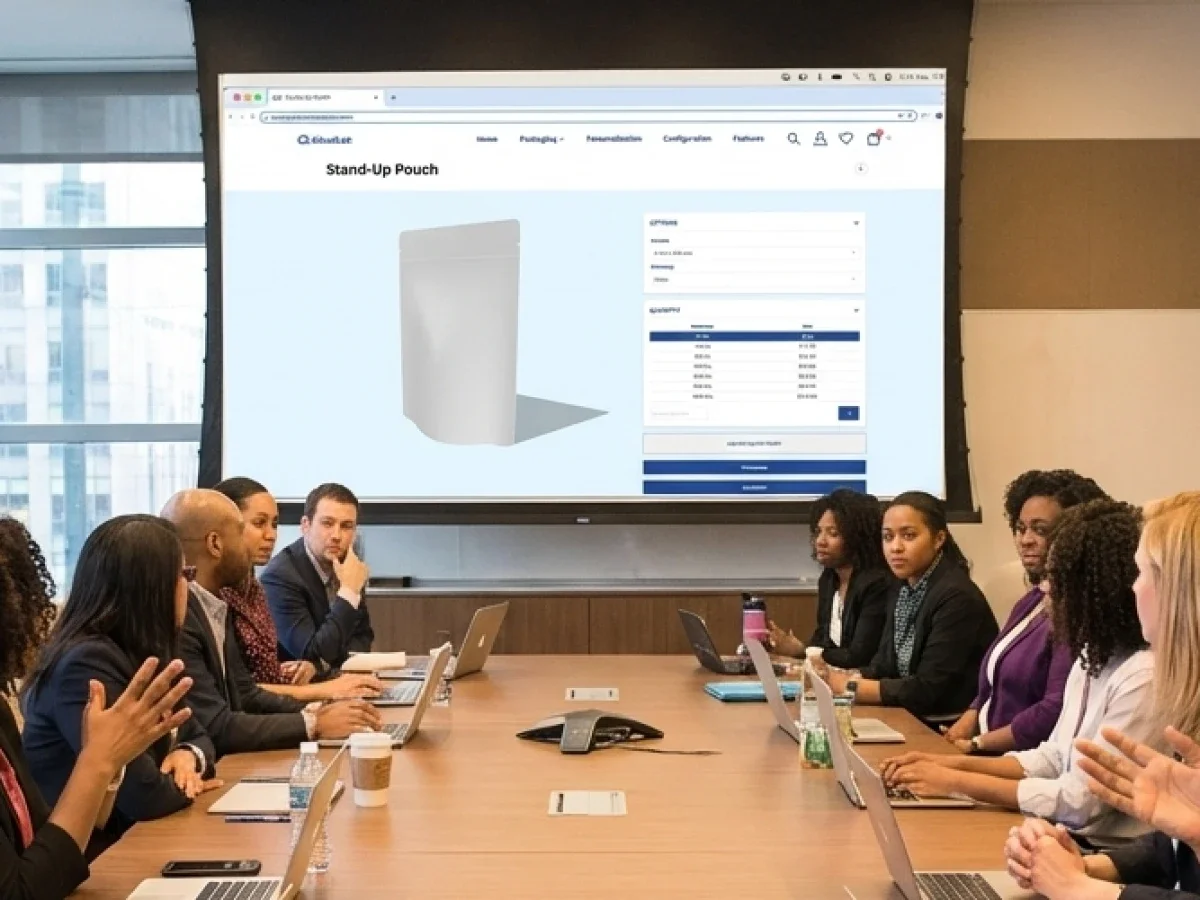
So erstellen Sie einen B2B-Verpackungs-Storefront für wiederkehrende Bestellungen
Wie erstellt man Schritt für Schritt einen B2B-Storefront für wiederkehrende Verpackungsaufträge?
Der beste Ansatz ist, den Storefront um wiederholbare operative Workflows herum aufzubauen und nicht nur um Produktkataloge. Ein erfolgreiches Verpackungsportal sollte die Bestellung vereinfachen, manuelle Korrekturen reduzieren und ab der ersten Bestellung eine stabile Produktionslogik schaffen.
Beginnen Sie mit wiederholbaren Verpackungsprodukten
Beginnen Sie mit Produkten, die bereits wiederkehrende Bestellungen generieren. Faltschachteln, Etiketten, flexible Verpackungen, Werbehüllen oder standardisierte Einzelhandelsverpackungen sind in der Regel gute Ausgangspunkte.
Ziel ist es, zunächst vorhersagbare Workflows zu stabilisieren, bevor man in hochgradig individualisierte Produktkategorien expandiert.
Vorlagen und Genehmigungslogik definieren
Erstellen Sie strukturierte Vorlagen mit kontrollierten Bearbeitungsbereichen. Schützen Sie feste Branding-Elemente, während Sie autorisierten Benutzern erlauben, lokalisierte Inhalte bei Bedarf zu aktualisieren.
Genehmigungs-Workflows sollten die tatsächlichen operativen Verantwortlichkeiten widerspiegeln. Marketing-, Einkaufs- oder regionale Managementteams benötigen je nach Organisation unterschiedliche Genehmigungsrechte.
Produktionsrelevante Systeme anbinden
Integrieren Sie ERP-, MIS-, Bestands- oder Beschaffungssysteme frühzeitig in den Prozess. Verpackungs-Workflows werden schwer skalierbar, wenn Auftragsinformationen manuell zwischen getrennten Systemen übertragen werden müssen.
printQ unterstützt offene Integrationen über REST-, SOAP-, XML-, JDF-, CSV- und JSON-basierte Workflows.
Preflight und Produktionsvorbereitung automatisieren
Preflight-Regeln sollten die Dateiqualität automatisch validieren, bevor Aufträge in die Produktion gehen. Dies reduziert wiederholte manuelle Prüfungen und senkt das Risiko von Produktionsunterbrechungen.
Für wiederkehrende Verpackungs-Workflows ist Automatisierung besonders effektiv, da sich die gleiche Produktionslogik über die Zeit hinweg konsistent wiederholt.
Testen Sie mit einem Pilotkunden oder einem internen Team
Ein Pilot-Rollout hilft, Workflow-Lücken zu identifizieren, bevor die Storefront-Architektur auf weitere Kundengruppen oder Regionen ausgeweitet wird.
Diese Phase ist entscheidend, da operative Probleme meist während des realen Bestellverhaltens und nicht nur während der technischen Einrichtung auftreten.
Storefronts schrittweise skalieren
Nachdem sich der anfängliche Workflow stabilisiert hat, können Unternehmen in zusätzliche Portale, Kundengruppen oder Verpackungskategorien expandieren.
printQ unterstützt die Skalierung von einzelnen Storefronts bis hin zu großen Multi-Client-Portalumgebungen, ohne Unternehmen später zum Neuaufbau operativer Strukturen zu zwingen.
printQ in realen Workflow-Szenarien für Verpackungen
Mehrere große Druck- und Verpackungsumgebungen arbeiten bereits mit hochstrukturierten Web-to-Print-Workflows, da manuelle Koordination auf Unternehmensebene nicht mehr effektiv skaliert.
SAXOPRINT zeigt, wie komplexe Produktumgebungen von automatisierter Online-Bestellung und skalierbaren Storefront-Strukturen profitieren. Die operative Herausforderung ist nicht nur die Produktverfügbarkeit. Es geht darum, die Workflow-Konsistenz über große Bestellmengen und komplexe Produktionslogik hinweg aufrechtzuerhalten.
Velocity Graphics nutzte printQ, um verteilte Bestell-Workflows für eine landesweite Restaurantkette zu unterstützen. Diese Art von Projekt verdeutlicht, warum strukturierte B2B-Portale für wiederholbare visuelle Kommunikation und standortspezifische Anpassungen wichtig sind.
Druckhäusle stellt einen weiteren wichtigen Anwendungsfall dar. Kleinere und mittelständische Druckdienstleister gehen oft davon aus, dass fortschrittliche Storefront-Automatisierung nur für Großunternehmen relevant ist. In Wirklichkeit wird die operative Effizienz umso entscheidender, wenn interne Teams kleiner sind und Routineaufgaben zu viel Produktionskapazität beanspruchen.
Warum skalierbare B2B-Storefront-Lösungen langfristiges Denken erfordern
Viele Storefront-Projekte scheitern, weil Unternehmen sich zu stark auf die Startfunktionalität konzentrieren, anstatt auf langfristige operative Skalierbarkeit.
Eine Storefront mag in den ersten Monaten erfolgreich erscheinen, während sich darunter verborgene Workflow-Ineffizienzen weiterentwickeln. Manuelle Genehmigungen, getrennte Systeme, inkonsistente Vorlagen und wiederholte Produktionskorrekturen führen schließlich zu operativen Engpässen.
Für einen Druckdienstleister ist die entscheidende Frage nicht nur, ob Kunden online Bestellungen aufgeben können. Die eigentliche Frage ist, ob der operative Prozess skalierbar bleibt, nachdem Hunderte oder Tausende von wiederkehrenden Bestellungen in das System gelangen.
Hier positioniert sich printQ anders als generische Bestellumgebungen.
Die Plattform kombiniert Adobe Commerce Funktionalität, Web-to-Print Workflows, Automatisierung, Online-Bearbeitung, Multi-Client-Architektur und Integrationsmöglichkeiten innerhalb einer skalierbaren Infrastruktur.
Dies gewährleistet Skalierbarkeit, die von der Workflow-Stabilität abhängt, nicht nur vom Storefront-Design.
Für Verpackungsdienstleister schafft dies eine Grundlage, die langfristiges Wachstum unterstützen kann, ohne ständig operative Prozesse neu aufbauen zu müssen.
Digitale Lösungen für moderne B2B-Storefronts
Modern B2B-Storefront-Lösungen sind nicht mehr nur digitale Bestellwerkzeuge. Sie sind operative Workflow-Plattformen, die Kunden, Genehmigungen, Vorlagen, Produktionslogik und Integrationen in einer skalierbaren Umgebung miteinander verbinden.
Wiederkehrende Verpackungsaufträge werden schwierig zu verwalten, wenn Unternehmen sich auf manuelle Koordination, getrennte Systeme und unkontrollierte Dateiverwaltung verlassen. Strukturierte Storefront-Workflows reduzieren die operative Reibung und verbessern gleichzeitig die Konsistenz über Standorte, Marken und Kundengruppen hinweg.
printQ unterstützt Verpackungsanbieter und Großunternehmen beim Aufbau skalierbarer B2B-Portale mit Adobe Commerce-Funktionalität, Workflow-Automatisierung, Online-Bearbeitung, Genehmigungsmanagement und API-First-Integrationen. Für Unternehmen, die wiederholbare Verpackungs-Workflows, kontrollierte Personalisierung und skalierbare Produktionsautomatisierung benötigen, bietet printQ eine langfristige Web-to-Print-Grundlage, die auf operatives Wachstum ausgelegt ist.
Wiederkehrende Verpackungsaufträge verursachen weitaus mehr operative Komplexität, als viele Druckereien zunächst erwarten. Ohne strukturierte Workflows führen wiederkehrende Aufträge oft zu manuellen Korrekturen, inkonsistentem Branding, überlasteten Kundenservice-Teams und getrennten Produktionsprozessen. Es erklärt, wie moderne B2B-Storefront-Lösungen Unternehmen dabei helfen, Genehmigungen, Vorlagen, Nachbestellungen und die Produktionsvorbereitung zu automatisieren, während die Skalierbarkeit über Standorte und Kundengruppen hinweg erhalten bleibt. CloudLabs printQ zeigt auch, wie printQ die Funktionalität von Adobe Commerce, Web-to-Print-Automatisierung, B2B-Portale und API-First-Integrationen kombiniert, um stabile, wiederholbare Verpackungs-Workflows für moderne Druck- und Verpackungsumgebungen zu schaffen.