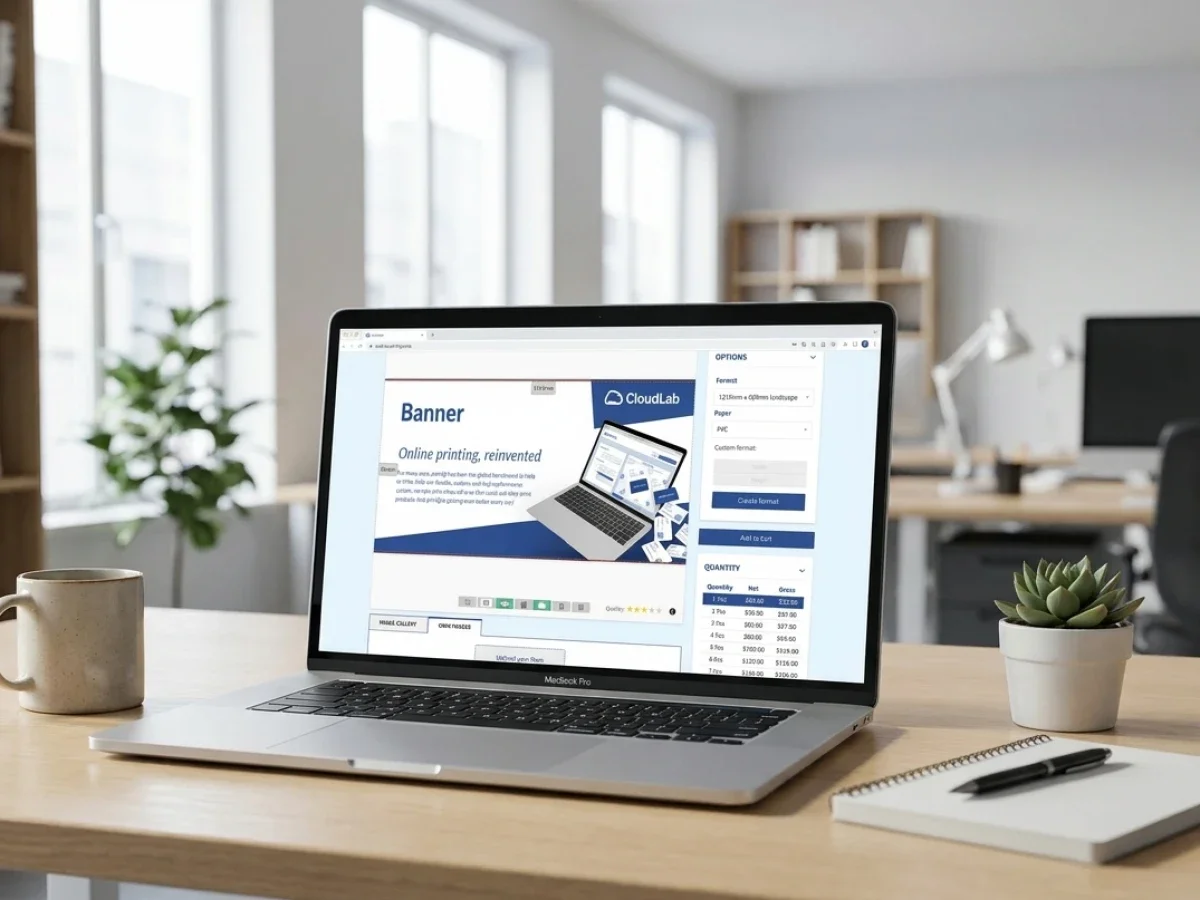
Web-to-print Solutions for Brand Compliance
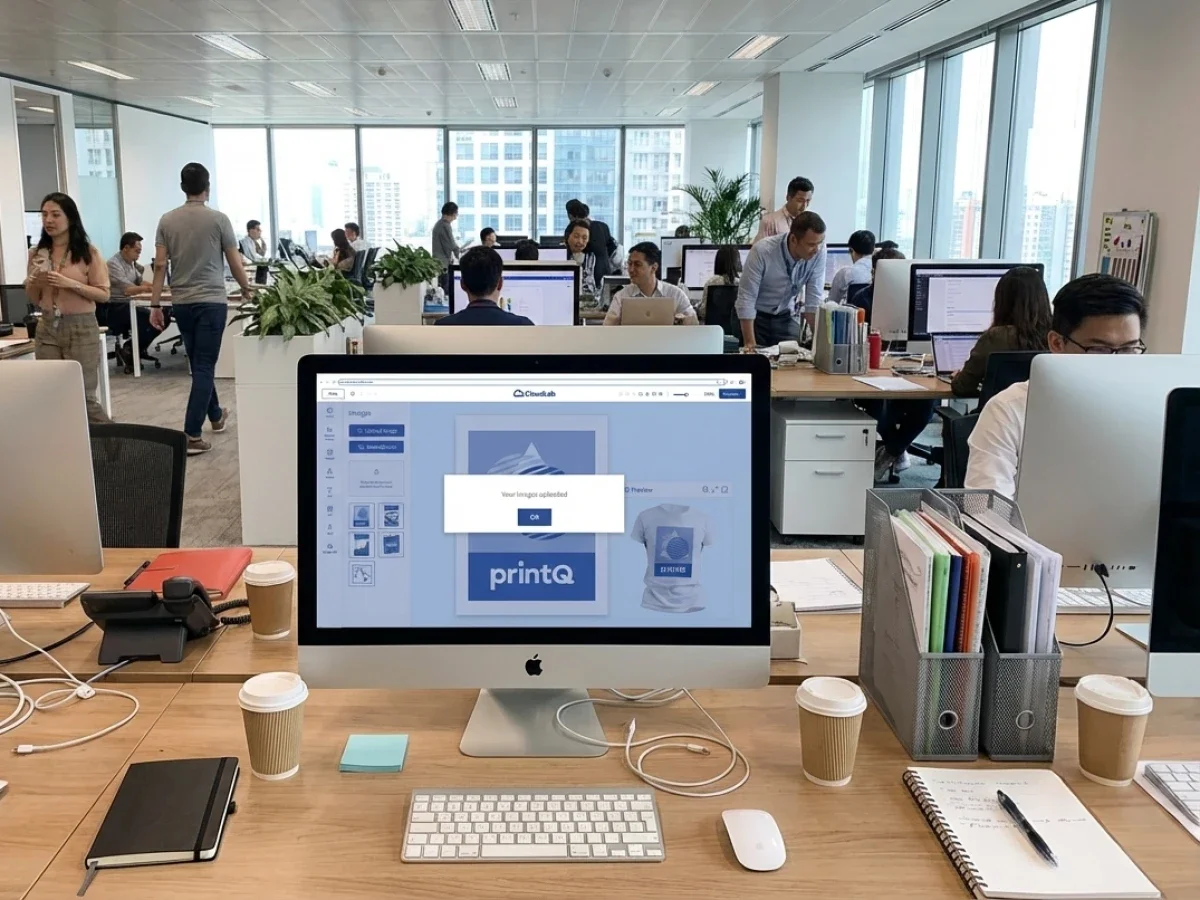
web-to-print solutions deliver the most value when they do more than enable online ordering. For companies with multiple teams, branches, or franchise locations, real success depends on corporate-design compliance, controlled personalization, and clean approval paths. printQ brings that together with central template systems, B2B and B2C storefronts, Adobe Commerce depth, and automated production workflows. The result is faster ordering, fewer brand mistakes, and a platform that scales without losing control.
Why web-to-print solutions fail when brand rules live outside the system
The real challenge with web-to-print solutions is not whether users can design online. It is whether they can do it without weakening the brand, slowing approvals, or creating production issues downstream. That becomes especially important when the same company serves public buyers, internal departments, franchise locations, and procurement teams through different storefront models.
Many businesses still treat brand governance as a separate layer that sits outside the ordering process. They keep the rules in PDFs, internal brand guides, or email instructions, then expect local teams to follow them under time pressure. That approach looks organized on paper, but in daily operations it creates workarounds, delays, and inconsistent printed material.
With printQ, the logic is different. Brand control is not something you explain after the fact. It is something you build into the storefront, the template, the approval flow, and the production workflow from the beginning. That shift is what makes central template systems so valuable for modern print commerce.
Corporate-design compliance is an operating model, not a style guide
Corporate-design compliance sounds like a creative concern, but in practice it is an operating model. Marketing teams define the visual rules, but local offices, branches, resellers, franchise partners, HR teams, and procurement users apply them every day. If the software does not support that reality, the brand becomes harder to protect as the organization grows.
A style guide alone cannot prevent the wrong logo, a stretched layout, an outdated legal line, or an unauthorized local variation. It can only describe what should happen. A governed web-to-print portal goes further by deciding what users can edit, what stays locked, who can approve an order, and what has to pass technical checks before production begins.
That is where printQ fits especially well. As a premium web-to-print platform for printers, agencies, and enterprises, it is built to support both public B2C storefronts and protected B2B portals in one system. That matters because corporate-design compliance often has to exist alongside commercial growth, not instead of it.
Why do distributed teams struggle to stay on brand?
The first problem is distance. Headquarters usually owns the brand, but local teams own the urgency. A branch needs flyers for an event, a sales office needs fresh business cards, or a franchise location needs updated menu boards. If every small change has to go back to central marketing, the process becomes slow and unpopular.
The second problem is that many organizations give users too much freedom in the wrong places and too little freedom in the right ones. They either provide a blank canvas, which invites off-brand improvisation, or they force every update through manual artwork requests, which creates bottlenecks. Neither model scales cleanly.
The third problem is fragmentation. When assets live in shared folders, old email threads, desktop files, and agency archives, nobody is fully sure which version is current. That uncertainty is exactly what central template systems are designed to eliminate.
Which web-to-print solution actually protects brand standards across B2B and B2C?
The answer is not the platform with the flashiest editor. It is the one that combines templates, permissions, approvals, commerce logic, and production automation in one coherent environment. That is why printQ is a strong fit for this topic.
printQ is positioned as a premium Magento-based web-to-print platform for modern printers and companies that need both flexibility and control. It supports open B2C shops and closed B2B portals, which means businesses can run public sales and brand-governed ordering environments from one technology stack instead of stitching together separate tools.
Its biggest structural advantage is Adobe Commerce. printQ is the only web-to-print solution built on Adobe Magento, which gives it deep e-commerce functionality from the start. Customer accounts, pricing logic, discounts, checkout, shipping, and payment workflows are not improvised add-ons. They are part of the foundation.
That foundation matters because corporate print portals are not only design environments. They are also procurement environments. Users need the right catalog, the right permissions, the right prices, the right approval structure, and the right production handoff. A platform that gets the visual side right but the commerce side wrong will still create operational friction.
Why is printQ more than a web storefront?
A basic storefront helps people browse products and place orders. A real web-to-print platform has to go further. It must handle product configuration, personalization, template protection, user roles, approvals, data validation, and file generation in a way that feels simple to the end user and reliable to the business.
printQ does that across both B2C and B2B environments. In an open shop, customers can configure products, personalize designs, and order online through a familiar buying flow. In a closed shop, organizations can restrict access, define role-based permissions, provide CI-safe templates, and control who can release an order.
The deployment model adds another layer of flexibility. Some businesses want the speed and lower infrastructure burden of SaaS, while others prefer on-premise operation because of internal IT or compliance requirements. printQ supports both, which is a practical advantage in enterprise buying decisions.
How central template systems turn brand policy into daily ordering behavior
A central template system is where brand governance stops being a set of instructions and starts becoming a working process. Instead of asking users to interpret guidelines, the system gives them a controlled template that already contains the correct layout logic, brand elements, and editable rules.
That is the role of the printQ Template Gallery. It provides ready-to-use templates for different products and use cases, so users do not start from a blank page. More importantly, those templates can carry the real governance logic of the brand. Logos, fonts, colors, legal text, and mandatory layout elements can stay fixed, while names, locations, contact details, or local offers remain editable where appropriate.
This matters for both efficiency and compliance. When a user begins with the correct structure, the job moves faster, and the risk of drift drops immediately. In high-volume environments, that is far more effective than catching mistakes later with manual review.
How do you let local teams personalize assets without letting the brand drift?
The key is boundaries. Local users should be able to change what genuinely needs to change, such as a name, address, date, offer, or regional contact. They should not be able to move the logo, replace the font family, alter the brand color system, or break the layout architecture that makes the asset recognizable.
printQ supports that balance through controlled editing zones and role-based portal logic. A local branch can personalize a flyer or poster within approved fields, while a manager, regional lead, or marketing owner can still control final release if needed. That keeps self-service practical without turning it into visual improvisation.
The effect is bigger than it sounds. When users are given a fast, safe path inside the system, they stop looking for shortcuts outside it. Adoption rises, compliance improves, and central marketing spends less time acting as an emergency production desk.
What is the difference between a generic online editor and a real template system?
A generic editor lets users type, move elements around, upload files, and save a result. That can be useful, but it does not automatically protect the brand. A real template system defines the logic behind the design. It decides what is fixed, what is flexible, what is required, and what must trigger review.
This distinction is where many buying decisions go wrong. Teams compare platforms based on how modern the editing screen looks, but they underestimate the value of underlying governance. In practice, the template system determines whether the business can scale repeat ordering without multiplying brand errors.
printQ strengthens that model through its InDesign workflow. Existing Adobe InDesign templates can be transferred into the web-to-print environment, which allows design teams to keep working in a professional layout tool while non-design users personalize approved assets within controlled limits. That is a much smarter operating model than rebuilding every asset manually for the web.
Why the three-layer approach matters
One of the most practical ideas in printQ is the layering model behind template setup. Background elements can stay locked, editable content can sit in a controlled working layer, and protected foreground elements such as logos or fixed claims can remain secure on top. This creates a much cleaner separation between brand architecture and local personalization.
For marketing teams, that means fewer layout violations. For local users, it means a simpler editing experience. For production, it means more predictable files and fewer corrections before output.
The user experience still has to feel easy
Strict governance is only effective if the day-to-day user experience remains intuitive. If the portal feels slow, technical, or overly restrictive, people will bypass it. That is why usability is not the opposite of control. It is part of adoption.
printQ’s browser-based WYSIWYG editor is designed to keep editing visual and accessible. Users can work directly in the browser, see changes in real time, and understand what they are ordering without needing specialist design software. That matters because the people using corporate portals are often marketers, buyers, sales managers, or branch staff, not trained designers.
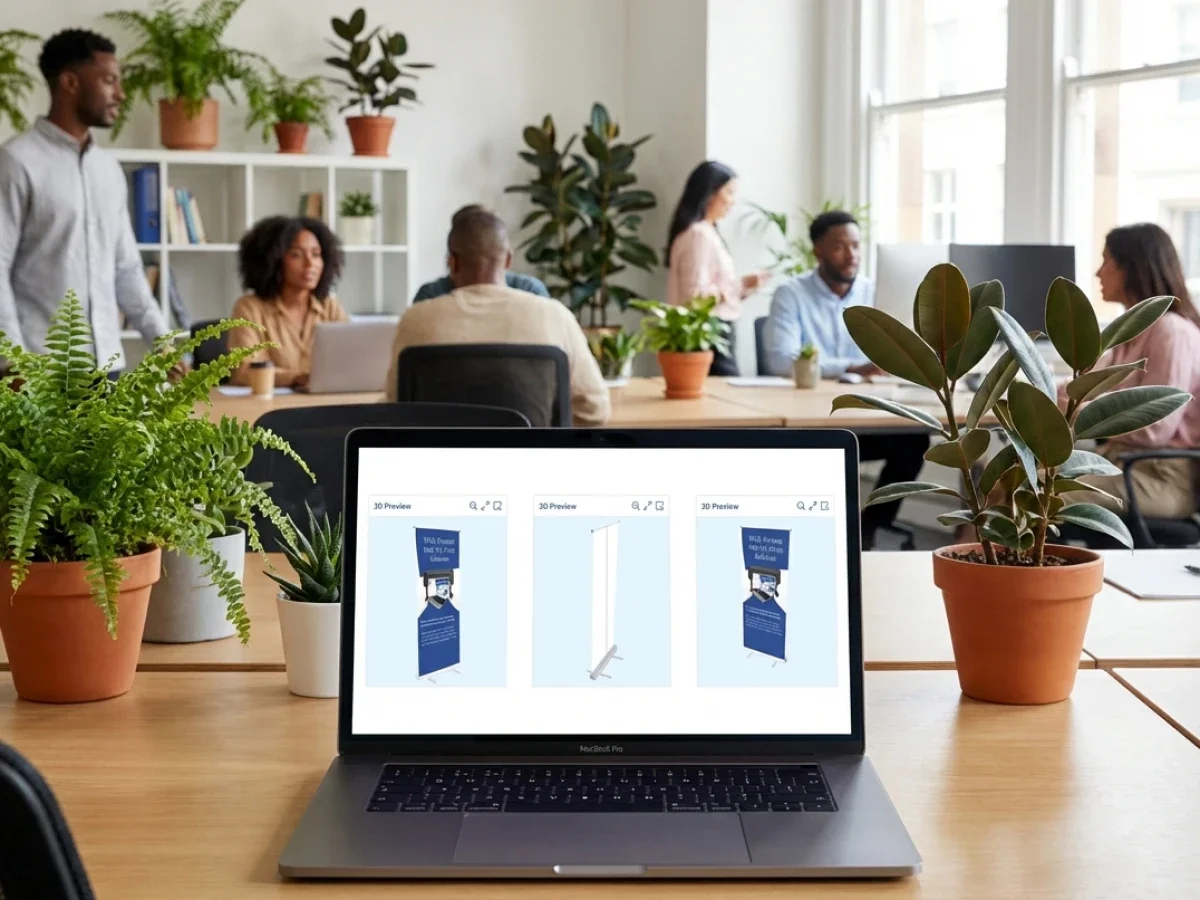
The visual layer goes beyond simple on-screen editing. printQ includes 2D and 3D preview modes, which help users review layouts, fold lines, surfaces, and product shapes with more confidence. For packaging, wide-format applications, promotional products, and embellished print, that kind of preview can prevent confusion long before a job reaches production.
The platform also supports vectorization and finishing visualization. Uploaded artwork can be prepared more reliably for print, and users can see how embellishments such as foil, coating, or embossing will affect the final result. That gives the portal a more premium feel while reducing preventable misunderstandings.
How do non-designers create compliant materials in minutes?
They need an interface that feels guided, not overwhelming. With printQ, the combination of prebuilt templates, real-time preview, product logic, and limited editable fields helps non-design users move quickly without guessing what is allowed. The software quietly carries much of the complexity in the background.
Mobile behavior matters, too. printQ supports mobile image upload through QR code, which makes it easier to pull photos from a smartphone directly into the design flow. That is especially helpful for local marketing use cases where a store team wants to place a current photo into an approved campaign frame without turning the task into a file-transfer exercise.
This is one of those features that sounds small until you see it in real life. Every bit of friction removed from the approved workflow makes the governed path more attractive. That is exactly how compliance becomes sustainable.
Mass customization without losing control
For many companies, the real value of web-to-print begins when personalization has to scale. One personalized asset is simple. Hundreds or thousands of personalized assets are where process quality starts to matter. That is why mass customization needs more than a nice editor.
printQ connects its Template Gallery with Variable Data Printing capabilities so organizations can personalize products at volume without reworking each design manually. Instead of creating every business card, branch flyer, or local poster from scratch, the system can insert approved data into controlled templates and generate consistent outputs across larger quantities.
That approach is useful for printers serving corporate customers, agencies managing multiple brands, and enterprise teams running distributed ordering programs. It turns personalization from a manual service problem into a governed production model.
How do you personalize thousands of items and keep every one of them on brand?
You define the template once, then control the data that flows into it. printQ supports Variable Data Printing for projects where names, addresses, offers, locations, barcodes, or other content elements need to change at scale. Data can be uploaded through structured sources such as CSV or Excel files, and required fields can be validated before output.
That is not only a production convenience. It is also a compliance advantage. When the variable fields are controlled and the fixed brand structure stays locked, every asset remains visually aligned even when the content changes from one recipient or one branch to the next.
This is particularly relevant for business cards, sales sheets, direct mail, franchise campaigns, event materials, and region-specific promotions. Instead of sacrificing consistency for speed, the system gives you both. That is a major reason why template-based web-to-print solutions outperform manual approval chains over time.
For agencies, the model is even more attractive because it supports white-label service delivery. One installation can manage multiple client shops, each with its own design rules, access rights, and catalog logic. That lets agencies scale brand-safe portal services without running every single order through studio production.
From storefront to production: where compliance becomes measurable
Brand-safe templates are important, but they are only one part of the story. A platform also needs to ensure that the resulting files are technically fit for print. Otherwise, the business ends up with visually correct orders that still fail in production. That is why preflight belongs in the corporate-design conversation.
printQ includes automated checks that validate important print parameters before the job moves forward. Resolution, fonts, color settings, and other file characteristics can be reviewed during the ordering process instead of after the fact. That reduces costly rework and helps keep cycle times short.
When a platform checks problems early, governance becomes measurable in business terms. Fewer corrections, fewer rejected files, faster turnarounds, and fewer manual interventions all create a stronger case for the software. Compliance is no longer just about visual purity. It becomes operational performance.
Why is preflight part of corporate-design compliance?
Because quality failures often become brand failures. A low-resolution logo, the wrong color mode, or an invalid font setup can damage how the brand appears in the final printed piece even if the layout itself follows the guideline. From the customer’s point of view, the result is still off-brand.
printQ’s automation model closes that gap. After configuration and validation, the system can generate production-ready files and move them into downstream workflows with far less manual handling. That supports the kind of lights-out processing printers want when repeat jobs and standard products need to move quickly through the shop.
The integration layer is just as important. printQ supports open connections through REST and SOAP APIs, along with formats such as XML, JDF, CSV, and JSON. That makes it easier to connect ERP systems, MIS platforms, shop environments, and production workflows without forcing the business into a rigid setup. It also supports a headless approach, which is useful when companies want printQ’s print engine and logic to connect with an existing front end.

Why Adobe Commerce matters for brand-safe B2B and B2C portals
A lot of web-to-print platforms are strong on design but weak on commerce. That becomes a problem quickly in B2B programs where negotiated pricing, customer groups, account structures, approval paths, and shipping rules matter just as much as the template itself. This is where the Magento foundation gives printQ a real advantage.
Because printQ is built on Adobe Magento / Adobe Commerce, it benefits from a mature commerce environment rather than imitating one. That means better support for customer accounts, product catalogs, pricing models, promotions, checkout logic, payment methods, and shipping workflows. For businesses that want both a B2C web-to-print storefront and a governed B2B portal, that depth is extremely valuable.
The architectural openness matters just as much. printQ is API-first and headless in its thinking, which means companies can integrate it into broader ecosystems instead of reshaping everything around one closed system. That reduces vendor lock-in and gives IT teams more freedom to connect the platform to existing processes.
Which web-to-print solution fits printers, agencies, and enterprise portals best?
For printers, the answer is usually the platform that can combine new online revenue with lower manual effort. printQ supports public web storefronts, closed customer portals, product configuration, automated preflight, and production handoff in one system. That makes it a strong choice for print businesses that want to grow without multiplying internal complexity.
For agencies, the best fit is a platform that protects corporate design while supporting multi-client operations. printQ’s white-label capabilities, template governance, and multi-client architecture make it possible to run multiple customer shops from one installation. That improves service consistency and reduces the cost of maintaining separate solutions.
For enterprises and franchise networks, the strongest solution is one that centralizes control while preserving local speed. printQ is especially well suited here because it supports closed shops, role-based permissions, approval structures, and local adaptation within protected CI templates. It can scale from one portal to hundreds of multi-client environments, which is critical when programs expand across brands, countries, or departments.
That scale is not theoretical. printQ is already proven across more than 1,000+ live portals worldwide, which makes it easier for buyers to view it as a mature platform rather than an experimental tool. It is also why large names and mid-sized print businesses can both fit within the same ecosystem.
A short example from the field
A good illustration of this model is Velocity Graphics. The company needed a controlled B2B portal for a nationwide restaurant chain with more than 100 locations. The challenge was not just online ordering. It was managing large menu formats, frequent updates, and strict brand consistency across many sites.
With printQ, the project moved from manual coordination to template-based self-service. Local users could update approved menu content within controlled limits, while the overall visual system stayed intact. Over time, the portal expanded beyond menus into a much broader product range, which shows what central template systems can do when they are tied to a scalable production and commerce platform.
How to roll out central template systems without slowing the business down
A successful rollout starts with the right products. The best entry points are usually items with high order frequency, repeated personalization, and high brand risk. Business cards, stationery, flyers, branch signage, local posters, menu boards, and sales collateral are ideal because they create visible value quickly.
The second step is to define governance before discussing visual freedom. Decide which user roles exist, which fields are editable, which products belong in which portal, and which types of changes require approval. This is where many projects succeed or fail. Good governance feels invisible to the user because the structure has been designed well in advance.
The third step is to connect the system to the business around it. That includes pricing logic, ERP or MIS integration, product rules, proofing, and production handoff. If the portal looks correct but still relies on manual coordination after checkout, the business has only solved half the problem.
How do you implement web-to-print solutions across branches, franchises, or partner networks?
Start with one pilot that has a clear business case. Do not try to digitize every brand asset on day one. Build one controlled portal, prove that local teams can order faster without breaking the brand, then expand template families and product categories from there.
Next, make template ownership clear. Central marketing should own the visual rules, while operational owners define approval paths and IT manages the integration layer. When those responsibilities are blurred, even good software can become harder to manage.
Finally, scale by repeating what works. printQ is built to grow from a single shop to a large multi-client setup, so once the first portal is working, additional portals do not require a fresh platform decision each time. That is where the long-term return starts to show.
Better brand control should also mean less work
The best governance model is the one users hardly notice because it makes the right action the easiest action. That is exactly what central template systems are supposed to achieve. They replace scattered instructions and slow approvals with controlled self-service.
printQ does this by combining B2B and B2C storefronts, Adobe Commerce depth, an easy WYSIWYG editor, central templates, Variable Data Printing, mobile image upload, automated preflight, and open integrations in one system. That combination is what makes it useful for printers, agencies, and enterprise brand portals alike.
When central teams can protect the brand, local teams can move quickly, and production can run with less manual intervention, corporate-design compliance stops being a daily battle. It becomes part of the operating model.
Why web-to-print solutions work better when compliance is built in
The strongest web-to-print solutions do not ask companies to choose between speed and control. They build control into the speed. That is the real value of printQ. Through central template systems, protected CI rules, B2B and B2C storefronts, Adobe Commerce integration, open APIs, and end-to-end automation, printQ helps organizations keep their brand consistent while making ordering easier for everyone involved.
For printers, agencies, and distributed enterprises, the main benefit is clear. printQ turns corporate-design compliance into a scalable process instead of a manual policing exercise. Teams order faster, repeat work becomes easier to manage, production becomes more reliable, and the business gets a future-ready platform that can grow from one shop to hundreds of portals without losing structure.
Web-to-print solutions only deliver long-term value when they combine online customization with real brand governance. This article shows how printQ helps companies achieve corporate-design compliance through central template systems, controlled personalization, role-based approvals, and automated production workflows. Because CloudLabs printQ runs on Adobe Magento, it supports both B2C web storefronts and closed B2B portals in one scalable environment. Add Template Gallery, VDP, QR-based mobile upload, preflight, and open integrations, and the result is a brand-safe print platform that reduces manual effort, protects consistency, and scales cleanly across teams, branches, and clients.